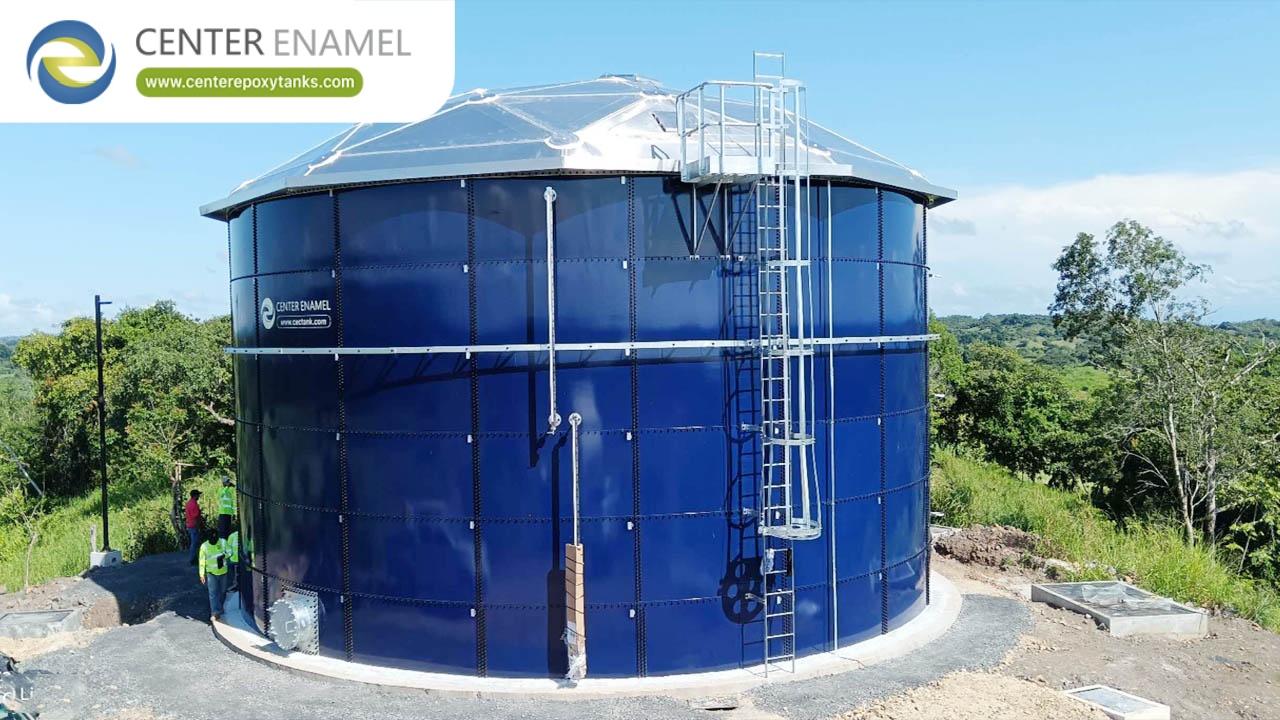
Aluminum Dome Roofs for Fire Water Storage Tanks: Securing Ultimate Reliability and Infrastructure Protection
In industrial complexes, petrochemical refineries, commercial facilities, and municipal water networks, fire protection systems represent the final shield against catastrophic losses. At the center of every dependable fire suppression system is the fire water storage tank, which must maintain an uncompromised, pristine volume of water ready for immediate activation by high-pressure fire pumps and sprinkler grids.
However, conventional tank covers—such as painted carbon steel cone roofs or poured concrete slabs—frequently succumb to severe internal corrosion, structural degradation, and environmental contamination. Rust accumulation, scale shedding, and algae growth can obstruct sprinkler heads and compromise emergency readiness. To permanently eliminate these vulnerabilities, industry leaders specify Aluminum Dome Roofs (ADRs). As a global pioneer in advanced liquid storage and cover engineering, Shijiazhuang Zhengzhong Technology Co., Ltd. (Center Enamel) delivers cutting-edge aluminum geodesic dome systems engineered explicitly to protect mission-critical fire protection water reserves.
Engineering Superiority: Why Aluminum Domes Excel in Fire Protection
Center Enamel’s aluminum geodesic domes are manufactured using high-strength marine-grade aluminum alloys configured in an advanced space-frame geometry that transforms the roof into a self-supporting shell:
Absolute Corrosion Immunity and Purity Protection: Fire water must remain clean and debris-free over decades of static storage. Unlike carbon steel, which rusts and sheds metallic scale, aluminum naturally generates a passivated oxide layer that stops oxidation entirely. This completely prevents internal rust flaking that could clog sprinkler nozzles or valve seats.
Hermetic Sealing Against External Contaminants: Fitted with advanced gasketing and batten bar sealing systems, aluminum domes create an airtight barrier that locks out wind-blown dust, rain, snow, insects, and UV sunlight. Eliminating sunlight completely halts algae growth inside the reservoir.
Unobstructed Clear-Span Geometry: The triangulated geodesic framework distributes loads uniformly along the perimeter ring beam, removing the need for internal support columns. This provides a completely clear interior span that simplifies internal cleaning and anti-vortex baffle maintenance.
Lightweight Structural Efficiency: The high strength-to-weight ratio of aluminum places minimal dead load on supporting tank walls, making these domes ideal for retrofitting aging fire water storage tanks without requiring expensive foundation upgrades.
Data Table: Comprehensive Comparison of Fire Water Tank Roof Technologies
Technical Parameter | Center Enamel Aluminum Geodesic Dome | Traditional Carbon Steel Cone Roof | Cast-in-Place Concrete Cover |
Material Composition | High-strength marine-grade aluminum alloy | Carbon steel plate | Cast-in-place reinforced concrete |
Corrosion Resistance | Excellent; natural oxide passivation prevents rust entirely | Low; vulnerable to moisture and atmospheric oxidation | Moderate; prone to carbonation and rebar spalling |
Water Purity Maintenance | Complete light block stops algae; zero metallic rust flaking | Prone to interior rust contamination over time | Prone to concrete dust and particulate ingress |
Internal Support Structure | Self-supporting clear span (zero internal columns required) | Requires center support poles or internal rafters | Requires heavy monolithic formwork and interior pillars |
Maintenance Profile | Near-zero maintenance (no periodic painting or recoating) | High; requires frequent abrasive blasting and repainting | Moderate; periodic crack sealing and surface treatment |
Governing Standards | AWWA D108, API 650 Appendix G, ASCE 7-10, NFPA | Standard industrial steel codes | ACI Structural Concrete Standards |
Meeting Strict Regulatory Standards and ESG Mandates
Industrial fire protection installations are governed by strict safety codes mandated by organizations such as the National Fire Protection Association (NFPA) and FM Global. Center Enamel's aluminum dome roofs assist facility operators in meeting these requirements by:
Ensuring 100% Water Volume Availability: Preventing evaporative loss in arid climates so that tanks remain fully capacitated during fire emergencies.
Withstanding Severe Environmental Loads: Engineered via 3D Finite Element Analysis (FEA) to comply with AWWA D108 and ASCE 7-10, guaranteeing structural survival against high-velocity winds and heavy snow loads.
Delivering Maintenance-Free Durability: Eliminating downtime and labor costs associated with recurring protective coating maintenance.
Frequently Asked Questions (FAQ)
Q: Why are aluminum dome roofs recommended for fire water storage tanks?
A: Aluminum dome roofs provide superior corrosion resistance, prevent internal rust contamination, block sunlight to stop algae growth, and seal out environmental debris, ensuring that fire sprinkler water remains clean, pressurized, and ready for immediate deployment.
Q: Do aluminum geodesic domes comply with NFPA and fire safety standards?
A: Yes. Center Enamel's aluminum domes are engineered in strict compliance with major global benchmarks, including AWWA D108, API 650 (Appendix G), ASCE 7-10, and design criteria supporting rigorous NFPA fire protection facility requirements.
Q: Can an aluminum dome roof be retrofitted onto an existing fire water tank?
A: Absolutely. Because aluminum is exceptionally lightweight, geodesic domes can be custom-designed and installed onto existing steel or concrete fire water reservoirs without requiring costly structural reinforcement of the walls or foundation.
Q: What ongoing maintenance is required for an aluminum dome roof?
A: Aluminum domes require virtually zero ongoing maintenance. The natural oxide layer protects the metal against weathering, eliminating the need for periodic painting, sandblasting, or rust-prevention coatings over its multi-decade operational lifespan.


