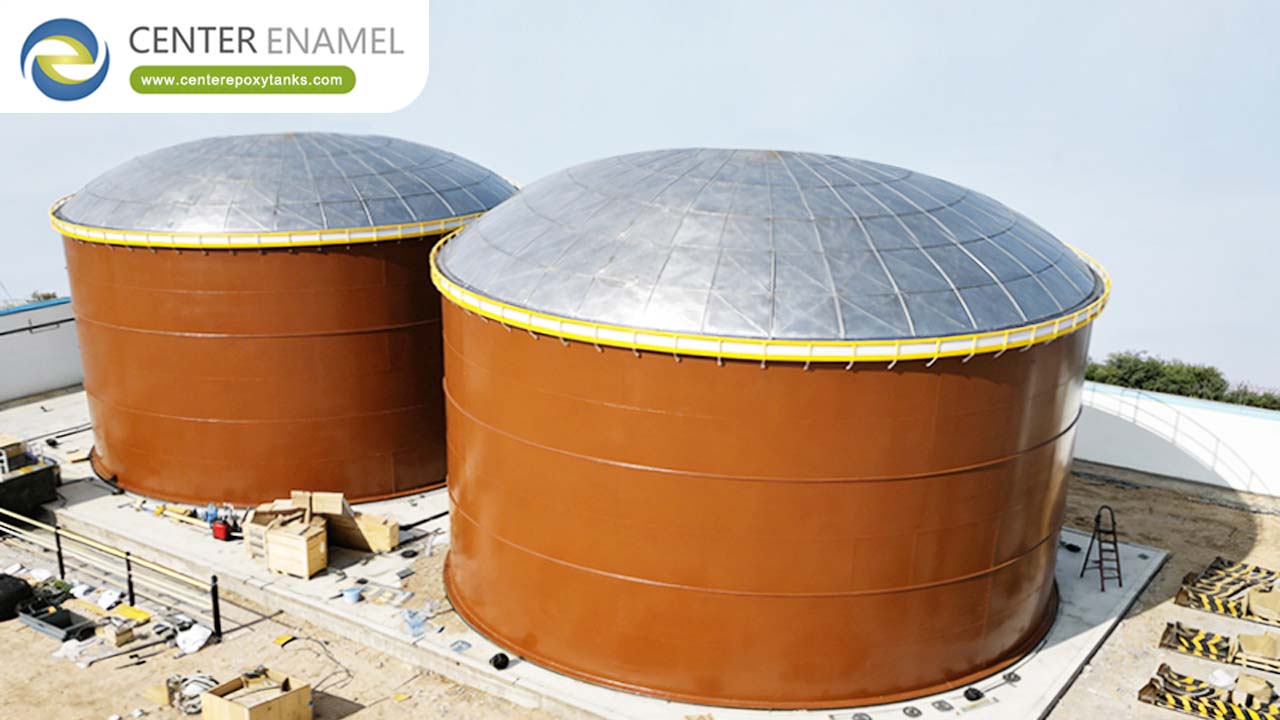
Aluminum Geodesic Dome Roofs for Soft Water Storage Tanks
Soft water, while essential for many industrial processes like power generation and food processing, presents a unique engineering challenge. Because soft water is naturally aggressive and prone to leaching minerals from materials it touches, it can rapidly corrode traditional steel and concrete tank roofs.
For industrial and municipal facilities, an Aluminum Geodesic Dome Roof is the modern solution for soft water storage. By combining an inert material (aluminum) with a structural "clear-span" geodesic geometry, these roofs provide a permanent, maintenance-free cover that ensures water purity and eliminates the structural risks of traditional tank roofing.
The Soft Water Corrosion Challenge
Standard tank roofs—typically made of carbon steel or concrete—are highly susceptible to the chemical nature of soft water.
Steel Corrosion: Carbon steel roofs require constant painting and re-coating. Soft water is notorious for accelerating the rust rate of these surfaces, leading to iron contamination in the water and structural thinning.
Concrete Degradation: Soft water can leach calcium hydroxide from concrete roofs, causing spalling, "dusting," and long-term structural instability.
Contamination Risks: As traditional roofs degrade, paint flakes, rust, and concrete debris fall into the water supply, compromising quality and requiring expensive filtration.
Aluminum geodesic domes effectively bypass these issues. The aluminum creates a self-healing, microscopic oxide layer that is impervious to the aggressive leaching associated with soft, acidic, or demineralized water.
Advantages of Aluminum Geodesic Domes
1. Superior Corrosion Resistance
Aluminum does not rust like steel. In environments where humidity is high or water purity is critical, an aluminum dome remains inert. It does not require protective coatings, blasting, or periodic repainting, even after decades of service.
2. Clear-Span Structural Integrity
The "geodesic" design—a network of interlocking triangles—distributes weight evenly across the structure. This means the roof is self-supporting. It requires no internal columns or supports that could obstruct water flow, harbor sediment, or hinder cleaning.
3. Lightweight & Retrofit-Friendly
Aluminum is significantly lighter than steel or concrete. This allows these domes to be installed on existing tank shells that were never designed to hold the weight of a heavy traditional roof. For new projects, the lightweight design allows for lighter, less expensive tank foundations.
4. Environmental & Thermal Efficiency
The reflective properties of aluminum reduce heat absorption inside the tank, preventing the rapid temperature fluctuations that can encourage algae growth or bacterial buildup—a common issue in municipal and industrial water storage.
Technical Comparison: Roofing Solutions
Feature | Aluminum Geodesic Dome | Fixed Steel Roof | Concrete Roof |
Corrosion Resistance | Excellent (Inert) | Poor (Requires Painting) | Moderate (Requires Lining) |
Internal Columns | None (Clear-span) | Required (Obstructive) | Required (Heavy) |
Maintenance | Minimal (Maintenance-free) | High (Periodic Coating) | High (Crack Sealing) |
Service Life | 30–50+ Years | 15–25 Years | 20–30 Years |
Installation Speed | Fast (Prefabricated/Modular) | Slow (Field Welding) | Very Slow (Curing) |
Frequently Asked Questions (FAQ)
1. Why is soft water more corrosive to tank roofs than hard water?
Soft water generally lacks the minerals (calcium and magnesium) that form a protective scale on metal surfaces. Because it is "hungry" for minerals, it aggressively dissolves and leaches materials from steel, copper, and concrete, accelerating the degradation of traditional tank roofs.
2. Does an aluminum dome require internal painting or sealing?
No. Aluminum is naturally resistant to corrosion. Because the dome is completely inert in most water storage applications, there is no need for internal liners, painting, or protective coatings, which eliminates the risk of coating particles flaking into your water supply.
3. Can an aluminum dome be installed on a tank that is already in use?
Yes. One of the primary advantages of the geodesic dome is its modularity. Because it is lightweight, it can often be assembled on the ground and lifted onto an existing tank via crane, often with minimal or no disruption to the tank's ongoing operations.
4. How does the dome handle heavy snow or high wind loads?
Geodesic domes are engineered to comply with stringent standards such as API 650 and AWWA D108. The triangular structural design is one of the strongest in architecture, allowing the dome to distribute live loads (snow, wind, seismic activity) across the entire roof surface, making it exceptionally resilient in extreme weather.
5. Is this solution cost-effective compared to traditional steel?
While the upfront cost of aluminum may differ from raw steel, the Total Cost of Ownership (TCO) is significantly lower. When you factor in the elimination of periodic painting/blasting, the lack of maintenance downtime, and the extended service life (30+ years), aluminum domes are often the most economical choice over the lifecycle of the tank.


