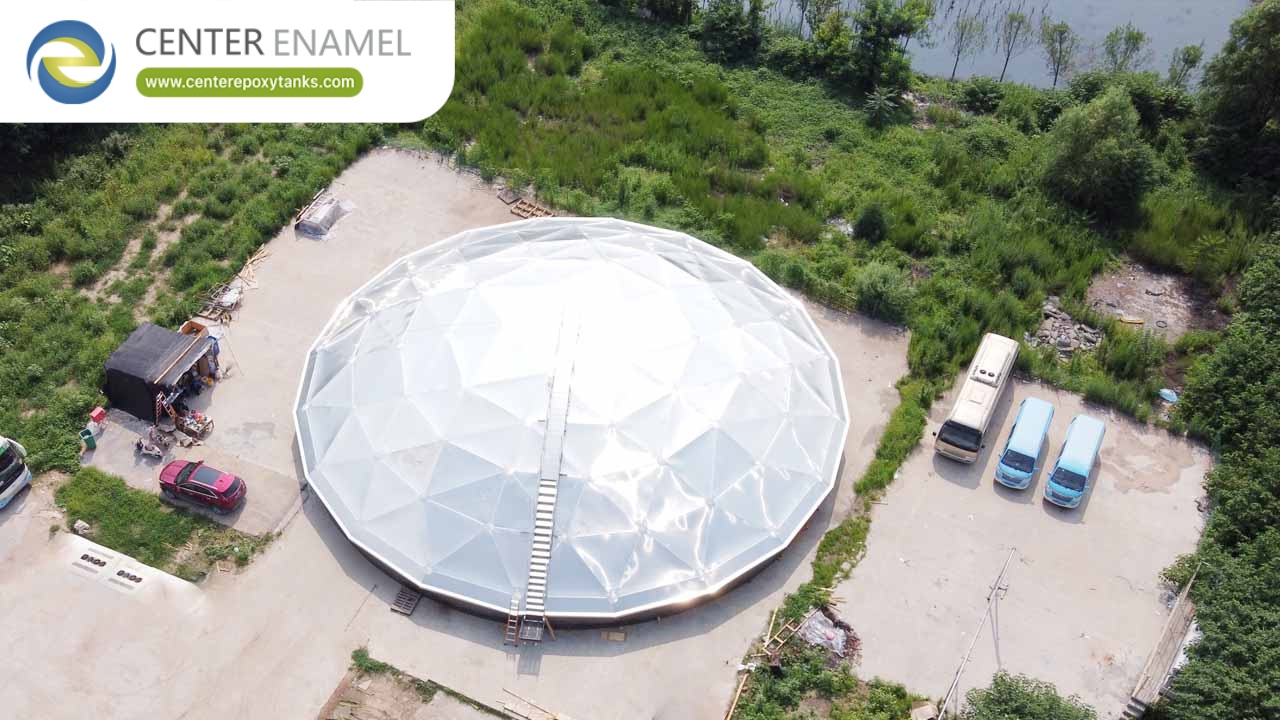
Aluminum Geodesic Dome Roofs for Dry Bulk Storage Tanks: Engineering Superior Protection and Structural Efficiency
In industrial operations spanning agriculture, mining, cement manufacturing, and chemical processing, storing dry bulk materials—such as grains, cement, fertilizers, fly ash, and mineral powders—requires absolute protection against environmental degradation. Exposure to moisture, wind-driven rain, humidity fluctuations, and airborne contaminants can cause caking, spoilage, and severe inventory loss.
Traditional roofing solutions, such as painted carbon steel conical roofs or cast-in-place concrete flat decks, frequently struggle with high maintenance burdens, internal structural corrosion, and the need for interior support columns that disrupt material handling equipment. To overcome these operational bottlenecks, aluminum geodesic dome roofs for dry bulk storage tanks have become the global standard, leveraging advanced geometric architecture and marine-grade aluminum alloys to deliver uncompromised asset protection.
The Engineering Mechanics of Geodesic Bulk Covers
The structural excellence of aluminum geodesic domes stems from a specialized three-dimensional space-truss configuration. By organizing lightweight aluminum struts and triangular panels into an interlocking geodesic matrix, the structure achieves maximum load distribution and rigidity with minimal dead weight.
True Clear-Span Architecture: Unlike conventional tank roofs that require internal columns, rafters, or central support trusses, aluminum geodesic domes are entirely self-supporting from the perimeter tension ring. This eliminates internal obstructions, maximizing storage volume and simplifying the operation of overhead filling spouts, conveyors, and internal reclaim systems.
Inherent Corrosion Immunity: Fabricated from high-strength, marine-grade aluminum alloys (typically 5000 and 6000 series), these domes develop a natural, protective aluminum oxide layer. They are completely immune to atmospheric oxidation and chemical fumes, requiring zero protective painting or periodic recoating.
High Strength-to-Weight Ratio: The lightweight nature of aluminum drastically minimizes dead loads transferred to the underlying silo walls or foundations. This makes geodesic domes ideal for retrofitting older storage infrastructure that cannot support heavy steel or concrete roofs.
Airtight Environmental Sealing: Fitted with specialized batten bar clamping systems and continuous elastomer gaskets, the dome provides a hermetic barrier that locks out rainwater, moisture, pests, and dust.
Technical Performance Matrix: Dry Bulk Storage Roof Solutions
Technical Parameter | Aluminum Geodesic Dome Roofs | Traditional Carbon Steel Conical Roofs | Cast-in-Place Concrete Flat Decks |
Corrosion Defense & Lifespan | Exceptional; marine-grade aluminum requires zero repainting; 40+ year lifecycle | Moderate to low; prone to rust flaking, pitting, and coating failure requiring frequent upkeep | Moderate; susceptible to micro-cracking, water seepage, and structural spalling over time |
Internal Support Structure | 100% clear-span; zero internal columns or support trusses required | Often requires internal rafter beams and center support columns for large diameters | Requires heavy internal support pillars and shoring formwork during construction |
Installation Speed & Method | Rapid modular assembly; can be craned or jacked into place without heavy scaffolding | Labor-intensive field welding, heavy crane mobilization, and painting overhead | Slow civil construction, extensive formwork, and multi-week curing |
Compliance & Design Standards | Engineered strictly to AWWA D108, API 650 Annex G, and ADM2015 | Governed by general steel design codes with variable field quality | Governed by local civil masonry and structural concrete standards |
Operational Efficiency and Safety in Bulk Handling
Beyond structural longevity, aluminum geodesic domes optimize daily plant workflows:
Elimination of Material Caking: By sealing out humidity and preventing roof leaks, dry bulk commodities like cement, chemicals, and grains remain free-flowing, preventing costly blockages in discharge chutes.
Rapid Modular Installation: Prefabricated components ship efficiently in standard containers and assemble rapidly on-site using lightweight mechanical tools, minimizing facility downtime.
Climate Resilience: Engineered to withstand extreme environmental forces, the curved geometry naturally sheds heavy snow loads and resists high wind velocities in compliance with ASCE 7-10 and IBC 2012 standards.
Frequently Asked Questions (FAQ)
Q: Why are aluminum geodesic domes preferred over steel or concrete for dry bulk storage tanks?
A: Aluminum domes offer a 100% clear-span structure that eliminates internal columns, provide complete corrosion immunity without requiring periodic painting, and feature a lightweight design that reduces structural loads on the silo walls.
Q: Can aluminum geodesic domes be retrofitted onto existing concrete or steel silos?
A: Yes. Because aluminum domes are exceptionally lightweight and modular, they are frequently used to replace aging, corroded, or leaking roof systems on existing tanks without requiring modifications to the underlying tank shell or foundation.
Q: How do aluminum dome roofs protect sensitive dry bulk materials from moisture?
A: The domes utilize continuous batten bar clamping systems paired with high-grade elastomer gaskets, creating an airtight, watertight seal that prevents rainwater and ambient humidity from entering the storage chamber.
Q: What international engineering standards govern aluminum geodesic dome roofs?
A: High-quality geodesic domes are engineered and manufactured in strict compliance with major global standards, including AWWA D108, API 650 Annex G, ADM2015, ASCE 7-10, and IBC 2012.


