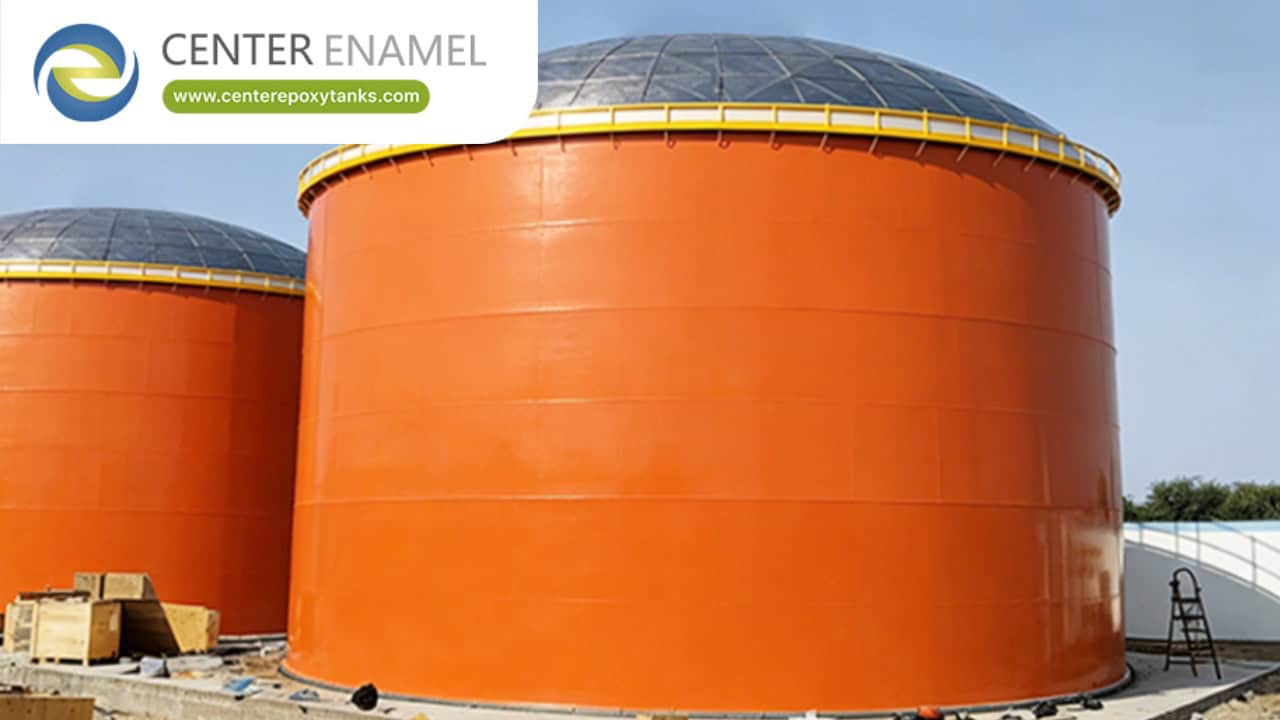
Aluminum Geodesic Dome For Oil Storage: A Low-Maintenance Asset
Aluminum geodesic domes are marketed as low-maintenance covers, and the claim holds up — but only because of how they are engineered. The alloy resists atmospheric corrosion on its own; the connections, fasteners, seals and drainage details are where maintenance actually lives. Specify those well and the maintenance program is a schedule; specify them badly and it is a repair history.
This article examines the maintenance economics of aluminum covers on oil storage: where corrosion risk actually sits, what the inspection intervals are, and how lifecycle cost is decided at specification.
The Low-Maintenance Claim, Examined
The claim rests on a real material property: aluminum forms a stable oxide film in atmospheric service, so the structure does not need the recoating cycles a steel cover requires. Remove recoating from the maintenance program and the program shrinks dramatically.
What remains is connection integrity, seal condition, drainage function and the headspace environment. None of those are eliminated by the material choice — they are managed by the detailing.
Why Aluminum Resists Atmospheric Corrosion
The oxide film is self-healing: where the surface is abraded, the film re-forms in air. That is why an aluminum dome on an oil tank survives decades of weather without a coating system, and why the structural sections do not carry a corrosion allowance the way steel would.
The exceptions are the environments that attack the film or the metal beneath: chlorides at coastal sites, sulfides in a sour headspace, and any interface that traps moisture or debris against the surface.
Corrosion Allowance And Where It Matters
Corrosion allowance is the wrong conversation for the aluminum structure and the right conversation for the details. Fasteners, interface components and anything in the headspace are specified for their environment — stainless grades, isolation detailing, corrosion-specified materials — rather than sized for loss.
Zone | Corrosion Mechanism | Design Response |
External structure | Atmospheric; oxide film stable | Alloy selection; no recoating cycle |
Connections and fasteners | Trapped moisture, galvanic couple | Stainless fasteners, isolation detailing |
Ring beam interface | Moisture and debris trap | Drained, sealed, inspectable detail |
Covered headspace | Product vapor and condensate | Material selection for the atmosphere |
Inspection Intervals
The inspection program is short and scheduled: external condition of the structure and connections, seal and penetration condition, drainage function, and — at shutdown — the cover underside and headspace details. Intervals follow the operating plan rather than a fixed calendar.
The program is designed to be executable without dismantling structure: access hatches, defined inspection routes and penetrations assessable from those routes.
Inspection Item | Interval Basis | Method |
Structure and connections | Scheduled external inspection | Visual, fastener condition |
Seals and penetrations | Scheduled; with seal renewal cycle | Visual, leak check where required |
Drainage paths | Seasonal or event-driven | Clearing and flow check |
Cover underside | Planned shutdown | Internal visual inspection |
Recoating Cycles: What To Expect
The aluminum structure expects no recoating cycle in normal atmospheric service. Where components are coated — fasteners, interface hardware, any steel details — those coatings carry their own renewal expectation and are inspected on the same schedule.
The practical consequence for lifecycle budgeting: the recoating line that a steel cover carries for decades is absent from an aluminum cover’s budget, and that difference compounds every cycle.
Seals, Gaskets And Penetrations
Seals and gaskets are the aging components, and they are specified with a planned renewal cycle rather than an open-ended life. The cycle length follows the elastomer selection and the service temperature — and the renewal is a planned activity with parts on the shelf.
Penetrations concentrate the risk: every penetration through the cover is a seal that has to accommodate movement and survive the environment. Penetration count is therefore a maintenance variable as much as a design one.
Drainage As A Maintenance Item
Drainage is the maintenance item most often forgotten until it fails. Scuppers and downpipes sized for the storm event, routed clear of the shell and detailed so blockages are visible — then cleared on a schedule, because a blocked scupper fails silently until the storm arrives.
The drainage detail is also a corrosion detail: standing water at a connection is a corrosion initiation site, so drainage design and connection durability are the same conversation.
Lifecycle Cost Comparison
The lifecycle comparison is not aluminum versus steel; it is specification versus specification. The aluminum cover’s advantage is the absent recoating cycle and the bolted, replaceable construction — both of which are decided at specification, not at purchase.
Cost Element | Aluminum Dome | Typical Alternative |
Recoating cycles | None for the structure | Scheduled for steel covers |
Panel replacement | Bolted modules; planned activity | Hot-work project |
Seal renewal | Planned cycle, parts on shelf | Case by case |
Inspection | External, no dismantling | Scaffold-dependent |
Designing Maintenance Out
The lowest-maintenance cover is the one with the fewest maintenance items: fewer penetrations, fewer sealed joints, drainage that cannot block silently, and fasteners and seals that survive the interval between planned interventions. Every eliminated item is a maintenance line deleted.
This is a design discipline rather than a product feature, and it is applied at the drawing stage — the penetration list reviewed against the covered service before anything is fabricated.
Condition Monitoring Over Decades
Condition monitoring is what turns the maintenance program into a managed one: the as-built survey as the baseline, scheduled inspections against it, and the records that show trend rather than snapshot. A cover whose condition is known is a cover whose renewal is planned.
The monitoring data also feeds the warranty and the insurance position, both of which depend on documented condition rather than assumption.
Center Enamel Low-Maintenance Cover Engineering
Center Enamel engineers aluminum geodesic domes for minimal intervention in oil storage service: connection and fastener specification for the environment, planned seal renewal cycles, drainage detailed to fail visibly rather than silently, and access designed so inspection never requires dismantling structure.
For low-maintenance covering, the standard we hold is the one the decades demand — a structure whose condition is known, whose renewal is planned, and whose maintenance program is a schedule rather than a history.
About Company
Shijiazhuang Zhengzhong Technology Co.,Ltd(Center Enamel) is a professional manufacturer dedicated to the design and fabrication of bolted storage tanks since 2008. Our products range includes Glass-Fused-to-Steel (GFS) tanks, fusion bonded epoxy tanks, stainless steel tanks, galvanized steel tanks and aluminum geodesic dome roofs. With professional enameling R&D team and nearly 200 enameling patents, Shijiazhuang Zhengzhong Technology Co.,Ltd has become the leader in bolted tanks industry of Asia. Our products are certified to ISO9001, NSF61, EN1090, ISO28765, WRAS ,FM, LFGB, BSCI, IS0 45001 and other international standards.
Shijiazhuang Zhengzhong Technology Co., Ltd is not only the first manufacturer in China which produces Glass-Fused-to-Steel tanks, but also the most experienced professional bolted tanks manufacturer in Asia.The engineering & design, product testing and quality system of Center Enamel Glass-Fused-to-Steel tanks is in strict accordance with AWWA D103-09, OSHA, ISO 28765, NSF/ANSI 61, NFPA and other international standards. Until 2023, Center Enamel bolted tanks have been exported to more than 100 countries including USA, Australia,Canada, Malaysia, Indonesia, Russia, UAE, Panama,Brazil and South Africa etc., the superior tank quality and prompt service gains us worldwide recognition.
As an outstanding containment and cover system provider with decades of industry experience, Shijiazhuang Zhengzhong Technology Co., Ltd sincerely expects to establish long-term cooperation with the local partners throughout the world and make continuous contribution to the development of the industry.
Suggested CTA
Center Enamel delivers aluminum geodesic dome engineered for oil storage covering duty, with low-maintenance cover engineering, lifecycle support. Contact our engineering team for engineering guidance on your next aluminum geodesic dome oil storage project — including sizing, standards compliance and delivery scheduling.
Frequently Asked Questions
Q: Is an aluminum dome really low-maintenance on an oil tank?
A: Yes, but the property is engineered rather than automatic. The alloy resists atmospheric corrosion without recoating; the maintenance that remains — connections, seals, drainage — is decided by the detailing and managed on a schedule.
Q: Where does corrosion risk actually concentrate on an aluminum dome?
A: At connections and fasteners, at the ring beam interface where moisture and debris can trap, and in the covered headspace where product vapor and condensate attack details. The structure itself is stable in atmospheric service.
Q: What inspection does an oil storage dome need?
A: External condition of structure and connections, seal and penetration condition, drainage function, and the cover underside at planned shutdown — all executable without dismantling structure.
Q: Does an aluminum dome need recoating?
A: Not in normal atmospheric service — the self-healing oxide film is the point. Coated components such as fasteners and interface hardware carry their own renewal expectation and are inspected on the same schedule.
Q: How are seals managed over the cover’s life?
A: As a planned renewal cycle: elastomer selection matched to the service temperature, parts on the shelf, and renewal as a scheduled activity rather than a reaction to a leak.
Q: What makes drainage a corrosion issue?
A: Standing water at a connection is a corrosion initiation site, and a blocked scupper fails silently until the storm arrives. Drainage design and connection durability are the same engineering conversation.


