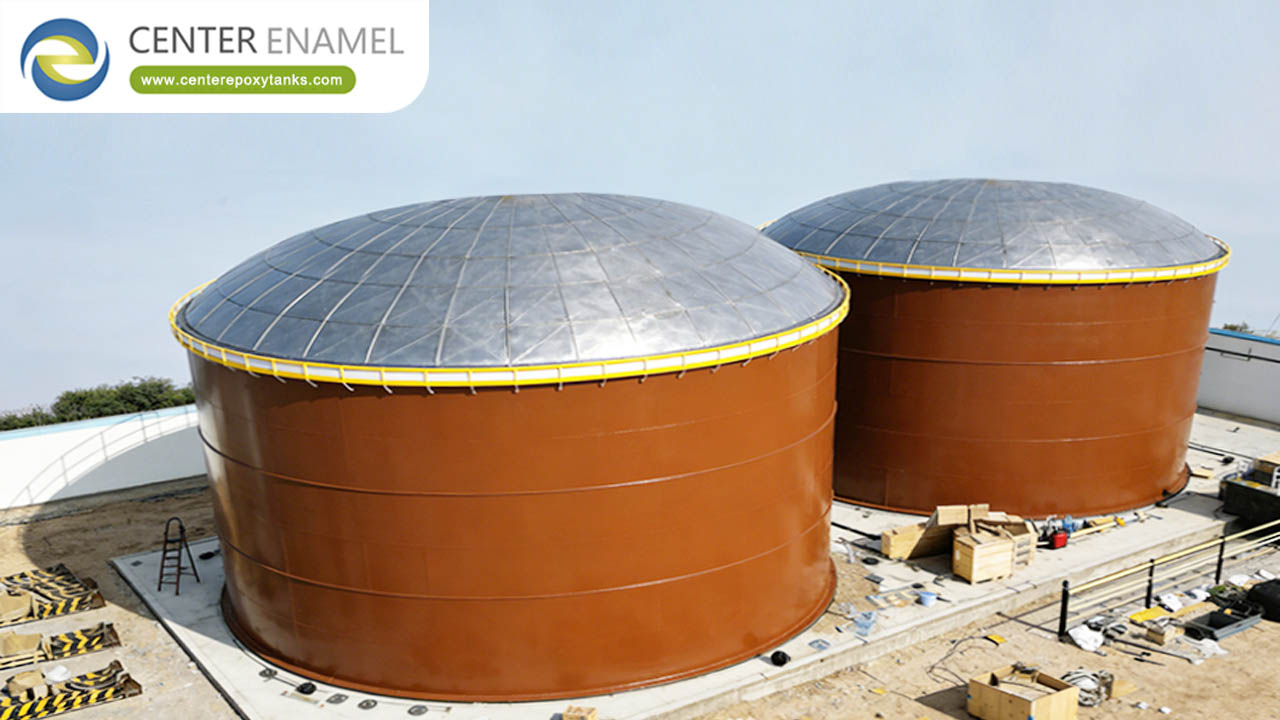
Aluminum Dome Tank Roof Supplier: How To Source The Cover
Buying a dome roof is not a catalog purchase. The buyer is procuring an engineered structure, fabricated to tolerance, delivered as modules and erected on a live tank — which means the sourcing process has to specify the outcome, qualify the supplier and control the schedule. Most cover procurement failures trace back to a specification that never said what it needed.
This article is the sourcing playbook: the specification package, the vendor qualification criteria, lead times, the QA documentation to require, and the landed cost factors that decide the real price.
Sourcing A Cover Is Buying An Outcome
The deliverable is not a pile of aluminum members; it is a verified cover on a specific tank, meeting a specific load set, with a documentation dossier. Every element of the sourcing process — specification, qualification, contract terms — exists to make that outcome contractual rather than hopeful.
The corollary is that the cheapest offer against a vague specification is usually the most expensive project. Sourcing discipline is cost control.
Building The Specification Package
The specification package states the outcome in engineering terms: the load set and the governing code, the tank interface conditions, the material and finish requirements, the access and penetration schedule, the erection constraints and the documentation required at handover.
It also states what the buyer will provide — the tank data, the site access, the schedule windows — because the offer is only as good as the inputs behind it.
Vendor Qualification Criteria
Qualification is an evidence exercise. The criteria below are verifiable, and a supplier who cannot produce the evidence for a criterion has answered the question.
Criterion | What To Verify | Evidence |
Fabrication capability | Member production under controlled conditions | Facility records, dimensional data |
Material certification | Alloy and temper traceability | Material certificates |
Engineering capability | Design against site load sets | Design samples, references |
Erection experience | Covered tank erection track record | Reference projects, crew records |
Documentation practice | Complete handover dossiers | Sample dossier from a past project |
Evaluating The Technical Offer
The technical evaluation reads the offer against the specification: load cases checked, member sections and connection capacities stated, the ring beam interface designed, the penetration schedule engineered and the erection methodology described. An offer that prices members without addressing the interface is not an offer for the specified scope.
The comparison between offers should be scope-normalized: same load set, same interface responsibility, same documentation, same erection scope. Only then is the price comparable.
Lead Times And Schedule Planning
Cover lead time runs through engineering, material procurement, fabrication, surface treatment, packaging and shipping — and the erection window sits after all of it. The schedule that matters is the erection window, because it has to fit the tank’s operating plan and the site’s access constraints.
The schedule risk to manage is the interface: where the tank is supplied separately, the tank readiness date governs the cover erection, and the two schedules have to be reconciled before order placement.
Stage | Schedule Driver | Buyer Action |
Engineering | Load data and interface information | Provide tank data early |
Material procurement | Alloy availability and certification | Confirm grades at order |
Fabrication and coating | Shop capacity, batch processing | Agree the inspection points |
Packaging and shipping | Route constraints, module sizes | Share the route survey |
Erection | Tank readiness, access window | Fix the erection window |
Quality Assurance Documentation
The documentation set is part of the purchase, and it should be specified item by item: material certificates, fabrication dimensional records, coating records where applicable, erection bolt torque logs, the as-built survey and the operation and maintenance regime.
The dossier is what makes the asset defensible later — at inspection, at modification and at warranty discussion. It cannot be reconstructed after the fact, which is why it is contracted at order.
Landed Cost Factors
Landed cost is the module price plus freight, plus duties, plus erection, plus the interface works, plus any rework. The comparison that matters is landed cost against a normalized scope — module price alone is marketing, not procurement.
The factors most often missed: freight driven by module dimensions, erection crew mobilization, the interface works the tank owner provides, and the schedule cost of an erection window that slips.
Erection: Who Owns The Site
The erection scope has to be assigned explicitly: who provides access, laydown and lifting equipment, who holds the site safety responsibilities, and who directs the sequence. Where the supplier provides the crews, the contract says so; where the buyer’s contractor erects, the supplier provides supervision and the method statement.
The failure mode is the gap: a structure delivered without an erection methodology, erected by a crew that was not trained on the connection details. The torque log is where that gap shows up.
Warranty And After-Sales Structure
The warranty structure follows the evidence chain: material and fabrication warranty from the supplier, coating warranty where applicable, and an after-sales channel for inspection questions, spare members and seal renewal. The structure is defined at contract, not discovered at failure.
The practical test is the dossier: a warranty without documentation behind it is difficult to enforce, and the supplier who insists on the dossier is the supplier who expects to honor it.
Red Flags In A Dome Supply Offer
The recurring red flags: a price with no load set referenced, no interface design, no documentation list, no erection methodology, and member sections quoted without the connection design. Each of those is a scope gap that reappears as a variation order.
The antidote is the specification package: state the outcome, require the evidence, normalize the comparison. Sourcing discipline is the cheapest engineering on the project.
Center Enamel Direct Manufacturer Supply
Center Enamel supplies dome roofs direct from the manufacturer: engineering against your load set, certified material, controlled fabrication, route-designed packaging, erection crews or supervised erection, and the documentation package contracted at order. Where the tank is ours as well, the interface is engineered rather than negotiated.
For cover procurement, the outcome we sell is a verified structure with a defensible dossier — and the sourcing process above is how we expect to be evaluated.
About Company
Shijiazhuang Zhengzhong Technology Co.,Ltd(Center Enamel) is a professional manufacturer dedicated to the design and fabrication of bolted storage tanks since 2008. Our products range includes Glass-Fused-to-Steel (GFS) tanks, fusion bonded epoxy tanks, stainless steel tanks, galvanized steel tanks and aluminum geodesic dome roofs. With professional enameling R&D team and nearly 200 enameling patents, Shijiazhuang Zhengzhong Technology Co.,Ltd has become the leader in bolted tanks industry of Asia. Our products are certified to ISO9001, NSF61, EN1090, ISO28765, WRAS ,FM, LFGB, BSCI, IS0 45001 and other international standards.
Shijiazhuang Zhengzhong Technology Co., Ltd is not only the first manufacturer in China which produces Glass-Fused-to-Steel tanks, but also the most experienced professional bolted tanks manufacturer in Asia.The engineering & design, product testing and quality system of Center Enamel Glass-Fused-to-Steel tanks is in strict accordance with AWWA D103-09, OSHA, ISO 28765, NSF/ANSI 61, NFPA and other international standards. Until 2023, Center Enamel bolted tanks have been exported to more than 100 countries including USA, Australia,Canada, Malaysia, Indonesia, Russia, UAE, Panama,Brazil and South Africa etc., the superior tank quality and prompt service gains us worldwide recognition.
As an outstanding containment and cover system provider with decades of industry experience, Shijiazhuang Zhengzhong Technology Co., Ltd sincerely expects to establish long-term cooperation with the local partners throughout the world and make continuous contribution to the development of the industry.
Suggested CTA
Center Enamel delivers aluminum dome engineered for tank roof procurement duty, with direct manufacturer supply, documentation and certification packages. Contact our engineering team for manufacturer capability and quotation on your next aluminum dome tank roof supplier project — including sizing, standards compliance and delivery scheduling.
Frequently Asked Questions
Q: What should a dome roof specification package contain?
A: The load set and governing code, tank interface conditions, material and finish requirements, the access and penetration schedule, erection constraints and the documentation required at handover — plus what the buyer will provide.
Q: How should a dome supplier be qualified?
A: On evidence: fabrication capability and dimensional records, material certification traceability, engineering capability against site load sets, erection experience with references, and a sample handover dossier from a past project.
Q: What drives dome roof lead time?
A: Engineering, material procurement, fabrication and coating, packaging and shipping — and then the erection window, which has to fit the tank’s operating plan. Where the tank is supplied separately, tank readiness governs erection.
Q: What documentation should be contracted at order?
A: Material certificates, fabrication dimensional records, coating records where applicable, erection bolt torque logs, the as-built survey and the operation and maintenance regime — itemized in the purchase, not promised at handover.
Q: What is the difference between module price and landed cost?
A: Freight driven by module dimensions, duties, erection crew mobilization, the interface works the tank owner provides, and the schedule cost of a slipped erection window. Landed cost against a normalized scope is the comparable number.
Q: What are the red flags in a dome supply offer?
A: A price with no load set referenced, no interface design, no documentation list, no erection methodology, and member sections quoted without connection design. Each is a scope gap that reappears as a variation order.


