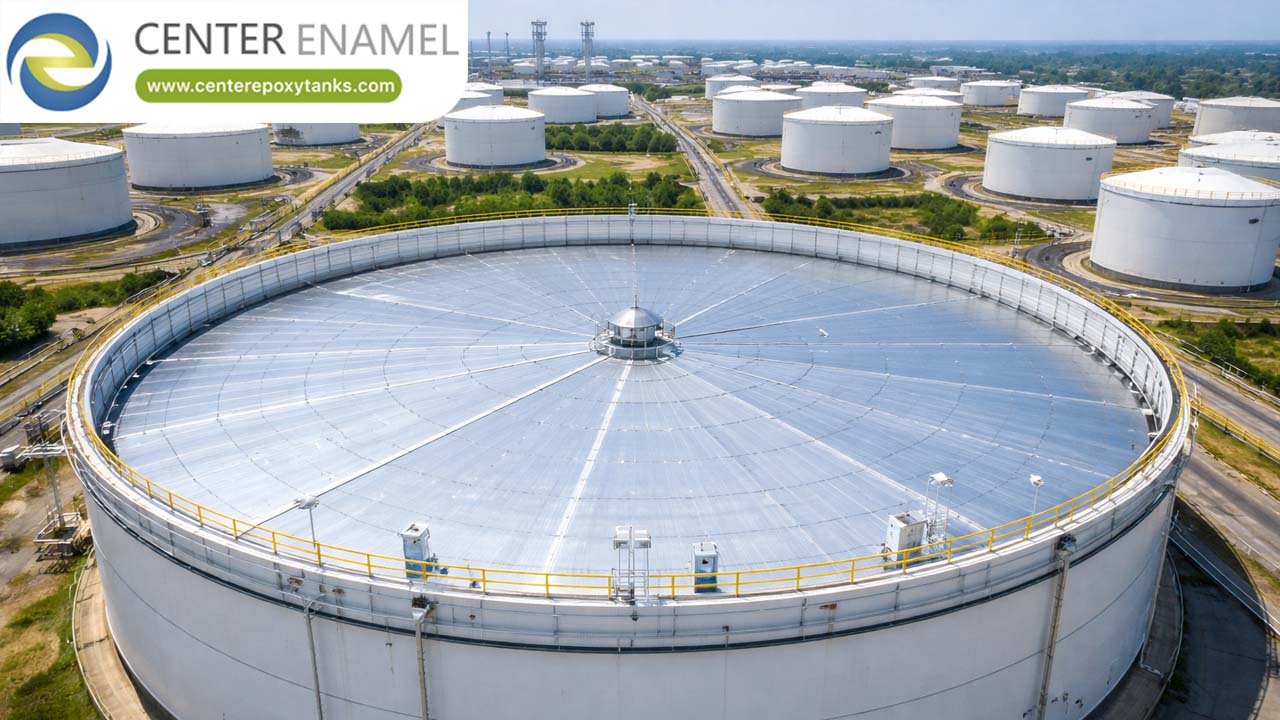
Aluminum Floating Roofs for Slop Oil Tanks - Surviving the Nastiest Stream on Site
Slop oil is the stream nobody designed for. It is whatever was recovered from drains, separators, tank bottoms and upsets - a shifting mixture of oil, water, solids, solvents and sometimes chemicals, arriving warm and unpredictable. It sits in the tank for long periods, separates slowly, and holds water against the underside of the deck. For a carbon steel floating roof that is close to a worst case.
Aluminium changes the material side of the problem. Engineered by Shijiazhuang Zhengzhong Technology Co., Ltd. (Center Enamel), an aluminium floating roof for slop oil service removes the corrosion mechanism that governs carbon steel deck life, and is supplied with the seal, drain and access arrangements that slop service specifically demands.
1. Why Is Slop Oil So Hard on a Floating Roof?
Because it combines water, chlorides, sulphides, solids and variable chemistry in one tank, held against the deck underside for long periods. Coatings fail, steel pits, and the deck's buoyancy compartments corrode from the inside.
· Water Bottom Contact: Free water sits under the deck and keeps the underside wet continuously.
· Chlorides and Sulphides: Recovered streams often carry both, which drive pitting and sulphide attack on carbon steel.
· Variable Chemistry: Slop composition changes with every upstream event, so a coating selected for one mixture may not suit the next.
· Solids and Abrasion: Settled solids abrade coatings and complicate deck landing and cleaning.
· Long Residence: Slop tanks sit, so any degradation mechanism has time to work.
2. Why Aluminium Rather Than Carbon Steel?
Aluminium does not rely on a coating for corrosion resistance, and it resists the wet, chloride- and sulphide-bearing environment far better than coated carbon steel. It is also light, which reduces the load on a shell that may already be ageing.
· No Coating to Fail: Corrosion resistance is inherent, so the dominant failure mode in slop service is removed.
· Chloride and Sulphide Tolerance: Appropriate aluminium alloys perform well in the wet, contaminated environment a slop tank presents.
· Low Weight: A lighter deck reduces load on the shell and can defer strengthening on retrofit work.
· Longer Intervals Between Repairs: Less corrosion means fewer unplanned entries into a tank that is unpleasant to open.
· Compatible Fittings: Fasteners, shunts and fittings are selected to avoid galvanic couples.
3. How Are Water Bottom and Emulsion Handled?
By separating and removing water routinely rather than letting it accumulate. The deck's landing height, the water draw-off and the tank's heating provision all have to be designed for slop service rather than for clean product.
· Water Draw-Off: A reliable draw-off at the lowest point lets free water be removed routinely.
· Heating Where Required: Heating helps break emulsions so water separates and can be drawn off.
· Landing Height: Deck legs are set above the expected sediment and sludge depth so the deck can land level.
· Emulsion Layer Management: The interfacial layer is monitored so it does not grow into the outlet or the deck.
· Cleaning Access: Manways and deck openings are sized for the cleaning a slop tank actually needs.
Evaluation Criterion | Aluminum Floating Roof | Coated Carbon Steel Roof |
Corrosion dependence | None - alloy | Entirely on coating |
Water bottom exposure | Tolerated | Pitting once coating is breached |
Chloride and sulphide tolerance | Good | Poor to moderate |
Deck weight | Low | Higher |
Interval between repairs | Long | Short in slop service |
Engineering Assurance and Project Support
Every welded oil tank delivered by Shijiazhuang Zhengzhong Technology Co., Ltd. (Center Enamel) is designed to API 650 with shell courses sized by the one-foot method and checked for wind, seismic and hydrostatic load cases, or to EN 14015 and the Eurocodes where the site is European. Shell plate is shot-blasted to Sa 2.5 and coated to a documented dry film thickness, longitudinal and annular plate welds are examined by radiography or ultrasonic testing to the acceptance level written into the purchase order, and every tank is hydrostatically tested and dimensionally surveyed before hand-over. Slop oil decks are supplied with alloy selection matched to the stream, compatible seals and gaskets, water draw-off, heating where specified, and an inspection schedule built around the reality of opening a slop tank.
Frequently Asked Questions (FAQ)
Why does slop oil damage floating roofs so quickly?
Because it holds water, chlorides, sulphides and solids against the deck underside for long periods, and its composition changes with every upstream event. A coating selected for one mixture may not suit the next, and once it is breached, carbon steel pits in exactly the place that is hardest to inspect and repair.
Is aluminium really better than coated carbon steel here?
Yes, for corrosion behaviour. Aluminium does not depend on a coating, so the dominant failure mode in slop service is removed rather than managed. Appropriate alloys tolerate the wet, chloride- and sulphide-bearing environment well, and the lower deck weight also reduces shell loading. Fasteners and fittings are selected to avoid galvanic couples.
How is the water and emulsion layer managed?
By removing water routinely through a draw-off at the lowest point, assisted by heating where the specification calls for it to break emulsions. The interfacial layer is monitored so it does not grow into the outlet or the deck, and the deck's landing height is set above the expected sludge depth.
Can the deck be customised for our slop tank?
Yes. Alloy and section, deck type and buoyancy, seal and gasket material, drain type, landing height, water draw-off, heating provision, fittings, grounding and access are all engineered to your tank, your slop stream characteristics and your site conditions.


