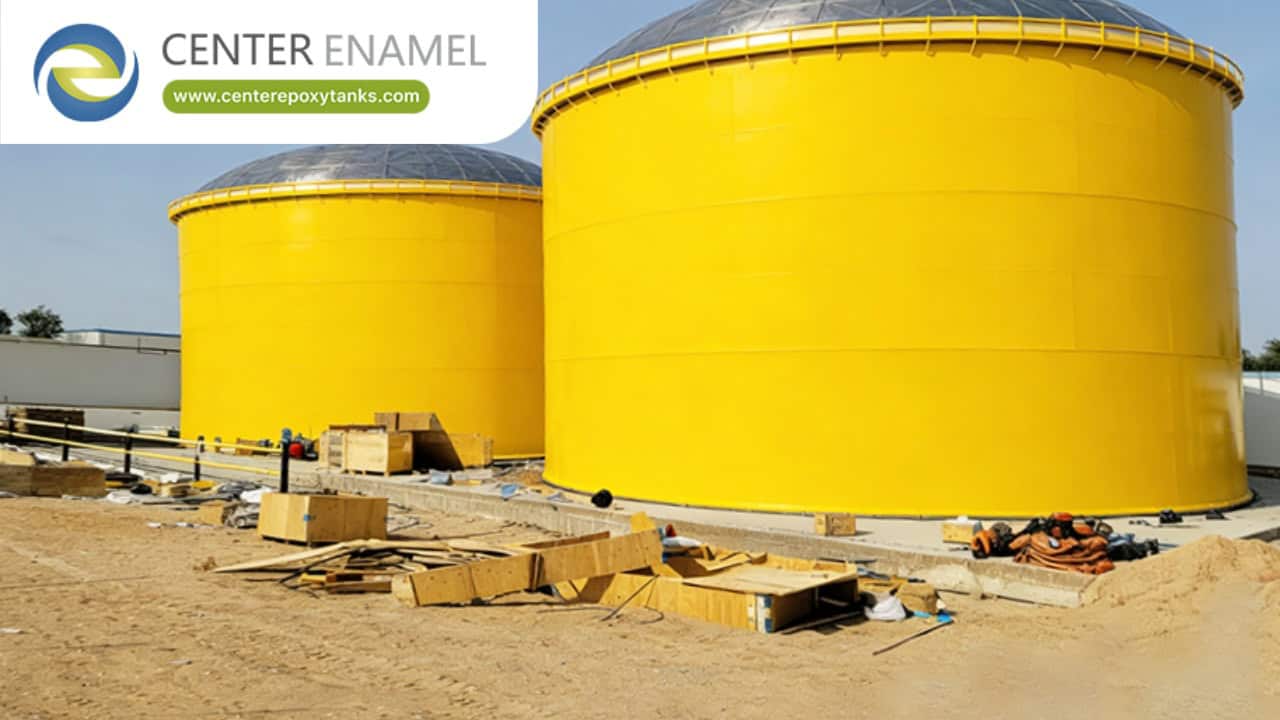
Aluminum Dome Roofs with High Wind Resistance: Engineering & Safety Guide
In regions prone to typhoons, hurricanes, and cyclonic events, the structural integrity of storage tank infrastructure is a critical vulnerability. Traditional tank roofs often fail due to uplift forces and inadequate fastener density during extreme wind events. High-wind resistant aluminum geodesic domes solve this by combining a low-profile aerodynamic shape with high-strength structural geometry. This guide details the engineering principles and vetting criteria required to specify dome roofs capable of withstanding extreme meteorological conditions.
1. Aerodynamics: Why Domes Deflect Wind
The fundamental advantage of a geodesic dome over a flat or cone roof is its aerodynamic coefficient. When wind hits a flat surface or a vertical cylinder, it creates significant drag and localized pressure differentials that can rip roof plates from their anchors.
A geodesic dome, by contrast, presents a curved surface that forces airflow to accelerate smoothly over the top, significantly reducing the "uplift" or "suction" force compared to traditional roofs.
Calculating the Wind Load
Engineers design these structures based on the velocity pressure of the wind, calculated using the standard Bernoulli-derived equation:
In high-wind zones, manufacturers utilize Finite Element Analysis (FEA) to ensure that the values are optimized, and the frame density is increased in zones where wind pressure concentrations are highest.
2. Critical High-Wind Design Features
To classify a dome as "high-wind resistant," standard assembly methods are insufficient. Procurement must specify these hardened structural features:
● Increased Fastener Density: Standard domes utilize a set number of structural bolts. High-wind variants specify dual-fastener or reinforced-node assemblies to prevent "pull-through" failures of the aluminum panels.
● Heavy-Duty Hub/Strut Connections: Connection nodes are the "joints" of the dome. In high-wind zones, these nodes are often reinforced with thicker gauge aluminum plate or stainless steel inserts to increase the moment-resisting capacity of the structure.
● Perimeter Ring Beam Anchoring: The connection between the dome and the tank shell is the most critical failure point during hurricanes. High-wind domes use an expanded, heavy-duty tension ring beam that is more securely anchored to the tank shell compared to standard designs.
● Flush-Batten Sealing: In extreme weather, wind-driven rain can penetrate standard seals. Flush-batten sealing systems—which compress the gasket against the dome panel—are essential to prevent seal blowout.
3. Comparative Structural Performance
Feature | Standard Geodesic Dome | High-Wind Geodesic Dome | Traditional Steel Cone Roof |
Wind Rating | Moderate (Standard Codes) | Extreme (Category 4/5+) | Low (Susceptible to uplift) |
Structural Geometry | Standard Triangular | Reinforced Node Density | N/A (Column supported) |
Aero-Shape | Efficient | Aerodynamically Optimized | Poor (High Drag) |
Fastener Load | Standard | High-Shear Load | Low (Edge-welded) |
4. Procurement & Vetting Checklist
When sourcing for regions with high-wind profiles, verify these items to ensure the asset meets your safety requirements:
1. Code Compliance: Ensure the design meets ASCE 7 (or local equivalent, such as IBC or Eurocode 1) for specific wind speeds (e.g., 250+ km/h).
2. Structural Calculations: Demand a stamped calculation package that specifically identifies the "Design Wind Speed" and the corresponding "Internal/External Pressure Coefficients."
3. Third-Party Review: High-wind structures are "critical assets." Require a third-party structural review of the dome’s FEA model to confirm the node and strut stress analysis.
4. Material Mill Test Reports (MTRs): Ensure all aluminum extrusions are from high-strength 6061-T6 or 6063-T6 alloys. Substitutions with lower-grade aluminum significantly compromise shear strength in high-wind scenarios.
Frequently Asked Questions (FAQ)
Q: Does a high-wind dome make the tank itself more stable?
A: Yes. Aluminum domes are significantly lighter than steel roofs. In high-wind scenarios, a lighter roof creates less overturning moment (leverage) on the tank foundation, effectively increasing the overall stability of the tank system.
Q: Can I retrofit a high-wind dome onto an old tank?
A: Yes, but the tank shell must be verified to handle the potential shear loads of the new dome connection. Often, an external "stiffening ring" is added to the top of the tank shell to ensure it can anchor the high-wind dome properly.
Q: How are fasteners protected from salt-air corrosion in coastal wind zones?
A: High-wind domes intended for coastal regions should specify 316-grade stainless steel fasteners with isolator gaskets. This prevents galvanic corrosion, which weakens fasteners over time—a dangerous combination when combined with high-wind stress.
Are you currently retrofitting an existing facility located in an extreme weather zone, or are you in the design phase for a new storage project requiring high-wind hardening?


