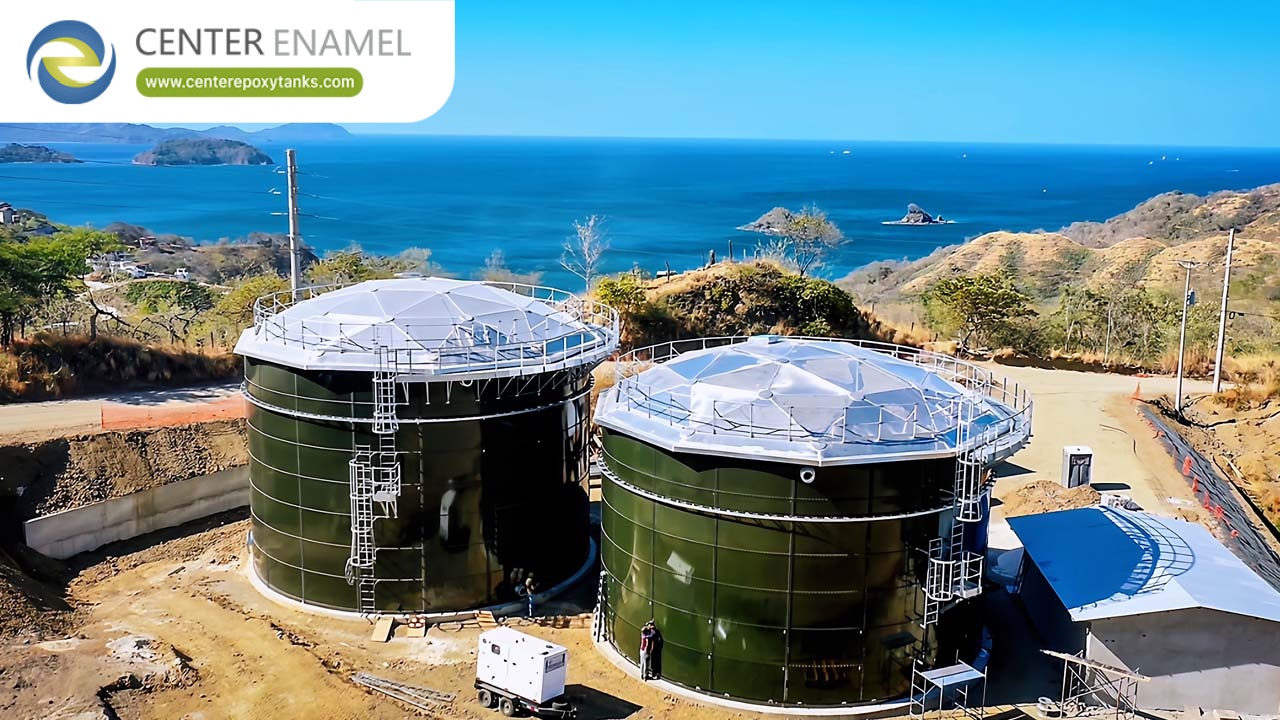
Aluminum Dome Roofs: Reliable Covering Solutions for Potable Water and Wastewater Storage Tanks
In municipal and industrial water management, the infrastructure protecting liquid assets is just as critical as the storage tanks themselves. Whether safeguarding public drinking water reserves against environmental contamination or containing corrosive gases and odors within municipal wastewater treatment facilities, storage tank covers must deliver absolute reliability.
Traditional roofing alternatives—such as painted carbon steel plates prone to rapid oxidation or flat concrete decks susceptible to micro-cracking and joint seepage—frequently incur heavy maintenance overheads. To establish long-term asset security, aluminum dome roofs have emerged as the definitive global standard for covering both potable water reservoirs and wastewater processing tanks.
The Engineering Superiority of Geodesic Aluminum Domes
Aluminum geodesic domes are engineered using a specialized three-dimensional space truss configuration composed of lightweight, high-strength aluminum alloy panels connected along precise geodesic lines. This advanced geometry offers unique advantages for water and wastewater applications:
Clear-Span Architecture: Unlike conventional tank roofs that require internal support columns, pillars, or rafter beams, aluminum domes are entirely self-supporting from the perimeter tension ring. In potable water tanks, this eliminates internal structures that serve as breeding grounds for biofilms and sediment. In wastewater tanks, clear spans optimize the movement of internal bridge scrapers and mixing equipment.
Inherent Corrosion Resistance: Fabricated from marine-grade aluminum alloys (typically 5000 and 6000 series), these domes develop a natural, protective aluminum oxide layer. They remain entirely immune to rust, eliminating the need for periodic abrasive blasting and recoating.
Hermetic Environmental Sealing: Equipped with advanced batten bar clamping systems and specialized elastomeric gaskets, aluminum domes provide an airtight seal that prevents external rainwater infiltration, bird droppings, dust, and insects from entering potable supplies. In wastewater applications, this airtight integrity is vital for capturing volatile organic compounds (VOCs) and hydrogen sulfide (H2S) gases for safe odor control or biofiltration.
Technical Performance Matrix: Storage Tank Cover Solutions
Technical Parameter | Aluminum Geodesic Dome Roofs | Welded Carbon Steel Conical Roofs | Cast-in-Place Concrete Flat Slabs |
Corrosion Defense & Lifespan | Exceptional; marine-grade aluminum requires zero repainting; 40+ year lifecycle | High vulnerability to rust flaking, pitting, and coating breakdown requiring frequent upkeep | Moderate; prone to carbonation, reinforcing steel oxidation, and chemical leaching |
Internal Support Structure | 100% clear-span; zero internal columns or support trusses required | Often requires internal rafter beams and center support columns for large diameters | Requires heavy internal support pillars and shoring formwork during construction |
Performance in Wastewater Environments | Highly resistant to moisture and corrosive sewer gases (H2S$) | Rapid internal sulfur degradation and weld corrosion without aggressive lining | Subject to biogenic sulfuric acid attack and structural spalling |
Design & Regulatory Standards | Compliant with rigorous global codes (AWWA D108, API 650 Annex G, ADM2015) | Governed by general steel design codes with variable field quality | Governed by local civil masonry and structural concrete standards |
Dual Application Resilience: Potable Water vs. Wastewater
Potable Water Reservoirs
For municipal drinking water, aluminum dome roofs ensure absolute water purity. The opaque aluminum structure completely blocks ultraviolet (UV) radiation, stopping algae growth in its tracks. Furthermore, the high solar reflectivity of aluminum minimizes internal heat gain, helping maintain stable water temperatures and preserving chlorine or disinfectant residuals.
Wastewater Treatment Facilities
In wastewater plants—including equalization basins, clarifiers, sludge holding tanks, and anaerobic digestors—aluminum domes act as robust containment shields. Their exceptional resistance to moisture and hydrogen sulfide prevents structural degradation, while integrated vapor extraction connections allow plant operators to capture foul odors and route them efficiently to scrubber systems.
Frequently Asked Questions (FAQ)
Q: Why are aluminum dome roofs preferred for both potable water and wastewater storage tanks?
A: Aluminum domes provide a clear-span structure, complete corrosion resistance without painting, and an airtight seal. For potable water, they prevent contamination and algal growth; for wastewater, they contain corrosive gases and control foul odors.
Q: Do aluminum dome roofs comply with recognized municipal engineering standards?
A: Yes. High-quality aluminum dome roofs are engineered and fabricated in strict accordance with AWWA D108 (the definitive standard for aluminum dome roofs in water and wastewater facilities), alongside API 650 Annex G, ADM2015, and ASCE 7-10 codes.
Q: How do aluminum domes handle aggressive wastewater gases like hydrogen sulfide (H2S)?
A: Marine-grade aluminum alloys naturally resist chemical attack from moisture and typical sewage gases. Unlike carbon steel, which suffers rapid pitting and weld decay in sewer environments, aluminum maintains its structural integrity over decades of exposure.
Q: Can an aluminum dome roof be retrofitted onto existing concrete or steel tanks?
A: Absolutely. Due to their lightweight modular construction, aluminum domes are frequently installed over existing concrete reservoirs and steel tanks. They can be assembled on-site or prefabricated and lifted into place using specialized anchor and tension ring assemblies, minimizing plant downtime.


