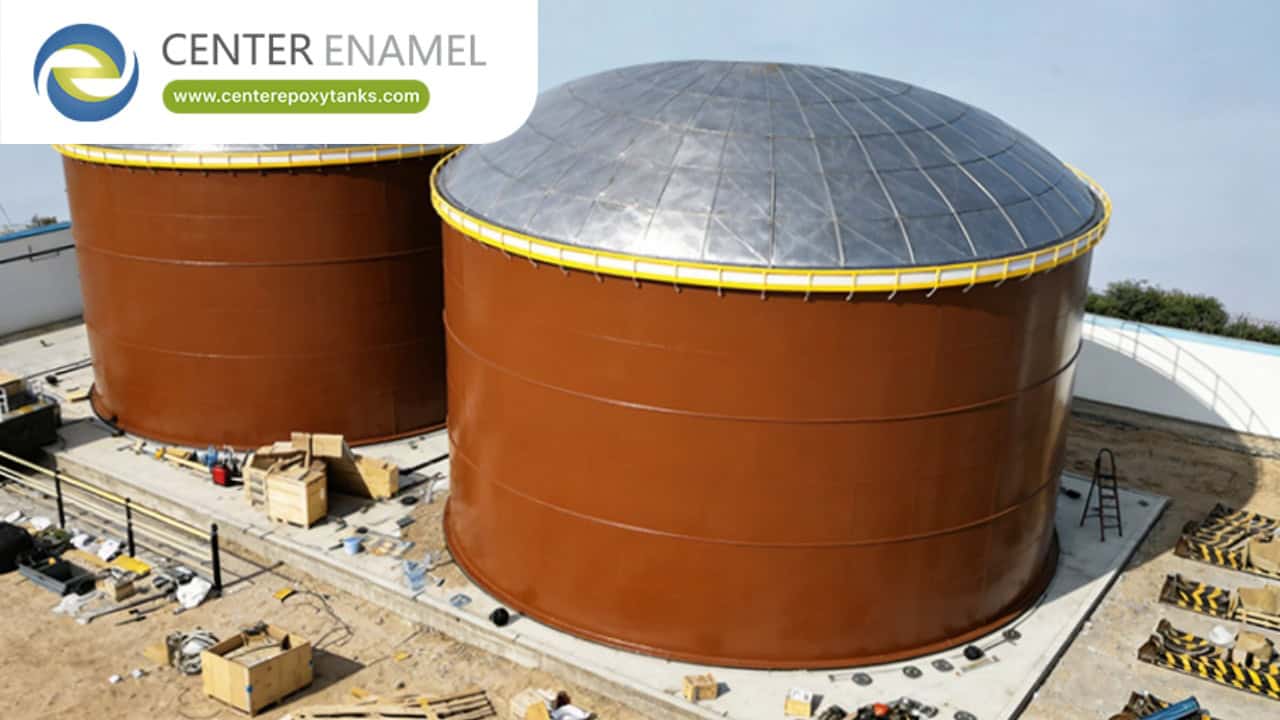
Aluminum Dome Roofs for Cooking Oil Storage Tanks - Clear-Span Cover for Edible Oil
Edible oil is one of the few stored liquids that can be spoiled by the roof over it. A carbon steel cone roof over warm oil builds condensation on its underside, and that condensate drips back into the product as free water - the single fastest route to hydrolysis, rising free fatty acid and off-spec oil. Add internal support columns, and every column becomes a crevice that rusts, sheds scale into the oil, and blocks the cleaning head. Add a painted roof, and within a decade the coating starts flaking into the product stream. Most edible-oil terminals discover this at the worst possible time: during a quality audit, when peroxide values and sediment counts no longer match the specification on the label.
To remove the roof as a contamination source, modern edible-oil terminals replace columned cone roofs with self-supporting aluminum geodesic domes. Engineered by Shijiazhuang Zhengzhong Technology Co., Ltd. (Center Enamel), these clear-span structures carry their own load to the shell compression ring with no internal columns, cannot rust because the structure is aluminium alloy, and need no repainting across a service life measured in decades. The result is a roof that protects the oil instead of threatening it.
1. Why Does a Cooking Oil Tank Need a Column-Free Roof?
A column-free roof removes the three contamination mechanisms that a conventional carbon steel cone roof introduces: condensation drip, corrosion debris from internal columns, and coating flakes. It also opens the full tank floor for cleaning, inspection and product recovery.
· Condensation Control: Aluminium's low emissivity and the dome's smooth inner skin reduce radiative heat loss and cut under-roof condensation, so free water stops entering the product.
· No Corrosion Debris: Aluminium alloy extrusion does not rust, so there is no scale or oxide shedding into food-grade oil from the roof structure or its supports.
· Unobstructed Interior: Without columns, a rotating cleaning head can coverage-spray the whole shell wall and floor, and an inspector can see every square metre of the interior.
· Full Working Volume: Clear-span geometry means the tank can be filled to its design level without the freeboard reserve that columned roofs need for inspection access.
· Hygienic Detailing: Gasketed panel joints are sealed against dust and insects, which matters for HACCP and food-safety audits at edible-oil terminals.
2. How Is an Aluminum Geodesic Dome Engineered and Erected?
The dome is a triangulated space frame of aluminium extrusions bolted through cast or machined nodes, pre-cut and pre-drilled in the factory, then assembled on the ground and lifted onto the tank, or built in place on a temporary centre ring. Design follows API 650 Appendix G for aluminium domes on steel tanks, with wind, snow, seismic and maintenance loads taken from the site data.
· Factory-Prepared Members: Every strut is cut, drilled and identified in the workshop so site work is assembly rather than fabrication - no hot work over open product.
· Sealed Joint System: Extruded gaskets in the panel grooves create a weather-tight, dust-tight skin that also accommodates thermal movement of the aluminium.
· Load Path Verification: Shell compression ring, rafters and node connections are checked by finite element analysis before any member is released for manufacture.
· Corrosion-Free Ancillaries: Fasteners, access hatches, vents and gauging platforms are supplied in compatible alloy or stainless steel to avoid galvanic couples.
· Ground or In-Situ Assembly: Small domes are fully assembled at grade and lifted; large spans are built in place on the tank using the dome's own geometry as the reference.
3. What Should a Buyer Specify Before Ordering a Dome?
Specify the design code, the site load cases, the alloy and temper, the sealing class, and the penetration schedule - in that order. Most field problems trace back to a purchase order that fixed the diameter but left the loads, the nozzles and the inspection access undefined.
· Design Code: State API 650 Appendix G, and add local wind, snow and seismic values rather than letting the supplier assume them.
· Alloy and Temper: Confirm the extrusion alloy and temper in writing; it governs strength, weldability of attachments and long-term corrosion behaviour.
· Shell Compatibility: Verify the existing tank can accept the dome's thrust - the compression ring and shell course often need strengthening on retrofit projects.
· Penetration Schedule: Fix every nozzle, vent, manway, gauge hatch and light fitting before fabrication; field-cutting a triangulated frame is not an option.
· Access and Fall Protection: Specify walkways, handrails and tie-off points compliant with OSHA or EN standards, since a smooth dome is otherwise hard to work on safely.
Evaluation Criterion | Aluminum Geodesic Dome | Carbon Steel Cone Roof |
Internal columns | None - clear span | Required above about 15 m diameter |
Roof corrosion | Aluminium does not rust | Carbon steel rusts; needs repainting |
Condensation drip | Low - smooth sealed skin | High on uninsulated steel |
Maintenance | Periodic joint and seal inspection | Blasting and recoating every 10-15 years |
Typical service life | 30 years or more | 20-30 years with coating upkeep |
Engineering Assurance and Project Support
Every welded oil tank delivered by Shijiazhuang Zhengzhong Technology Co., Ltd. (Center Enamel) is designed to API 650 with shell courses sized by the one-foot method and checked for wind, seismic and hydrostatic load cases, or to EN 14015 and the Eurocodes where the site is European. Shell plate is shot-blasted to Sa 2.5 and coated to a documented dry film thickness, longitudinal and annular plate welds are examined by radiography or ultrasonic testing to the acceptance level written into the purchase order, and every tank is hydrostatically tested and dimensionally surveyed before hand-over. For edible-oil service we add food-compatible gasket material, stainless or aluminium ancillaries, and a condensation review of the tank's operating temperature range before the dome geometry is frozen.
Frequently Asked Questions (FAQ)
Can an aluminum dome be installed on an existing cooking oil tank?
Yes. The existing shell is surveyed, the compression ring is checked or strengthened for the dome's thrust, and the old roof is removed or left in place as a working platform. Because the dome members arrive factory-cut and drilled, the retrofit is assembly work with no hot work over the product - provided the tank is cleaned, gas-freed and ventilated first.
Does an aluminum dome need painting or coating?
No. Aluminium forms a stable oxide film that protects the structure, so the dome is supplied mill finish or anodised and never needs blast-and-recoat. Routine maintenance is limited to inspecting joint gaskets, fastener torque and sealant condition at the intervals in the O and M manual.
How large a span can an aluminum geodesic dome cover?
Aluminium geodesic domes routinely clear-span the full diameter of the largest storage tanks, well beyond the practical limit of a self-supported steel cone roof. The real constraint is not the span but the ability of the existing shell to carry the dome's horizontal thrust at the compression ring.
Can the dome be customised for our tank and product?
Yes. Diameter, rise, panel thickness, alloy, gasket material, insulation, access hatches, vents, gauging platforms, walkways, handrails and light fittings are all engineered to the tank dimensions, the product's temperature range and the site's wind, snow and seismic loads.


