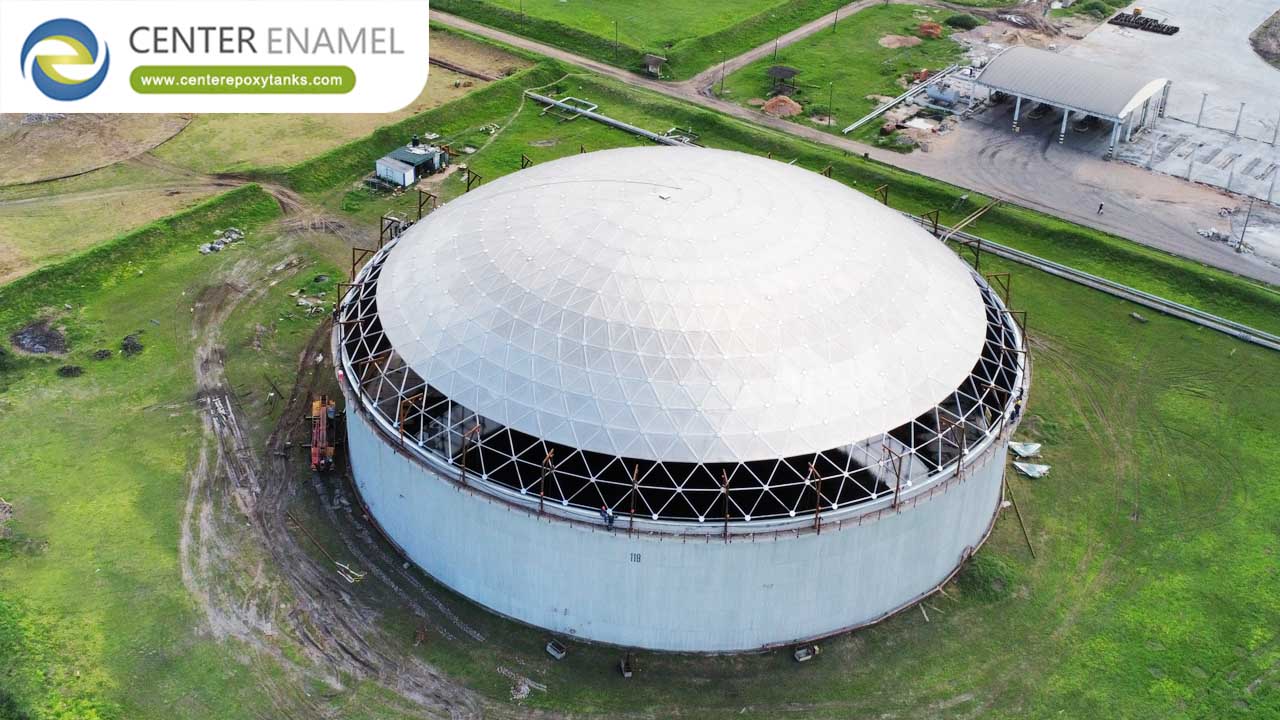
Aluminum Dome Roofs For African Agricultural Water Projects: Resilience And Water Security
African agriculture runs on water that arrives in a season and is needed outside it. Storage closes that gap — but only stored water counts, and open storage in hot, windy climates loses a large share of what it holds. Covering the storage is therefore not a refinement; it is the intervention that turns a reservoir into reliable production capacity.
This article covers aluminum covers for African agricultural water projects: the storage gap, the evaporation case, cover options, the logistics of remote sites, and the resilience and maintenance simplicity that decide whether the asset still performs a decade on.
Water Security As An Agricultural Input
Reliable water is an agricultural input in the same sense as seed and fertilizer: yields respond to irrigation reliability, and unreliability is priced into every planting decision. Covered storage shifts water from the wet season to the dry one, and that shift is what allows intensification — a second crop, a horticultural block, a dairy or livestock component.
The economic case for covering is therefore agricultural output, not engineering elegance. A farmer or a cooperative evaluating a cover is evaluating cropping options that open storage cannot support.
The Storage Gap In African Agriculture
The gap is rarely a single large reservoir. It is a distributed network: farm reservoirs, community tanks, irrigation balancing storage and livestock watering points, each sized to its command area. The covering solution has to work across that range — from a modest community tank to a multi-tank municipal-scale installation.
The distributed profile also shapes procurement: repeated standardized units rather than one-off bespoke structures, because the second and third units have to be deliverable on the same terms as the first.
Evaporation: The Quantified Loss
Evaporation from open water is driven by temperature, wind, humidity and solar radiation — and in hot, dry, windy climates it removes a large fraction of stored volume over a season. The loss is invisible, continuous and entirely preventable by sealing the surface.
Covering is therefore the highest-return single intervention on open storage: the water saved is water that would otherwise have been pumped, diverted or simply lost.
Configuration | Evaporation Loss | Engineering Note |
Open tank or pond | Highest — free surface, wind-driven | Baseline case; loss scales with wind and temperature |
Flat cover | Near zero — sealed surface | Simplest sealed configuration; drainage and access designed in |
Aluminum dome cover | Near zero — sealed surface | Adds clear-span volume and rain shedding |
Floating cover | Near zero — product contact | Used where cover contact with water is acceptable |
Cover Options For Agricultural Tanks
The cover decision runs between flat aluminum roofs and aluminum domes, with the choice driven by span, volume economics and site preference. Flat roofs are the economical sealed surface; domes add clear-span internal volume, shed rain without ponding, and suit larger diameters where the geometry pays for itself.
Both options share the properties that matter on agricultural sites: bolted erection, no hot work, and a sealed surface that keeps out dust, debris and animals while stopping evaporation.
Cover Option | Structural Behavior | Site Fit |
Flat aluminum roof | Economical sealed surface | Small to medium tanks |
Aluminum dome | Clear span plus volume gain | Larger diameters, municipal scale |
Bolted panel system | Modular erection, no hot work | Remote sites, local crews |
Supported roof | Needs internal columns | Rarely preferred on water storage |
Logistics To Remote Sites
Remote delivery is the constraint that decides the schedule. Modules have to reach sites with limited road capacity, and the plan covers route survey, transport windows, laydown area and — frequently — the last kilometer that heavy transport cannot manage. Packaging is designed for the route and for handling by the equipment actually available.
The alternative is field fabrication, which trades logistics for on-site work: welding crews, power supply and coating repair on site. For most agricultural scales, packaged bolted modules beat field fabrication on schedule and on coating quality.
Erection With Local Resources
Bolted aluminum erection is well matched to erection with local resources and supervision: connections are bolted rather than welded, assembly follows a defined sequence, and the crew skill required is assembly discipline rather than certified welding. Training and method statements do the work that specialized labor does elsewhere.
The practical benefit is that the erection team can be drawn from the region, with the manufacturer’s supervisors directing the critical stages — a model that keeps skills on site after the project closes.
Resilience: Designing For Harsh Service
Harsh service means dust storms, high diurnal temperature range, intense sun and — in many regions — long dry spells punctuated by intense storms. The cover design responds with dust-shedding detailing, thermal movement allowance, drainage sized for the storm event rather than the average, and access that survives the climate.
Resilience is also a spares and repair question: bolted panels and replaceable seals mean a damaged element is replaced rather than re-fabricated, and the repair is a planned activity.
Maintenance Simplicity As A Design Goal
Maintenance on a remote agricultural site has to be simple enough to be done by the people who are there. That means few inspection points, obvious condition indicators, no specialized equipment for routine checks and seals and fasteners that can be renewed without dismantling the structure.
Where maintenance simplicity is a design goal rather than an afterthought, the cover still performs in year ten — and the projects that skip it learn what deferred maintenance costs when the seal has already failed.
Community And Institutional Context
Agricultural water storage sits inside a community and an institutional frame: water user associations, cooperative management, and in many cases a public agency in the background. The cover that succeeds technically but fails institutionally — unaffordable to maintain, unowned by anyone — is a common failure mode.
The procurement model matters as much as the engineering: standardized units with a defined maintenance regime and an identified responsible party, whether that is a cooperative, a water users association or a municipal department.
Climate Adaptation And Drought Buffering
Climate variability raises the value of storage and the value of covering it together: the storage volume has to be sized for the drought the records show, and the cover has to hold that volume against the evaporation that would otherwise consume it. The two decisions belong in the same conversation.
Covered storage is, in effect, drought insurance with an engineering invoice — and the cover is what makes the insurance pay out.
Center Enamel African Project Delivery
Center Enamel delivers covered water storage across African projects, including multi-tank installations with combined tank-and-roof scope. Our aluminum flat roof and dome systems are engineered for the logistics realities of remote sites: packaged bolted modules, no hot work erection and a maintenance regime simple enough for local teams to own.
For agricultural water security, the standard we hold is the one the climate demands: sealed surfaces, designed thermal movement, drainage for the storm event, and access that survives the site.
Project Case Study
A Kenyan potable water project required storage capacity engineered for the service conditions of the region. Center Enamel supplied two glass-fused-to-steel bolted tanks at 27.52 m diameter by 7.2 m height each, totaling 8,560 m3, with the tank and roof supplied as one package and an aluminum flat roof configuration for the covered duty.
The two-tank configuration matched the project’s storage and operational strategy: parallel units allow one tank to be taken out of service for inspection or cleaning while the other holds supply. The combined tank-and-roof scope kept the interface engineering under single accountability. The project was delivered and completed in January 2022.
Project Reference | 01 Kenya Drinking Water 202201 |
Location | Kenya |
Application | Potable Water |
Product / Technology | Glass-Fused-to-Steel (GFS) Bolted Tank |
Tank Count | 2 |
Tank Dimensions | φ27.52*7.2m(H), 2 units |
Total Volume | 8560 m3 |
Completion | Delivered and completed 2022-01 |
Supply Scope Note | A relevance grade to this topic |
About Company
Shijiazhuang Zhengzhong Technology Co.,Ltd(Center Enamel) is a professional manufacturer dedicated to the design and fabrication of bolted storage tanks since 2008. Our products range includes Glass-Fused-to-Steel (GFS) tanks, fusion bonded epoxy tanks, stainless steel tanks, galvanized steel tanks and aluminum geodesic dome roofs. With professional enameling R&D team and nearly 200 enameling patents, Shijiazhuang Zhengzhong Technology Co.,Ltd has become the leader in bolted tanks industry of Asia. Our products are certified to ISO9001, NSF61, EN1090, ISO28765, WRAS ,FM, LFGB, BSCI, IS0 45001 and other international standards.
Shijiazhuang Zhengzhong Technology Co., Ltd is not only the first manufacturer in China which produces Glass-Fused-to-Steel tanks, but also the most experienced professional bolted tanks manufacturer in Asia.The engineering & design, product testing and quality system of Center Enamel Glass-Fused-to-Steel tanks is in strict accordance with AWWA D103-09, OSHA, ISO 28765, NSF/ANSI 61, NFPA and other international standards. Until 2023, Center Enamel bolted tanks have been exported to more than 100 countries including USA, Australia,Canada, Malaysia, Indonesia, Russia, UAE, Panama,Brazil and South Africa etc., the superior tank quality and prompt service gains us worldwide recognition.
As an outstanding containment and cover system provider with decades of industry experience, Shijiazhuang Zhengzhong Technology Co., Ltd sincerely expects to establish long-term cooperation with the local partners throughout the world and make continuous contribution to the development of the industry.
Suggested CTA
Center Enamel delivers aluminum dome / flat roof engineered for agricultural water storage duty, with african project delivery record, robust cover systems. Contact our engineering team for engineering guidance on your next aluminum dome roofs African agricultural water project — including sizing, standards compliance and delivery scheduling.
Frequently Asked Questions
Q: Why does covering agricultural water storage pay for itself?
A: Because evaporation from open storage in hot, windy climates removes a large share of stored volume over a season, and that loss is continuous and invisible. Sealing the surface converts a depleting reservoir into reliable dry-season capacity.
Q: What is the difference between a flat cover and a dome on an agricultural tank?
A: A flat cover is the economical sealed surface. A dome adds clear-span internal volume, sheds rain without ponding and suits larger diameters where the geometry pays for itself. Both stop evaporation and exclude dust, debris and animals.
Q: How are covers delivered to remote agricultural sites?
A: As packaged bolted modules designed for the route — member lengths and package weights checked against road capacity, turning radii and laydown area. Bolted erection needs no hot work, which removes welding logistics from remote sites.
Q: Can the erection be done with local labor?
A: Yes. Bolted aluminum assembly is a sequence discipline rather than a certified-welding exercise, so regional crews can be trained for it with the manufacturer supervising the critical stages — which also leaves skills on site after the project closes.
Q: What makes a cover resilient in harsh service?
A: Dust-shedding detailing, designed thermal movement, drainage sized for the storm event rather than the average, and bolted panels with replaceable seals so a damaged element is replaced rather than re-fabricated.
Q: Why does the institutional context matter for these projects?
A: Because a cover that is technically sound but has no owner, no maintenance budget and no simple regime fails within a few years. Standardized units with an identified responsible party are the delivery model that lasts.


