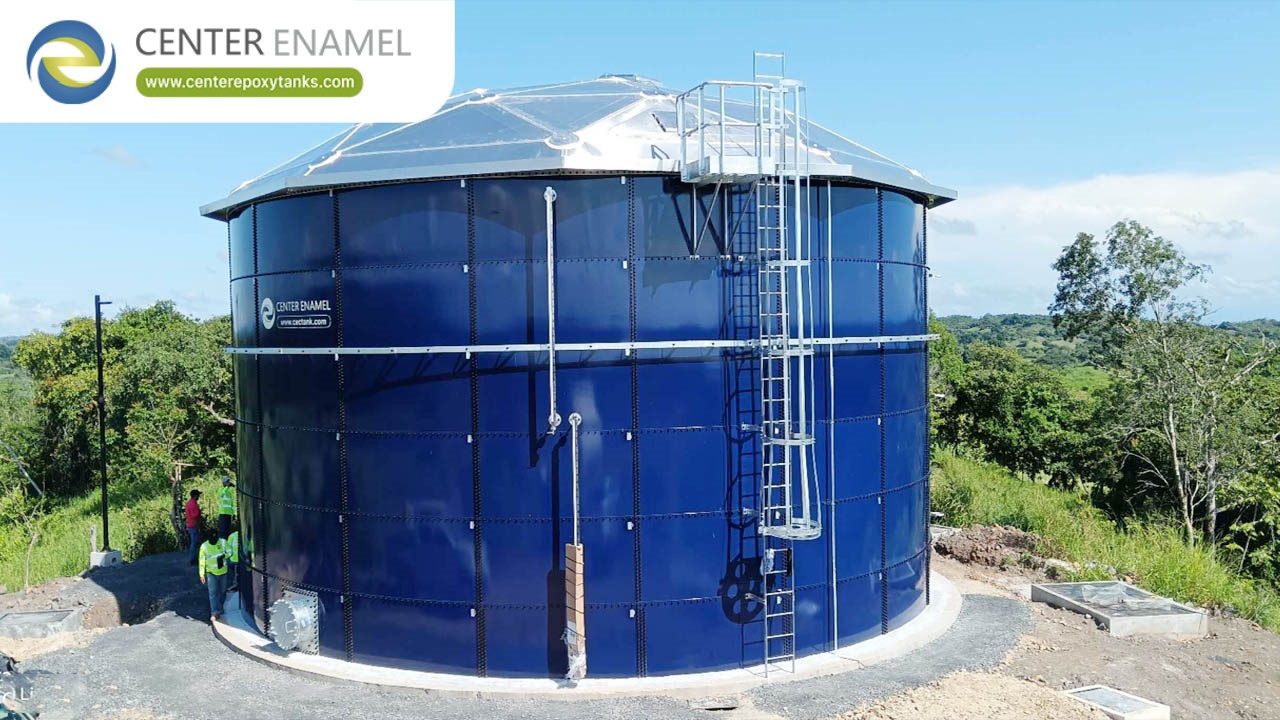
Aluminum Dome Roof Vs Fixed Cone And Floating Roof
When covering a storage tank you choose not just a material but a roof type. This article compares the aluminum geodesic dome roof with the fixed cone roof and the external floating roof across vapor control, maintenance, span, cost and application.
Roof Types, Different Jobs
A fixed cone roof is a simple sloped steel cover for atmospheric tanks. An external floating roof rides on the liquid to minimize vapor space. An aluminum dome is a clear-span geodesic cover. Each suits different service.
The right choice follows the product, vapor requirement and lifecycle expectation — not a single 'best' label.
Vapor Control
Floating roofs minimize vapor space for volatile products (e.g., crude, gasoline). Fixed cone roofs provide a basic seal with vents. Aluminum domes provide a sealed, gasketed cover that controls vapor and supports recovery/blanket-gas interfaces.
For volatile hydrocarbons, floating roofs or internal floats are often code-driven; domes suit water, wastewater, fuel fixed-roof and bulk service.
Maintenance
Fixed cone (steel) needs painting and corrosion work. Floating roofs have many moving seals and rim hazards needing frequent inspection. Aluminum domes need no repaint and minimal seal checks.
Lifecycle maintenance favors the dome where its service scope applies.
Span And Structure
Aluminum domes achieve large clear spans without internal columns. Fixed cones can span but add weight; floating roofs follow the liquid and need rim/secondary seals.
Clear span helps where internal access, mixing or reclaim matter.
Cost Profile
First cost: floating roofs are specialized, fixed cones are simple/cheap, domes are a premium cover. Lifecycle: domes often lead on low maintenance where applicable.
Exact figures are Not Specified; compare on a like-for-like specification for your product.
Application Fit
Fixed cone: simple atmospheric, non-volatile. Floating roof: volatile hydrocarbons with vapor-recovery drivers. Aluminum dome: water, wastewater, fuel fixed-roof, bulk — where a sealed low-maintenance clear-span cover is valued.
The product and code, not preference, should decide.
When Not To Choose A Dome
For highly volatile products where a floating or internal floating roof is code-required, the dome is not the vapor-control solution. For tiny tanks, a simple cone may be economical.
Match the roof type to the vapor and code requirement first.
Decision Framework
Step 1: what is the product and its vapor class? Step 2: what does the code require? Step 3: what span/access/maintenance profile fits? Step 4: compare lifecycle cost.
The dome wins where a sealed, low-maintenance, clear-span cover is the objective within the code framework.
Common Confusion
Assuming a dome replaces a floating roof for volatile hydrocarbons — it does not; they solve different vapor problems. Also, 'dome vs cone' is a roof-type choice distinct from 'aluminum vs steel' (material).
Keep roof-type and material as separate decisions.
Specifying The Roof
State the product, vapor class, code, required span/access and maintenance expectation. Request calculations and references matching that exact service.
This keeps the comparison honest and project-specific.
Summary
Fixed cone = simple/cheap atmospheric; floating roof = volatile vapor control; aluminum dome = sealed low-maintenance clear-span cover for its applicable services.
Choose by product, code and lifecycle — not a generic 'best roof' claim.
Hybrid: Dome Over Internal Floating Roof
For volatile products where an internal floating roof controls vapor, an aluminum dome can still serve as the external weather and access cover above it.
This hybrid separates the two functions - vapor control inside, weather and access outside - and must be engineered as one coordinated system.
Selection Decision Tree
Start with the product and its vapor class, then the code requirement, then span and access needs, then lifecycle cost. The dome is selected only where its sealed, low-maintenance clear-span profile fits that path.
If a floating roof is code-required, the dome is not its replacement; choose the roof type first, then decide the cover.
When Codes Mandate Floating Roof
For volatile hydrocarbons, codes may require an internal or external floating roof for vapor control. That requirement stands independent of any aluminum dome, which is not its replacement.
Where both apply, the dome can sit above an internal floating roof as the weather and access layer.
Cost Comparison Framework
Compare on a like-for-like basis: same product, environment, span and penetrations. First-cost rankings often reverse once lifecycle maintenance is included.
Request quotes that state assumptions so the comparison is honest.
Code-Driven Roof Selection
For volatile hydrocarbons, codes may require a floating or internal floating roof for vapor control; that requirement stands independent of any aluminum dome, which is not its replacement. Where both apply, the dome can sit above an internal floating roof as the weather and access layer.
The roof type is decided by product, vapor class and code first; the cover material is a separate, later choice.
Making The Comparison Honest
Compare options on a like-for-like basis - same product, environment, span and penetrations - and state the assumptions so the ranking is defensible. First-cost order often reverses once lifecycle maintenance is included.
A clear decision framework prevents choosing on a generic 'best roof' claim that may not fit the actual service.
Factor | Fixed cone | Floating roof | Aluminum dome |
Vapor | Basic seal | Minimal space | Sealed gasketed |
Maintenance | Repaint | Seal inspection | Minimal |
Span | Weighted | Follows liquid | Clear span |
Best for | Simple atmospheric | Volatile HC | Water/waste/fuel/bulk |
Decision | Ask |
Product/vapor | What is stored? |
Code | What is required? |
Lifecycle | Compare like-for-like |
Frequently Asked Questions
Does a dome replace a floating roof?
No — floating roofs minimize vapor space for volatile hydrocarbons; domes solve a different problem (sealed low-maintenance cover).
When is a fixed cone enough?
For simple atmospheric, non-volatile service where a basic sealed cover meets the code.
What is the dome's edge?
Clear-span, no repaint, low maintenance within its applicable services (water, wastewater, fuel fixed-roof, bulk).
How do costs compare?
First cost: cone cheapest, dome premium; lifecycle: dome often lowest on maintenance. Exact figures Not Specified — quote like-for-like.
Is roof-type the same as material?
No — 'dome vs cone' is roof type; 'aluminum vs steel' is material. Keep them separate.
What decides the choice?
Product, vapor class, code requirement, span/access need and lifecycle cost.
Work With Center Enamel
Center Enamel (Shijiazhuang Zhengzhong Technology Co., Ltd) is a Chinese manufacturer of bolted storage tanks and aluminum geodesic dome roofs, established in 2008. Its product range covers Glass-Fused-to-Steel (GFS) tanks, Fusion-Bonded Epoxy (FBE) tanks, galvanized and stainless-steel tanks, welded tanks, pressure vessels, and aluminum dome roofs. The company holds ISO 9001, NSF, WRAS, FM, CE/EN 1090 and ISO 28765 certifications for its tank lines and designs aluminum domes to AWWA D108, API 650, ADM 2015, ASCE 7-10 and IBC 2012. It operates automated enamel-plate production and has supplied engineering projects across drinking-water, wastewater, biogas, fire-water and industrial-storage applications.
For aluminum geodesic dome roofs engineered to AWWA D108, API 650, ADM 2015, ASCE 7-10 and IBC 2012, contact Center Enamel to discuss your tank cover, span and site requirements.


