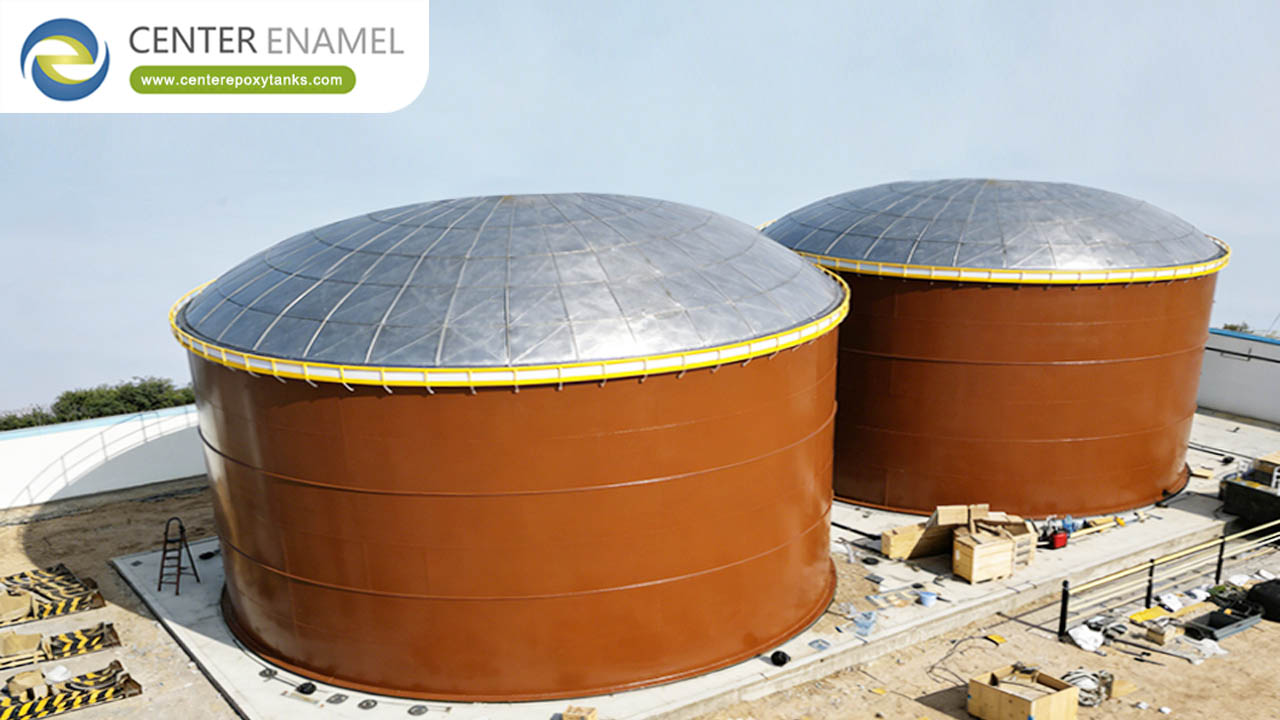
Aluminum Dome Roof Systems For Large-Scale Tanks: Engineering And Supply
A dome on a large tank is not a product bought off a shelf. It is a system that has to be engineered against the tank it covers, fabricated to tolerance, shipped in modules that fit the route, and erected by crews who answer for the result. The supply model therefore matters as much as the geometry: split responsibility between tank vendor and dome vendor creates interface gaps exactly where the loads concentrate.
This article covers large-scale dome roof systems from the supply side — what the system includes, the shell interface engineering, module logistics, on-site assembly and the quality control regime that makes the finished structure verifiable.
The Dome As A System, Not A Product
A turnkey dome scope includes the structural design against site loads, material procurement with certification, member fabrication and surface treatment, module packaging, the erection hardware, the installation crews and the quality records that prove the result. Each element is ordinary; the value is that they sit under one accountability.
When the dome is bought separately from the tank, the interface becomes a negotiation: who designs the ring beam, who owns the tolerance, who seals the joint. On large diameters those questions are structural questions, and the projects that answer them early are the ones that erect on schedule.
Load Cases And Structural Design
Dome design starts from the load set: dead load of the structure and its appurtenances, live and maintenance loads, snow, wind, seismic and — where the tank is covered and vented — internal pressure effects. The load combination set follows the governing code for the site, and the design output is member sections, connection capacities and support reactions.
The reaction set is what the tank shell has to carry, which is why the dome design and the tank design have to be reconciled rather than merely compatible. A dome designed in isolation can deliver uplift and horizontal reactions the shell was never checked against.
Load Case | Source | Design Check |
Dead load | Self weight plus appurtenances | Member stress and connection capacity |
Live / maintenance | Crews, tools, stored materials | Local deflection and plating |
Snow | Site ground snow data | Drift at penetrations and eaves |
Wind | Site wind map, terrain category | Uplift, cladding and connection design |
Seismic | Site seismic zone | Connection and anchorage design |
Internal pressure | Vent setpoint, covered service | Roof uplift where applicable |
The Tank Shell Interface
The ring beam or attachment detail is where the dome meets the tank, and it is the most engineered element of the whole cover. It transfers dead load, wind uplift and seismic reactions into the shell, accommodates the tolerance between fabricated dome geometry and as-built shell roundness, and provides the sealing line for covered service.
Tolerance is the practical issue. A shell erected in the field is not perfectly round, and a dome fabricated in the shop is not perfectly nominal; the interface detail has to absorb the difference without inducing secondary stresses. That is a detailing exercise — slotted connections, adjustable bearings and shimming provisions — decided at design stage, not improvised with packers on site.
Module Logistics And Packaging
At large diameters the dome ships as modules — struts, nodes, connectors and panel packages — and the logistics constraint is member length and package weight against the route. Route survey, turning radii, overhead restrictions and laydown area are settled before fabrication starts, because a member that cannot reach the site is a member fabricated twice.
Packaging protects the product: members crated against abrasion, fasteners segregated and counted, and coating surfaces protected in transit. Damage in transit becomes repair work on site, and site repair is the most expensive coating work there is.
On-Site Assembly And Erection
Erection is a sequence discipline: support and ring beam first, then the member assembly following the structural sequence the design assumed, with temporary works where the structure is incomplete. Bolt connections are torqued to specification and verified, with the bolt log retained as the erection record.
Aluminum dome erection suits tank sites because it needs no hot work: no welding, no fire watch, no gas-free requirement on a live tank. That single property removes most of the permitting complexity from covering an operating storage asset.
Quality Control Regime
The QA regime is what turns a delivered structure into a verifiable one. Each stage has a method and a record: material certification at receipt, dimensional control at fabrication, dry-film thickness at coating, torque verification at erection and a final as-built survey against the design geometry.
The records are not paperwork for its own sake. They are what allows the structure to be re-analyzed later for added loads, what supports the warranty position, and what demonstrates condition at the first inspection decades later.
QC Stage | Method | Record |
Material receipt | Certification review against order | Material certificates |
Member fabrication | Dimensional check to drawing | Fabrication inspection report |
Surface treatment | Dry-film thickness measurement | DFT log per batch |
Erection | Bolt torque verification | Erection bolt log |
Completion | As-built survey vs design geometry | As-built survey record |
Cover Access And Instrumentation
Every dome carries penetrations: access hatches, vents, instrumentation and, on some tanks, mixing or level equipment. Each is an engineered detail with a seal, a movement allowance and an inspection route. A field-cut penetration is a leak path and a corrosion initiation site that the design never saw.
The penetration list should be reviewed against the covered service before fabrication: every eliminated penetration is a leak path and a maintenance item eliminated.
Corrosion Protection And Durability
Aluminum dome durability comes from alloy selection and connection detailing rather than from coatings. The alloy forms a stable oxide film in atmospheric service; the risk concentrates at connections, at fastener couples and at trapped interfaces where dust and moisture sit.
Fastener specification is the highest-leverage decision: stainless fasteners in aluminum members with the galvanic couple reviewed and isolation detailed where required. A dome is only as durable as its thousands of connections.
Commissioning And Handover Documentation
Commissioning closes the loop: the as-built survey confirms geometry, the venting and access provisions are demonstrated, and the documentation dossier is assembled. The dossier includes material certificates, fabrication records, the erection bolt log, the survey record and the operation and maintenance regime.
For the owner, the dossier is the asset’s birth certificate — the reference every future inspection, modification and warranty discussion is measured against.
Total Cost Of The Cover System
Cover cost is not the module price. It is module price plus logistics plus erection plus interface works plus the cost of any rework — and the rework line is where split-scope projects bleed. A dome delivered without the interface design, or modules that do not fit the route, converts a competitive price into an expensive project.
The lifecycle view is more forgiving of good specification: a dome engineered for durability and inspectability costs less per decade than a cheaper cover that needs early repair. The procurement question is total cost, and the specification is what controls it.
Center Enamel Turnkey Dome Supply
Center Enamel supplies dome roof systems as an engineered package: structural design against site loads, certified material, controlled fabrication, route-designed packaging, erection crews and a QA regime documented at every stage. Where the tank is ours as well, the dome and the shell are designed together and the interface is engineered rather than negotiated.
For large-scale covering, the accountability model is the product. One team owns the geometry, the interface and the record — which is the only way the structure arrives verified.
Project Case Study
A potable water project on Guadeloupe required storage capacity with the tank and roof supplied as one engineered package. Center Enamel supplied a glass-fused-to-steel bolted tank at 16.05 m diameter by 6.0 m height, totaling 1,213 m3, configured with an aluminum dome roof for the covered potable water duty.
The combined tank-and-roof scope let the interface be engineered as one system: the ring beam, the sealing line and the access provisions designed together rather than reconciled between vendors. The project was delivered and completed in September 2024.
Project Reference | 0106 Guadeloupe Drinking Water 202409 |
Location | Guadeloupe |
Application | Potable Water |
Product / Technology | Glass-Fused-to-Steel (GFS) Bolted Tank |
Tank Count | 1 |
Tank Dimensions | φ16.05*6m(H), 1 unit |
Total Volume | 1213 m3 |
Completion | Delivered and completed 2024-09 |
Supply Scope Note | A relevance grade to this topic |
About Company
Shijiazhuang Zhengzhong Technology Co.,Ltd(Center Enamel) is a professional manufacturer dedicated to the design and fabrication of bolted storage tanks since 2008. Our products range includes Glass-Fused-to-Steel (GFS) tanks, fusion bonded epoxy tanks, stainless steel tanks, galvanized steel tanks and aluminum geodesic dome roofs. With professional enameling R&D team and nearly 200 enameling patents, Shijiazhuang Zhengzhong Technology Co.,Ltd has become the leader in bolted tanks industry of Asia. Our products are certified to ISO9001, NSF61, EN1090, ISO28765, WRAS ,FM, LFGB, BSCI, IS0 45001 and other international standards.
Shijiazhuang Zhengzhong Technology Co., Ltd is not only the first manufacturer in China which produces Glass-Fused-to-Steel tanks, but also the most experienced professional bolted tanks manufacturer in Asia.The engineering & design, product testing and quality system of Center Enamel Glass-Fused-to-Steel tanks is in strict accordance with AWWA D103-09, OSHA, ISO 28765, NSF/ANSI 61, NFPA and other international standards. Until 2023, Center Enamel bolted tanks have been exported to more than 100 countries including USA, Australia,Canada, Malaysia, Indonesia, Russia, UAE, Panama,Brazil and South Africa etc., the superior tank quality and prompt service gains us worldwide recognition.
As an outstanding containment and cover system provider with decades of industry experience, Shijiazhuang Zhengzhong Technology Co., Ltd sincerely expects to establish long-term cooperation with the local partners throughout the world and make continuous contribution to the development of the industry.
Suggested CTA
Center Enamel delivers aluminum dome system engineered for large tank covering duty, with turnkey dome supply, installation crews and qa regime. Contact our engineering team for selection and procurement guidance on your next aluminum dome roof systems for large tanks project — including sizing, standards compliance and delivery scheduling.
Frequently Asked Questions
Q: What does a turnkey dome roof system include?
A: Structural design against site loads, certified material, member fabrication and surface treatment, route-designed packaging, erection hardware, installation crews and the QA records. The value is single accountability for the interface between dome and tank shell.
Q: Why is the dome-to-shell interface the critical junction?
A: It transfers dead load, wind uplift and seismic reactions into the shell, absorbs the tolerance between fabricated dome geometry and as-built shell roundness, and provides the sealing line. Every one of those functions is structural, and none survives a split-scope gap.
Q: How is dome quality verified on site?
A: Through the stage records: material certificates at receipt, dimensional checks at fabrication, dry-film thickness at coating, bolt torque verification during erection and an as-built survey against the design geometry at completion.
Q: Why do aluminum domes suit tank sites?
A: Erection needs no hot work — no welding, no fire watch and no gas-free requirement on a live tank — which removes most of the permitting complexity from covering an operating asset.
Q: What drives the total cost of a dome cover?
A: Module price plus logistics, erection, interface works and rework. Rework is where split-scope projects overspend: a missing interface design or modules that do not fit the route turns a competitive module price into an expensive project.
Q: How are penetrations through the dome handled?
A: Each is an engineered detail with a seal, a movement allowance and an inspection route — access hatches, vents and instrumentation designed in before fabrication. Field-cut penetrations are leak paths and corrosion initiation sites the design never saw.


