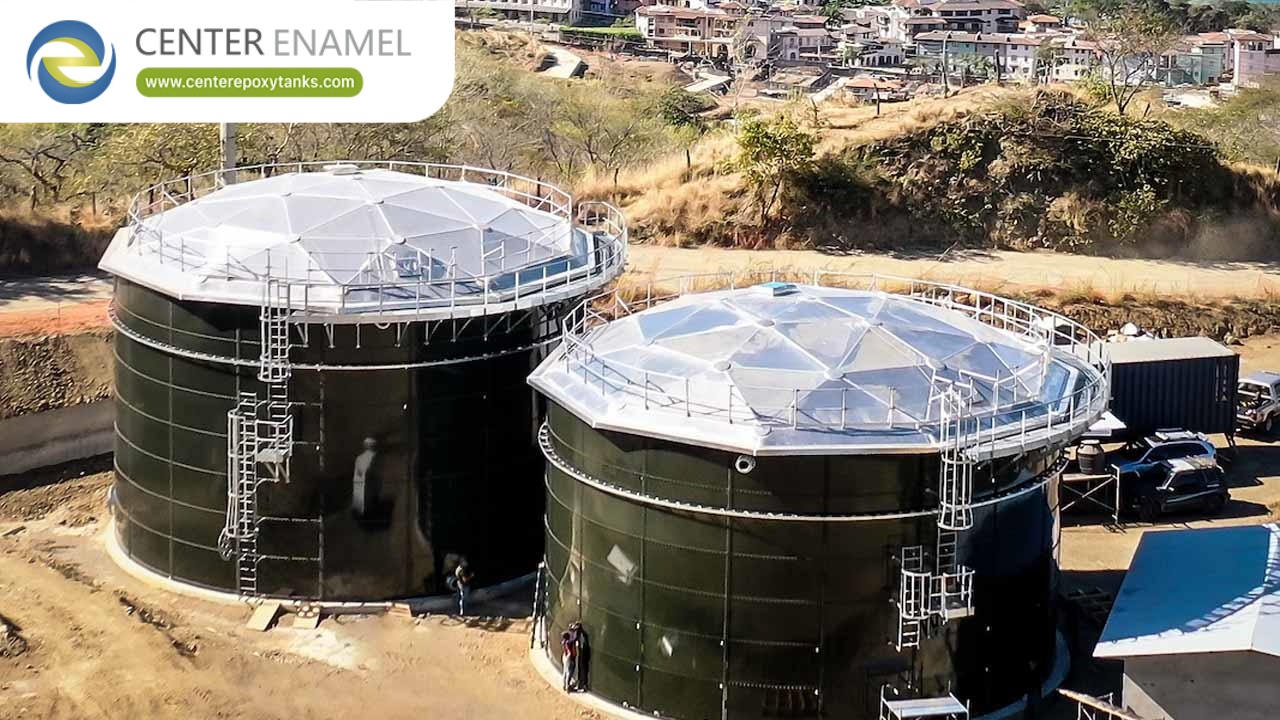
Aluminum Dome Roof Retrofit Of Existing Tanks
Retrofit means adding an aluminum geodesic dome to a tank that was built with a different or no permanent roof — converting an open or cone-roofed tank to a sealed, low-maintenance dome cover. This article explains the assessment, structural upgrade and interface work that decide whether an existing tank can accept a dome, and how the retrofit is executed.
What Retrofit Means Here
Retrofit is distinct from new-tank supply (where the dome is designed in from the start) and from replacement (where the old roof is removed). Retrofit adds a dome to a tank that exists, often changing its cover function from open/vented to sealed.
The defining challenge is the existing structure: the dome must connect to a rim that was not necessarily designed for it, and the tank may need upgrading to carry the dome reaction.
First: Can The Tank Accept A Dome?
Assess the tank shell, top ring, anchorage and foundation. The dome transfers load into the rim; if the rim or shell is thin, corroded or out of plumb, the retrofit scope must include strengthening, not just the dome.
Review the original design basis and any modifications. A tank that was never meant for a fixed roof may need a new top-ring or additional shell courses before a dome is viable.
Rim And Connection Upgrade
The retrofit design specifies how the dome anchors to the existing rim: new top-ring stiffener, anchor pattern, and any transition structure. The connection must be detailed for the actual as-found geometry, not the drawing ideal.
Galvanic interaction between aluminum and the existing steel rim must be managed with isolation or compatible fasteners, or the interface will corrode regardless of the dome's own resistance.
Seismic And Wind Considerations
Retrofitting a dome changes the tank's load path and profile. In seismic or high-wind zones, the added mass and anchorage must be checked against the local code so the upgrade improves safety rather than introducing a new failure mode.
The assessment should confirm the tank's anchorage to foundation is adequate for the combined system, since a dome adds overturning and uplift demand at the base.
Service Change And Containment
Converting an open tank to a domed, sealed tank changes vapor and access behavior. Confirm the service still suits a sealed cover (potable, wastewater, fire water) and that any ventilation or pressure/vacuum protection is specified.
For a tank previously open to atmosphere, adding a sealed dome may require vent and relief devices sized for the new enclosed condition. Do not seal a tank without addressing pressure protection.
Retrofit assessment gate
Check | Pass condition | If fails |
Shell | Sound, in plumb | Strengthen / replace |
Top ring | Can carry dome reaction | Add stiffener |
Anchorage | Adequate for combined | Upgrade base |
Service | Suits sealed cover | Reconsider type |
Pressure | Vent/relief sized | Add protection |
Retrofit Procedure
Sequence: assess and strengthen the tank, prepare/upgrade the rim, set the dome connection, assemble the dome (outside-in or inside-out), install penetrations, then inspect and accept. The tank often stays in partial service, so isolation and access planning matter.
Because the tank is live, method statements for working over an active tank — and any confined-space or hot-work permits — are part of the retrofit, not an afterthought.
Penetrations Added During Retrofit
Retrofit is a chance to add manways, vents, mixers or walkways correctly, with reinforcement and a capacity check at each point. Avoid field-drilling unreinforced panels; the retrofit should improve, not degrade, the structure.
Consolidate redundant openings from the old arrangement. A cleaner penetration plan reduces future leak paths.
Verification And Acceptance
Accept by document review (strengthening calcs, certs) and physical checks (rim alignment, torque, seal continuity, connection to tank). The retrofit is judged on the combined tank-dome system, not the dome alone.
Keep the assessment, strengthening design and as-built in the tank file so the next inspector understands the retrofitted system.
Cost And Value Of Retrofit
Retrofit costs more engineering than a new-tank dome because of the assessment and upgrade, but it preserves a serviceable tank and avoids full replacement. The value is extending a sound asset with a low-maintenance cover.
Quantify against the alternative (replace the whole tank). Where the shell is good, retrofit is usually the economic choice; where the shell is poor, replacement may win.
When Retrofit Is Not Suitable
If the shell, rim or foundation cannot be economically upgraded to carry the dome, or the service does not suit a sealed cover, retrofit is the wrong path. Forcing a dome onto an inadequate tank creates a hazard.
An honest assessment that says 'replace, don't retrofit' is a successful retrofit study, not a failure — it prevented a bad investment.
Retrofit vs new-tank dome
Aspect | Retrofit | New tank |
Engineering | Assessment + upgrade | Design from start |
Tank | Existing, may strengthen | Built for dome |
Downtime | Partial | Full new |
Cost driver | Upgrade work | Full supply |
Planning The Retrofit Project
Scope the retrofit as: assessment, strengthening design, permits, rim work, dome supply, installation, inspection and handover, each with an owner. The assessment gates everything that follows.
The outcome is an existing tank with a sealed, clear-span, low-maintenance dome cover and a documented basis for its next service interval.
Frequently Asked Questions
Q: What is a dome retrofit vs a new dome?
A: Retrofit adds a dome to an existing tank that lacked one or had a different cover, and usually requires assessing and possibly upgrading the tank to accept it.
Q: Can any existing tank take a dome?
A: No. The shell, top ring, anchorage and foundation must be able to carry the dome reaction; otherwise strengthening or replacement is needed first.
Q: Why manage galvanic contact at the rim?
A: Aluminum meeting steel can corrode unless isolated or fastened with compatible materials; the interface must be detailed, not assumed.
Q: Does retrofitting change seismic demand?
A: Yes — added mass and anchorage change the load path, so the combined tank-dome system must be checked against the local code.
Q: Must a sealed dome have pressure protection?
A: If converting an open tank to a sealed dome, vents or relief devices must be sized for the enclosed condition; do not seal without addressing pressure.
Q: When is retrofit not suitable?
A: When the shell/rim/foundation cannot be economically upgraded or the service does not suit a sealed cover; then replacement is the better path.
Conclusion
Aluminum geodesic dome roofs are selected, designed and maintained as structural systems, not as standalone covers. The articles in this batch treat each angle — from OEM sourcing and tender specification to retrofit, corrosion, loads, accessories, applications and manufacturing — as a distinct user task with its own evidence and boundaries.
Work With Center Enamel
Center Enamel (Shijiazhuang Zhengzhong Technology Co., Ltd) has manufactured bolted and welded storage tanks since 2008 from its base in Shijiazhuang, China. The company produces GFS (Glass-Fused-to-Steel), FBE-coated, galvanized, stainless-steel and welded tanks, aluminum geodesic dome roofs, floating roofs, pressure vessels, and wastewater and biogas engineering packages. Its quality system carries ISO 9001, and aluminum dome roofs are designed to AWWA D108, API 650, ADM 2015, ASCE 7-10 and IBC 2012. With an installed base of 30,000+ projects and 300,000 enamel steel plates produced annually, Center Enamel supports drinking-water, municipal, industrial, petroleum, dry-bulk and architectural applications.
Considering a dome on an existing tank? Contact Center Enamel to run the retrofit assessment — shell, rim, anchorage and service — before any dome is specified.
Project Case Reference
Project reference (B-grade, delivered with aluminum dome roof): Panama Drinking water — GFS bolted tank, Ø15.29 x 9.0 m (H), 3 tanks, 2025. The dome roof was supplied as the cover solution for this verified tank project.


