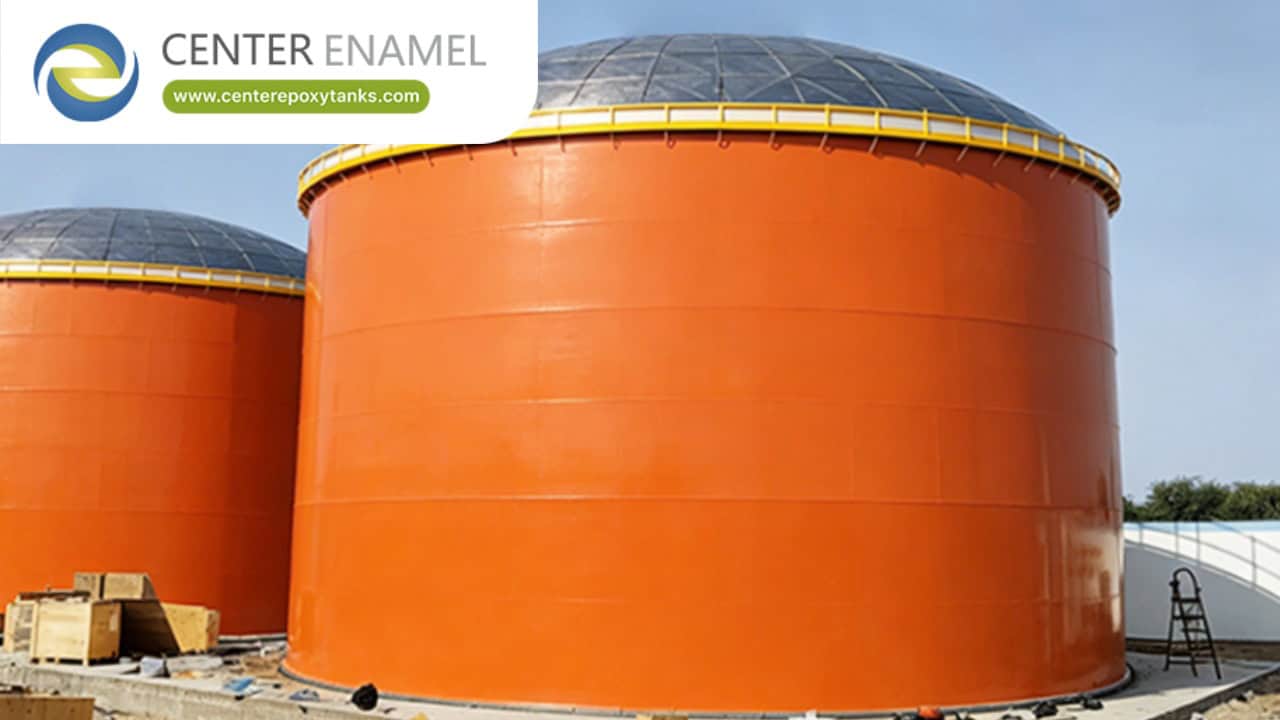
Aluminum Dome Roof Maintenance And Life-Cycle Cost
The real cost of a tank cover is what you spend on it over decades, not just the purchase price. This article covers the maintenance profile and lifecycle cost of aluminum geodesic dome roofs — no painting, inherent corrosion resistance and simple inspection.
Maintenance Driven By Material
Steel covers need periodic coating renewal and often cathodic protection; concrete covers need crack and spall repair; aluminum needs none of these because its corrosion resistance is intrinsic.
The maintenance difference, compounded over a 20–30 year life, is the dominant lifecycle factor.
No Painting Or Repainting
Aluminum forms a stable oxide layer and resists UV and ozone, so the dome is supplied without a paint system and needs no repaint cycle.
Eliminating repaint removes both the direct cost and the access/scaffolding/confined-space risk of recoating.
Inherent Corrosion Resistance
In water, wastewater (H2S), coastal and industrial atmospheres, aluminum's oxide layer holds without supplemental protection. This is why maintenance stays low across environments.
Contrast with steel, where coating failure in corrosive atmospheres drives recurring work.
Inspection Access
Clear-span geometry and framed manways make routine inspection straightforward. Checks focus on seal continuity at nodes and rim, and on penetration details.
No internal columns means fewer hidden areas to inspect.
Seal And Gasket Upkeep
Silicone gaskets at nodes and rim are the primary weather seal and resist UV and heat. Inspection confirms continuity; individual gaskets can be addressed if needed.
Because the seal is continuous and accessible as the dome closes during build, quality is verifiable during installation.
Lifecycle Cost Comparison
First cost: aluminum is often a premium versus basic steel/concrete. Lifecycle cost: aluminum frequently leads because avoided repaint and corrosion work outweigh the premium.
Exact figures are Not Specified here and depend on diameter, environment and local labor; obtain a project quote for a like-for-like comparison.
Total-Cost View For Procurement
Compare lifecycle cost, not ex-works price: a dome needing no repaint and minimal maintenance can beat a cheaper cover with ongoing coating programs.
Request a like-for-like specification (span, loads, penetrations, environment) so quotes are comparable.
Factors That Raise Upkeep
Heavy industrial or abrasive environments, frequent penetration modifications, and neglect of early seal checks can raise upkeep. These are manageable with good design and routine inspection.
Avoiding field cutting of aluminum preserves the structure and its low-maintenance profile.
Specification For Low Lifecycle Cost
Specify the aluminum alloy with traceability, require the gasket/seal QC plan, and confirm the no-paint advantage is carried into the operations manual.
Pair with a compatible low-maintenance tank system for end-to-end lifecycle benefit.
Common Misjudgment
Selecting on first cost alone and underestimating decades of repaint/scaffolding on a steel cover. The lifecycle view usually reverses the apparent saving.
Require a lifecycle comparison in the evaluation, not just unit price.
When Aluminum Pays Off
On large spans, corrosive environments and assets expected to run decades with minimal intervention, aluminum domes typically deliver the lowest lifecycle cost.
For small, short-life or budget-only temporary covers, a simpler option may suffice.
Spare Parts Strategy
Because the dome uses standardized extrusions and gaskets, a small stock of spare panels and silicone gaskets covers most field needs over the asset life.
Confirm lead time and alloy traceability for spares so a future repair uses matching material rather than a substitute that could break the seal plane.
Condition Assessment Over Time
Routine inspection focuses on seal continuity at nodes and rim and on penetration details; the absence of coating programs removes the largest recurring task.
Document findings against the as-built record so any change in seal condition is detectable early.
Inspection Frequency Guidance
A practical routine is a visual seal and penetration check at planned intervals, weighted toward the first year after installation. Adjust frequency to the environment.
Because there is no coating program, the inspection load is light compared with steel covers.
Comparing To Steel Over 25 Years
Over a 25-year horizon, steel covers accrue multiple repaint and repair cycles; aluminum accrues primarily routine seal checks. The maintenance gap widens with corrosive exposure.
This is the core reason lifecycle cost - not first cost - should lead the decision.
Planning The Inspection Regime
A practical regime weights the first year more heavily, confirming seal continuity and penetration details, then settles to routine intervals tuned to the environment. Because there is no coating program, the inspection load stays light.
Recording findings against the as-built baseline makes any change in condition detectable early, when it is cheap to address.
Why Lifecycle Beats First Cost
Over a 25-year horizon the maintenance gap between aluminum and steel widens with corrosive exposure, because steel accrues repaint and repair cycles that aluminum avoids. This is the core reason lifecycle - not purchase price - should lead the decision.
Requesting a lifecycle basis in proposals tests the apparent saving on a cheaper cover against its long-term cost.
Lifecycle In Summary
Over the asset life, aluminum's no-paint, corrosion-resistant profile removes the largest recurring cost that steel and concrete covers carry, especially in corrosive or coastal atmospheres.
Specifiers who compare on lifecycle rather than first cost usually find the aluminum dome the lower-risk choice for long-life, low-intervention service.
Cover | Recurring maintenance |
Aluminum | Minimal (no repaint) |
Steel | Coating renewal + CP |
Concrete | Crack/spall repair |
FRP | UV/impact inspection |
Cost view | Aluminum position |
First cost | Often premium |
Lifecycle | Often lowest (no repaint) |
Verify with | Like-for-like quote |
Frequently Asked Questions
Does an aluminum dome need repainting?
No — aluminum is inherently corrosion-resistant and UV-stable; no paint or repaint cycle is required.
What maintenance does it need?
Routine inspection of seal continuity at nodes/rim and penetration details; no coating work.
Is lifecycle cost lower?
Typically yes, because avoided repaint and corrosion work outweigh the often-higher first cost.
What are exact cost figures?
Not Specified here — they depend on diameter, environment and labor; request a like-for-like project quote.
What raises upkeep?
Harsh environments, frequent penetration changes and skipped seal checks — all manageable with design and routine inspection.
How to specify for low lifecycle cost?
Require alloy traceability, a gasket/seal QC plan, and carry the no-paint advantage into operations.
Work With Center Enamel
Center Enamel (Shijiazhuang Zhengzhong Technology Co., Ltd) is a Chinese manufacturer of bolted storage tanks and aluminum geodesic dome roofs, established in 2008. Its product range covers Glass-Fused-to-Steel (GFS) tanks, Fusion-Bonded Epoxy (FBE) tanks, galvanized and stainless-steel tanks, welded tanks, pressure vessels, and aluminum dome roofs. The company holds ISO 9001, NSF, WRAS, FM, CE/EN 1090 and ISO 28765 certifications for its tank lines and designs aluminum domes to AWWA D108, API 650, ADM 2015, ASCE 7-10 and IBC 2012. It operates automated enamel-plate production and has supplied engineering projects across drinking-water, wastewater, biogas, fire-water and industrial-storage applications.
For aluminum geodesic dome roofs engineered to AWWA D108, API 650, ADM 2015, ASCE 7-10 and IBC 2012, contact Center Enamel to discuss your tank cover, span and site requirements. Reach the team at sales@cectank.com or through cectank.com for a project-specific proposal.
Sources
brand_facts.py — PRODUCTS['AluminumDome'] (material_advantages, features: no painting/low maintenance)


