Aluminum Dome Roofs for African Agricultural Projects: Engineering Resilience, Water Security, and Sustainable Farming
Across the African continent, the rapid expansion of commercial farming, greenhouse cultivation, and rural agro-processing has placed a premium on dependable infrastructure. From large-scale irrigation reservoirs in sub-Saharan grain belts to liquid fertilizer and wastewater management systems in North and South Africa, containing agricultural assets safely against extreme weather is vital. Open-air storage basins face severe challenges, including intense solar evaporation, wind-blown dust, algal proliferation, and rapid material corrosion.
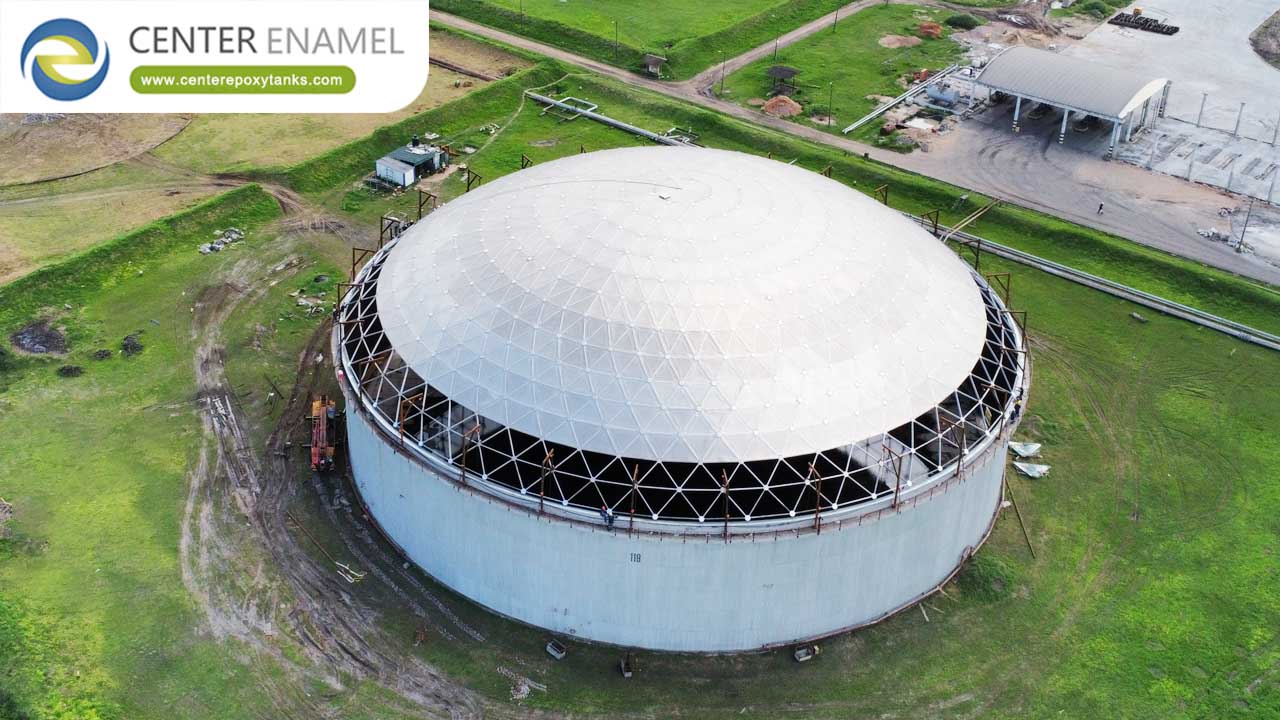
To overcome these environmental obstacles, agricultural engineers and project developers increasingly deploy aluminum dome roofs for African agricultural projects. Engineered as self-supporting, lightweight geodesic structures, these advanced aluminum covers provide long-lasting, maintenance-free protection for water reserves, fertilizer tanks, and agro-industrial wastewater facilities.
Core Engineering Advantages in African Climates
Deploying heavy infrastructure across diverse African topographies—ranging from arid desert heat to tropical humidity—requires materials that eliminate maintenance burdens and simplify remote logistics:
Superior Corrosion Resistance: Unlike carbon steel, which oxidizes rapidly when exposed to humid tropical air, irrigation chemicals, or coastal salt spray, marine-grade aluminum alloys naturally form a protective, self-healing oxide layer. This eliminates the need for recurring sandblasting and protective recoating cycles.
Self-Supporting Clear-Span Geometry: Utilizing a triangulated space-frame architecture, aluminum domes distribute structural loads uniformly along the perimeter ring beam. This completely eliminates the need for internal columns, allowing full-volume storage capacity inside circular or rectangular agricultural tanks.
Solar Heat Reflection and Evaporation Control: In arid and semi-arid agricultural zones, open water storage can lose up to half its volume to solar evaporation. Aluminum’s high reflectivity bounces sunlight away, keeping stored water and liquid nutrients cooler while locking down 100% of the moisture envelope.
Lightweight Modular Shipping and Assembly: Because aluminum is approximately one-third the weight of steel, dome components pack efficiently into standard shipping containers. This drastically reduces freight costs to remote inland agricultural sites and permits rapid assembly using basic mechanical tools without heavy cranes.
Key Agricultural Applications Across the Continent
Potable and Irrigation Water Reservoirs: Shielding clean borehole water or harvested rainwater from dust storms, organic debris, and sunlight, preventing harmful algae growth that clogs drip-irrigation emitters.
Liquid Fertilizer and Chemical Containment: Preventing atmospheric dilution and chemical degradation of high-value liquid fertilizers stored prior to field application.
Agro-Industrial Wastewater Management: Enclosing anaerobic digestion or effluent ponds at sugar mills, wineries, and livestock processing plants to suppress heavy odors and capture combustible biogas safely.
Data Table: Comparative Analysis of Tank Cover Options for African Agriculture
Technical Parameter | Aluminum Geodesic Domes | Traditional Steel Cone Roofs | Cast-in-Place Concrete Covers |
Corrosion Performance | Excellent; natural oxide layer withstands humidity, UV, and chemicals | Poor; highly vulnerable to rust in aggressive agricultural environments | Moderate; susceptible to carbonation and chemical spalling |
Maintenance Overhead | Near-zero maintenance; no periodic repainting required | High; demands regular manual rust removal and protective painting | Moderate; requires joint sealing and structural crack patching |
Shipping & Logistics (Remote Sites) | Highly modular and lightweight; ships efficiently in standard containers | Heavy steel plates incur high transport and handling overhead | Requires massive local civil construction resources and raw materials |
Expected Service Life | 40 to 50+ years | 15 to 25 years | 30 to 40 years |
Frequently Asked Questions (FAQ)
Q: Why are aluminum dome roofs ideal for agricultural projects in Africa?
A: They offer unmatched corrosion resistance against harsh climates, eliminate solar evaporation losses in water reservoirs, prevent algae growth, and feature a lightweight modular design that reduces shipping costs to remote farming regions.
Q: Can aluminum geodesic domes be installed on existing farm storage tanks?
A: Yes. Because aluminum domes are lightweight and self-supporting at the perimeter, they can be easily retrofitted onto existing concrete, bolted steel, or welded tanks without requiring extensive structural reinforcement of the walls.
Q: How do aluminum domes handle extreme weather events like tropical storms or heavy winds?
A: Engineered to international structural benchmarks (such as AWWA D108 and Eurocode standards), the triangulated geodesic framework provides exceptional structural stability, capable of withstanding high-velocity wind loads common across open plains and coastal areas.
Q: Do aluminum dome roofs require specialized maintenance in dusty or hot environments?
A: No. Aluminum is virtually maintenance-free. It does not rust, peel, or degrade under intense UV radiation, eliminating the need for recurring surface repainting or chemical treatments.


