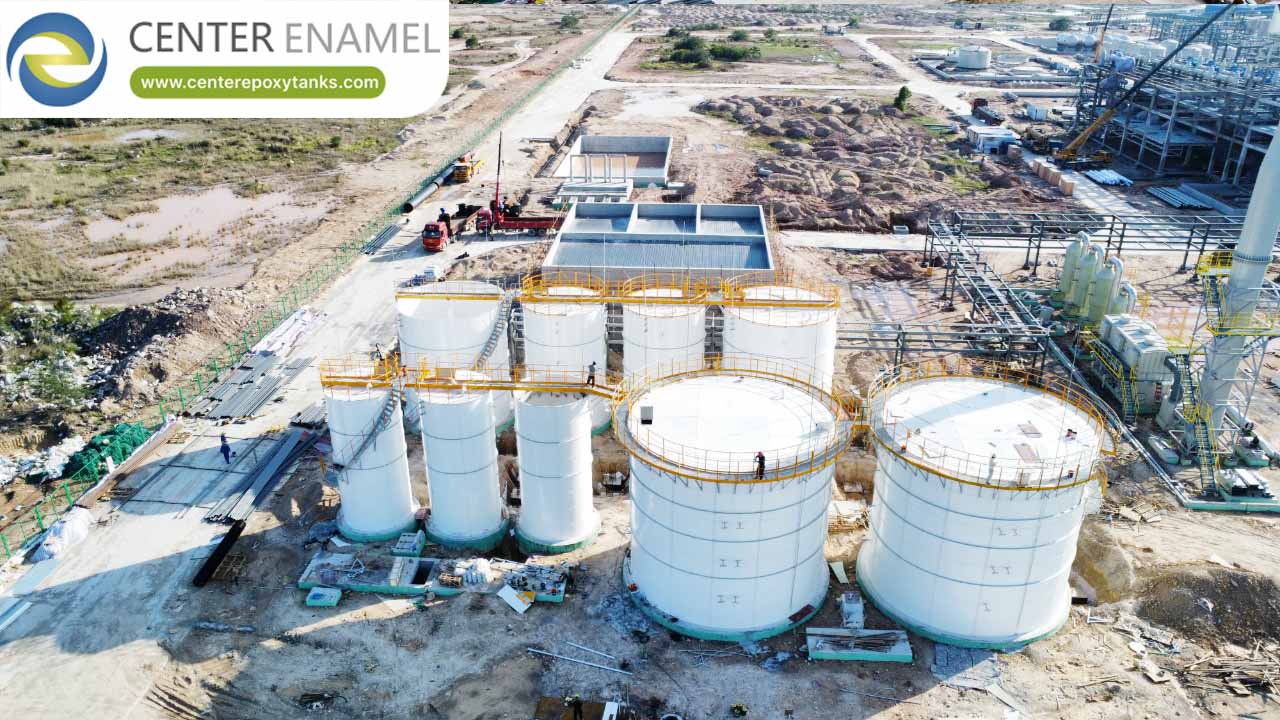
Welded Steel Silos: Engineering Advantages Over Alternative Storage Solutions
The welded steel silo is the reference standard for dry bulk storage, and for one functional reason: it can be built airtight. Airtightness is what makes fumigation effective, controlled atmosphere possible and moisture exclusion reliable — and it is a property of welded construction that bolted joints approximate but do not equal. This article examines the welded silo’s engineering advantages against the alternatives: airtightness, height and footprint, and the cost and lifespan picture.
The Airtightness Advantage
Welded silos are continuously welded structures with no gasketed joints, which means the wall is a barrier by construction rather than by assembly. Fumigation holds concentration because the gas has nowhere to go; controlled atmosphere storage works because the atmosphere stays controlled; moisture stays out because the wall is continuous.
Bolted silos can be built tight — gasketed panels and sealed details achieve gas-tightness for fumigation — but the welded wall achieves it as a default rather than as an engineered exception.
Attribute | Welded Steel Silo | Bolted Coated Silo |
Airtightness | Default — continuous wall | Engineered — gasketed and sealed |
Height / footprint | Tall — land-efficient | Bounded by panel catalog |
Erection duration | Months — field welding | Weeks — bolted assembly |
Relocatability | No | Yes — disassemble and re-erect |
Cost at scale | Lower per tonne at large capacity | Lower at small capacity |
Height And Footprint
Welded silos go tall. Height is the cheapest capacity in dry bulk storage: adding height adds volume without adding footprint, and the land cost per tonne stored falls accordingly. Where site area is constrained — urban terminals, port facilities, plants with no room to spread — the tall welded silo is frequently the only configuration that fits.
The height advantage compounds with conveying: tall silos feed gravity discharge and reduce elevator and conveyor scope, which is a capital and energy saving on the handling side.
Cost And Lifespan
Welded silos carry higher first cost per tonne than bolted at small scale, and lower cost at large scale — the welding crew amortizes across the volume, and the taller structure uses land efficiently. Lifespan is measured in decades with coating maintenance, and the structure has no relocatability to trade.
The honest comparison is cost per tonne-year over the asset life, not first cost per tonne — and that comparison depends on capacity, site constraints and the project’s time horizon.
Fumigation And Controlled Atmosphere
The welded wall is what makes the silo a treatment device: phosphine fumigation holds concentration long enough to be lethal at every point in the mass, and controlled atmosphere storage — modified oxygen and CO2 levels — preserves grain quality without chemicals. Both require the airtightness the welded wall provides.
Sealing integrity is tested and maintained: pressure-decay testing after erection, and gasket and hatch discipline for the life of the silo. The fumigation is only as good as the worst seal.
Function | Airtightness Requirement | Verification |
Phosphine fumigation | Hold concentration for exposure period | Pressure-decay test after erection |
Controlled atmosphere | Maintain modified O2/CO2 levels | Continuous monitoring, seal audit |
Moisture exclusion | Continuous barrier | Visual, hatch and gasket inspection |
Aeration And Monitoring Integration
Welded silos integrate aeration and monitoring as naturally as any configuration: ducting in the floor or wall, temperature cables at multiple depths and level instrumentation. The tall structure concentrates the monitoring value — stratification is more pronounced in deep silos, which makes the temperature data more actionable.
The integration is a design task: aeration ducting, cable routing and access must be resolved before fabrication, because retrofitting into a welded shell is hot work.
Coatings And Internal Finish
Internal coatings in dry bulk service resist abrasion from flowing grain and the mild acidity of some commodities. Galvanized and coated steel are both used, with the coating system specified against the commodity and the flow regime. The internal finish also matters for cleanability between commodities.
For food-grade commodities, the coating system carries food-contact certification, and the internal finish must support the cleaning regime between grades.
Foundations And Structural Design
Tall silos are structures before they are containers: wind and seismic load cases govern the wall and the foundation, and the flowing-granular pressure on the wall is a design load that static-level calculations miss. The foundation must handle both the vertical load and the overturning moment.
This is where silo engineering differs most from tank engineering: the wall is a structure carrying lateral earth-pressure-like loads from the stored material, not a shell holding liquid.
Load Case | Governs | Design Response |
Flowing-granular pressure | Wall thickness and reinforcement | Janssen or equivalent analysis |
Wind overturning | Foundation and anchorage | Moment capacity, hold-down design |
Seismic | Wall and foundation | Code annex detailing |
Live load (access) | Roof and platform | Roof design load |
Handling And Discharge Systems
Welded silos discharge by gravity through conical or flat bottoms with sweep systems, and fill through distribution that limits breakage and segregation. The handling scope — intake, conveying, distribution, discharge — is frequently larger than the silo scope, and it must be designed with the silo rather than around it.
Sweep augers in flat-bottom silos and cone angles in conical silos are commodity-specific: flow characteristics of the stored material govern the geometry.
Erection And Site Logistics
Welded silo erection is a site-fabrication project: plates are delivered, stored, formed and welded in sequence, and the critical path runs through the welding crews rather than the supply chain. Plate handling and storage must protect the coating — every scratch is a corrosion allowance spent before service begins — and the erection sequence must hold the structure plumb and round while the shell is open at the top.
Weather governs the welding window: moisture and temperature limits apply to coating repair and to weld quality alike. The site logistics that matter are plate storage under cover, a laydown area sized for the plate packages, and access for the erection equipment. None of it is exotic, but a silo erected through a wet winter without protected storage accumulates coating damage that shortens service life for the life of the asset.
Level Monitoring And Inventory
A silo is an inventory asset as much as a structure, and inventory accuracy depends on the measurement technology. Level measurement in dry bulk is genuinely difficult: dust, angle of repose, bridging and ragging all defeat naive sensors. Guided-wave radar, through-air radar and load-cell systems each have their failure modes, and the selection decision belongs in the silo design, not in an instrumentation retrofit.
Inventory accuracy pays for itself twice: it prevents the empty-silo event that shuts a process down, and it prevents the over-ordering that ties up working capital. For grain silos specifically, the same data feeds the aeration control decisions — knowing the inventory and its temperature profile is what lets the aeration run on demand rather than on a fixed schedule.
Center Enamel Welded Silo Capability
Center Enamel fabricates welded steel silos with airtight construction for dry bulk storage, integrating aeration and monitoring scope with the silo structure. Our fabrication works to the applicable tank and structural codes with documented welding quality and coating inspection.
For dry bulk storage where airtightness and height matter, the welded silo remains the reference — and we build it to the standard the commodity deserves.
About Company
Shijiazhuang Zhengzhong Technology Co.,Ltd(Center Enamel) is a professional manufacturer dedicated to the design and fabrication of bolted storage tanks since 2008. Our products range includes Glass-Fused-to-Steel (GFS) tanks, fusion bonded epoxy tanks, stainless steel tanks, galvanized steel tanks and aluminum geodesic dome roofs. With professional enameling R&D team and nearly 200 enameling patents, Shijiazhuang Zhengzhong Technology Co.,Ltd has become the leader in bolted tanks industry of Asia. Our products are certified to ISO9001, NSF61, EN1090, ISO28765, WRAS ,FM, LFGB, BSCI, IS0 45001 and other international standards.
Shijiazhuang Zhengzhong Technology Co., Ltd is not only the first manufacturer in China which produces Glass-Fused-to-Steel tanks, but also the most experienced professional bolted tanks manufacturer in Asia.The engineering & design, product testing and quality system of Center Enamel Glass-Fused-to-Steel tanks is in strict accordance with AWWA D103-09, OSHA, ISO 28765, NSF/ANSI 61, NFPA and other international standards. Until 2023, Center Enamel bolted tanks have been exported to more than 100 countries including USA, Australia,Canada, Malaysia, Indonesia, Russia, UAE, Panama,Brazil and South Africa etc., the superior tank quality and prompt service gains us worldwide recognition.
As an outstanding containment and cover system provider with decades of industry experience, Shijiazhuang Zhengzhong Technology Co., Ltd sincerely expects to establish long-term cooperation with the local partners throughout the world and make continuous contribution to the development of the industry.
Suggested CTA
Center Enamel delivers welded steel silo engineered for dry bulk storage duty, with welded silo fabrication, airtight construction. Contact our engineering team for selection and procurement guidance on your next welded steel silo project — including sizing, standards compliance and delivery scheduling.
Frequently Asked Questions
Q: What is the main functional advantage of a welded silo?
A: Airtightness by construction — the continuously welded wall is a barrier rather than an assembly, which makes fumigation, controlled atmosphere storage and moisture exclusion reliable rather than engineered exceptions.
Q: Why do welded silos go taller than bolted silos?
A: Height is the cheapest capacity in dry bulk storage: adding height adds volume without adding footprint, and the structure amortizes across the volume. Where site area is constrained, the tall welded silo is often the only configuration that fits.
Q: How do bolted and welded silos compare on cost?
A: Bolted silos are lower cost at small scale with erection in weeks and relocatability; welded silos achieve lower cost per tonne at large scale with height economics. The crossover is driven by capacity, labor and schedule rather than a technical ceiling.
Q: What load cases govern silo design?
A: Wind and seismic govern the wall and foundation, and flowing-granular pressure from the stored material governs wall design — static-level calculations miss it. The foundation must handle both vertical load and overturning moment.
Q: Can welded silos serve food-grade storage?
A: Yes, with coating systems certified for food contact and internal finishes that support cleaning between commodities. The coating specification follows the commodity and the flow regime.
Q: What sealing maintenance does a welded silo need?
A: Pressure-decay testing after erection, then gasket and hatch discipline for the life of the silo. Hatches and openings are the sealing risk — the fumigation is only as good as the worst seal.


