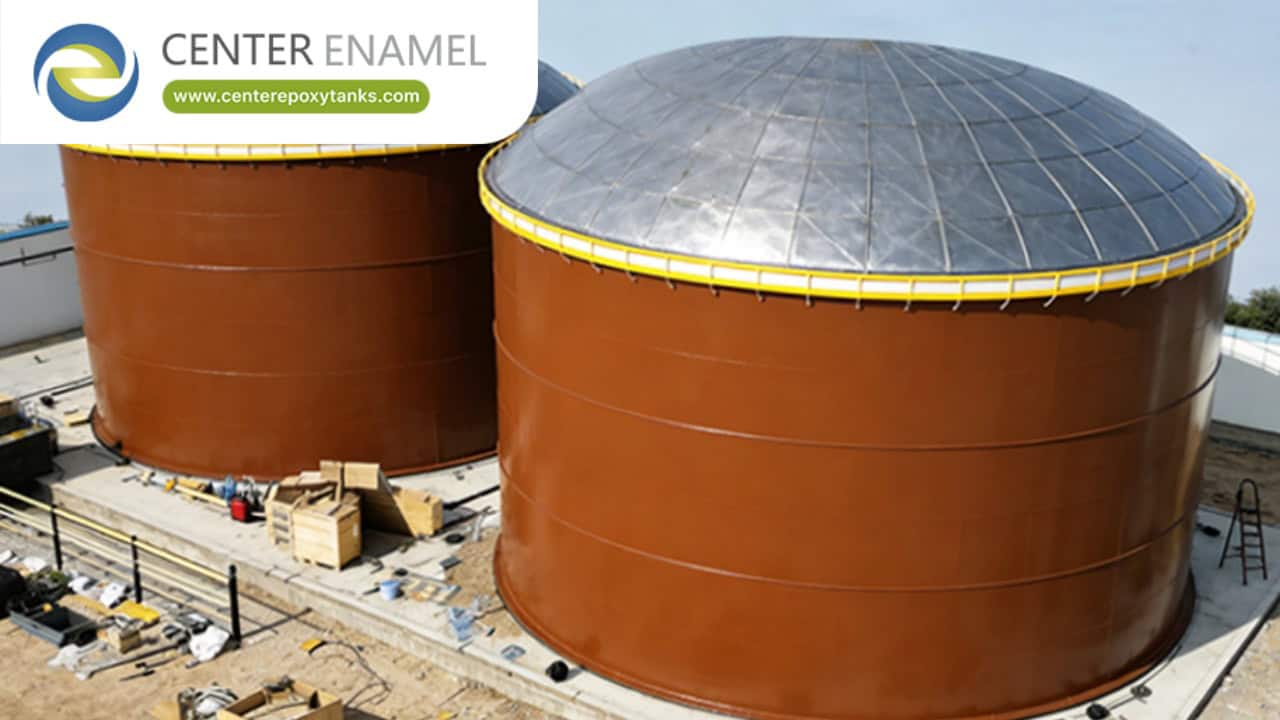
Advanced Fusion Epoxy Tanks for Grain Storage: Engineering & Procurement Guide
For modern grain storage, the challenge is twofold: maintaining structural integrity under massive load and ensuring the absolute purity of the stored commodity. Fusion Bonded Epoxy (FBE) tanks represent the pinnacle of current steel storage technology. By fusing a chemically inert, highly abrasion-resistant epoxy layer to the steel surface at a molecular level, these tanks offer a frictionless, food-safe, and corrosion-resistant environment that significantly outperforms traditional galvanized or bare steel silos.
1. The Technology: What is Fusion Epoxy Coating?
Unlike standard liquid paints or coatings, Fusion Bonded Epoxy (FBE) is a thermoset epoxy powder coating applied to steel via an electrostatic process and then heat-cured.
This process creates a highly cross-linked polymer network that is:
● Chemically Inert: Does not react with grain oils or natural organic acids, ensuring no contamination of the food product.
● Abrasion Resistant: Grain movement causes significant friction against silo walls; FBE provides an exceptionally hard surface that resists "scarring," which is where corrosion typically begins in standard silos.
● Smooth Finish: The ultra-smooth surface improves the flowability of grains, reducing bridging and blockage during discharge.
2. Engineering Performance: Structural & Storage Dynamics
When storing grain, we must consider the Janssen Effect, which governs how grain distributes pressure against the silo walls. Unlike liquids, grain pressure is non-linear.
The lateral pressure against the fusion epoxy-coated wall is calculated by:
The FBE Advantage: Because the coefficient of friction ($mu$) for Fusion Epoxy is generally lower than that of raw or galvanized steel, the wall friction is minimized. This allows for more predictable grain discharge rates and reduces the stress on the steel structure during filling and emptying cycles.
3. Comparative Performance Matrix
Selecting the right silo technology is a balancing act between durability, food safety compliance, and capital expenditure.
Engineering Attribute | Fusion Epoxy (FBE) Steel | Galvanized Steel | Poured-in-Place Concrete |
Food Safety (Purity) | Excellent (Inert) | Moderate (Zinc leaching risk) | Variable (Porosity risk) |
Abrasion Resistance | Superior | Moderate | Low (Surface spalling) |
Maintenance | Minimal | High (Corrosion monitoring) | High (Crack repair) |
Flowability | High | Moderate | Low |
Initial Cost | Premium | Moderate | High |
4. Procurement Vetting Matrix
When issuing an RFP for grain storage, distinguish between standard steel fabricators and specialized agricultural engineering firms.
● Holiday Testing (ASTM G62): Demand 100% of the internal surface undergoes high-voltage holiday testing. A "holiday" is a microscopic void in the coating; in grain storage, these voids are the entry points for moisture and rust.
● Food Grade Compliance: Insist on documentation verifying that the epoxy formula is FDA-compliant (or equivalent national standard) for direct contact with dry, consumable commodities.
● Adhesion Testing (ASTM D4541): Require the manufacturer to provide pull-off strength test results to ensure the epoxy bond will not delaminate under cyclic thermal expansion.
● Impact Resistance: Grain silos take abuse during filling. Require data on the coating's impact strength to ensure it won't chip when struck by high-velocity grain or mechanical equipment.
Frequently Asked Questions (FAQ)
Q: Why is FBE better for grain flow than galvanized steel?
A: Galvanized surfaces can develop "white rust" and become pitted over time, which increases surface friction. FBE coatings remain slick and inert for the life of the silo, ensuring consistent flow rates and reducing the likelihood of grain bridging.
Q: Can FBE silos be used for high-moisture grain?
A: Yes. FBE provides a superior moisture barrier compared to other coatings. However, in high-moisture grain storage, proper aeration systems remain the most critical factor in preventing spoilage.
Q: Is the coating prone to peeling?
A: Not when applied correctly via fusion-bonding. Because the coating is heat-cured and chemically bonded to the steel (not just "painted" on), it becomes an integral part of the tank wall, making it extremely resistant to peeling or flaking.
Are you currently in the design phase for a new storage facility, or are you looking to retrofit existing infrastructure to improve grain quality and flow consistency?


