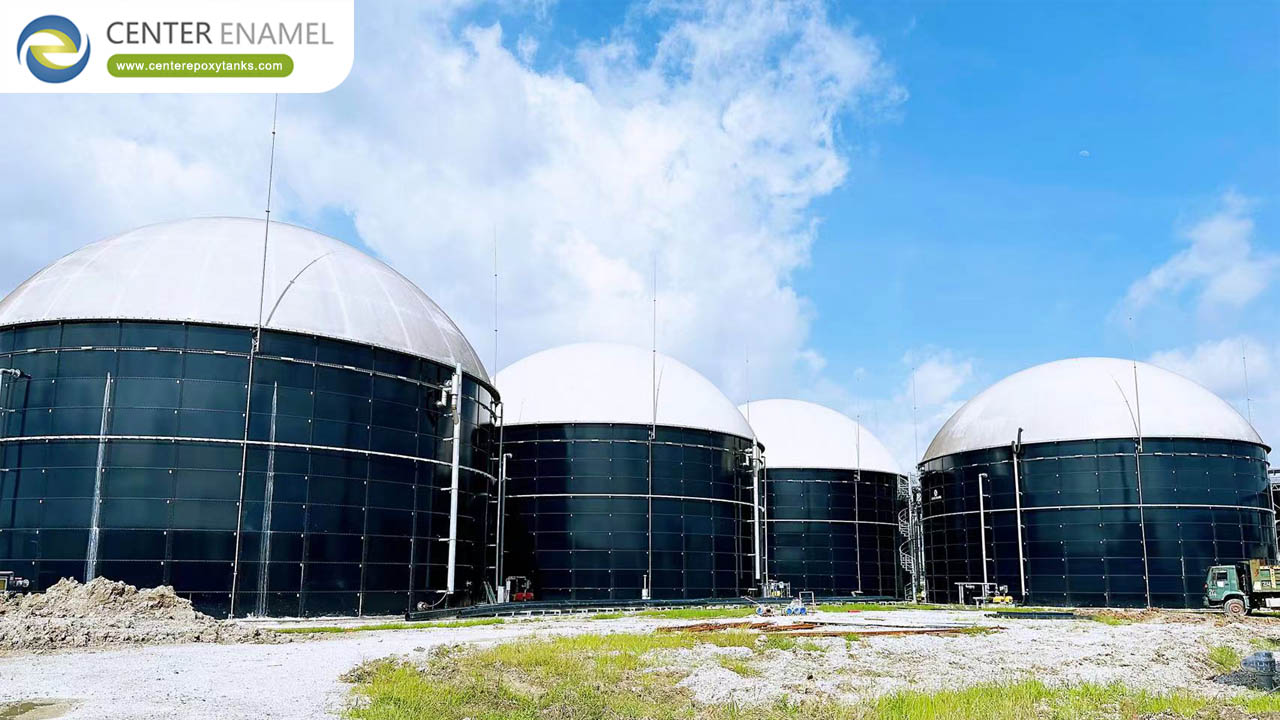
Advanced Double Membrane Covers for Food Processing Biogas Storage
An advanced double membrane cover is a specialized, variable-volume gas storage system designed to sit atop anaerobic digesters in food processing biogas plants. It consists of an inner membrane that expands and contracts to hold biogas and an outer, air-supported membrane that provides structural protection and maintains constant pressure. In the food processing sector—where feedstock consistency can fluctuate, leading to unpredictable gas production rates—these covers act as a critical buffer system. They enable the plant to store surplus gas during peak production and provide a steady supply to CHP (Combined Heat and Power) engines or upgrading units, while also offering high chemical resistance to the high-H₂S (Hydrogen Sulfide) concentrations common in organic food waste digestion.
The "Buffering" Need in Food Processing Digesters
Unlike stable agricultural feedstocks, food processing waste (FOG—fats, oils, grease; or high-sugar organic waste) often causes rapid, volatile spikes in gas production.
Handling Gas Fluctuations: A fixed-roof tank or concrete cover offers zero storage flexibility. If production exceeds demand, the gas is either flared (wasted) or the system risks overpressurization. Double membrane systems provide a "gas breathing" capability, allowing the inner membrane to swell during production surges and retract during low-production periods, ensuring your CHP units have a consistent, reliable fuel supply.
H₂S and Corrosive Atmosphere: Food waste digestion often yields biogas with high H₂S levels. Advanced double membrane systems use high-grade, chemically inert materials (such as PVDF or specialized PVC coatings) that are resistant to acid-induced corrosion, ensuring the cover outlasts traditional carbon-steel or low-quality fabric structures.
Comparative Overview: Digester Cover Technologies
Feature | Advanced Double Membrane | Fixed Concrete/Steel Roof | Single-Layer Flexible Cover |
Storage Capability | Dynamic (Variable) | Static (None) | Limited/Fixed |
Operational Pressure | Constant (Automated) | Variable (Passive) | None (Low/Variable) |
Corrosion Resistance | High (Chemically Inert) | Low (Requires Coating) | Moderate |
Installation Speed | Rapid (Modular) | Very Slow | Moderate |
Odor/Emission Control | Excellent (Hermetic) | Moderate (Requires Seals) | Poor |
Technical Engineering Benchmarks for Food Waste Plants
To ensure the longevity and safety of a biogas facility handling organic food waste, procurement and engineering teams should demand these specific performance benchmarks:
Material Durability (The "H₂S Shield"): Demand high-tenacity polyester fabric coated with specialized PVDF or anti-corrosion PVC. These materials prevent "gas permeation" and maintain their structural integrity even when exposed to high-acidity atmospheres.
Constant Pressure Control Systems: The membrane is only as good as its control system. Ensure the solution includes redundant, ATEX-certified blowers and automated pressure control cabinets that monitor gas volume and weather conditions in real-time.
Weather Protection: In extreme climates, the outer membrane must handle heavy snow or high wind loads. The air-support system must be integrated with the plant's PLC/SCADA to ensure the external dome remains rigid and protected regardless of the gas level inside.
Seam Integrity: The seams are the primary failure point. Specify high-frequency (HF) welding for all membrane joints, which creates a fused bond stronger than the base material itself, effectively eliminating the risk of gas leakage.
Frequently Asked Questions (FAQ)
Q: Why is a double membrane cover better than a concrete roof for my food waste digester?
A: Concrete is prone to corrosion when exposed to biogas and H₂S. Over time, the "concrete rot" caused by these gases can compromise the structure. Double membranes are chemically inert and provide a "gas bag" effect, effectively doubling as your gas storage unit, which concrete roofs cannot do.
Q: How do you prevent the membrane from tearing when the food waste composition changes?
A: The membrane is designed with a high safety factor and utilizes sensors to monitor the internal pressure. If production surges, the pressure control system manages the gas outflow to your engines or flares to prevent over-inflation.
Q: What is the maintenance expectation for a double membrane cover?
A: Maintenance is significantly lower than rigid roofs. It involves routine (bi-annual) inspections of the air blowers, safety valves, and a visual check of the membrane surface. There is no sandblasting or painting required.
Optimizing Your Renewable Energy Asset
The choice of cover is a long-term infrastructure decision that impacts your energy output, safety, and compliance with local odor and emission regulations. By selecting an advanced double membrane system, you secure the reliability of your food-to-energy loop.
Are you planning a new food-waste digester project or retrofitting an existing facility?
[Contact our technical engineering team] to request a structural feasibility analysis, gas capacity assessment, and a technical proposal tailored to your specific feedstock volume and local climate conditions.
Would you like a detailed technical brief on the specific performance differences between PVDF and PVC coatings for high-acidity food waste environments?


