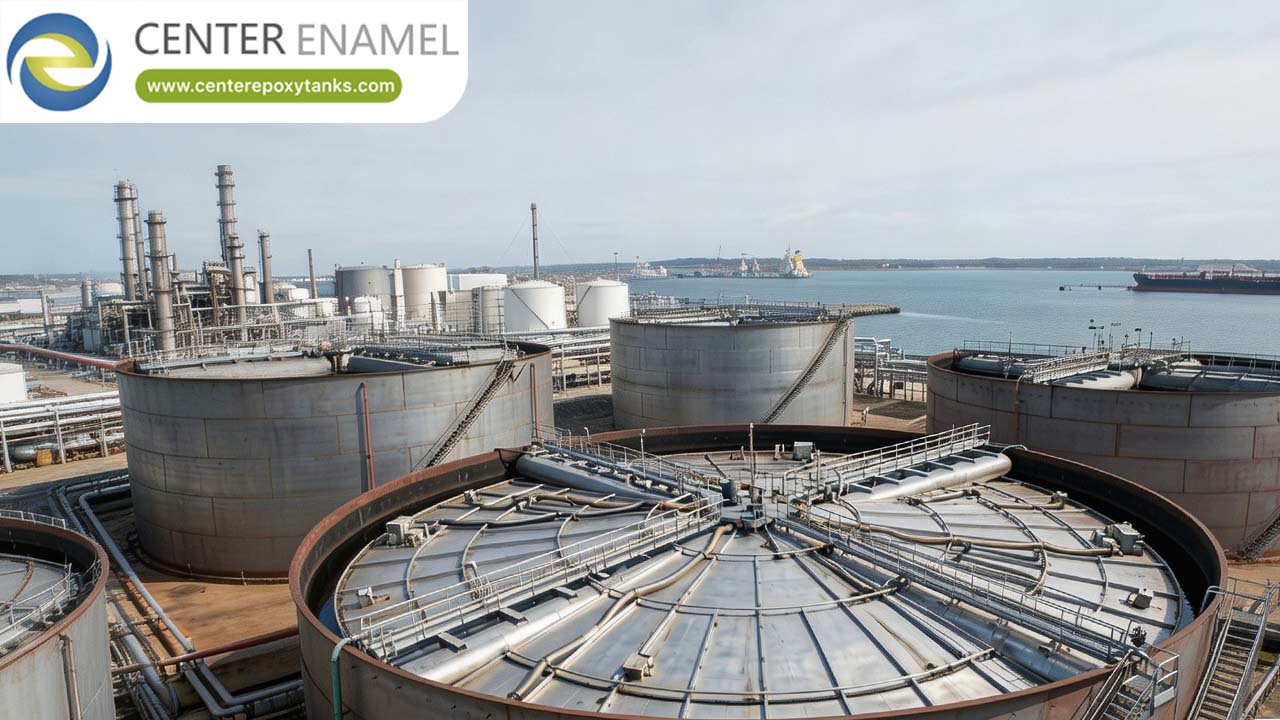
Aluminium Floating Roofs for Reducing Vapor Loss in Large-Capacity Tanks
In large-capacity industrial storage terminals, refineries, and chemical processing plants, the containment of volatile organic liquids represents both an environmental mandate and an economic priority. When volatile products—such as crude oil, refined fuels, solvents, and petrochemicals—are stored in conventional fixed-roof tanks, temperature fluctuations cause diurnal breathing and working losses. This creates significant vapor spaces where Volatile Organic Compounds (VOCs) accumulate and escape into the atmosphere, leading to valuable product loss, increased fire safety risks, and strict regulatory penalties.
To mitigate these challenges, modern engineering standards heavily advocate for Aluminium Internal Floating Roofs (IFRs). Designed to float directly on the liquid surface, aluminum IFRs eliminate the vapor zone entirely, establishing an elite barrier that dramatically curtails evaporation, protects environmental air quality, and ensures long-term operational asset preservation.
The Mechanics of Vapor Suppression: How Aluminium IFRs Function
The primary engineering purpose of an internal floating roof is to eradicate the vapor space between the liquid surface and the tank roof. By floating in direct contact with the stored product, aluminum IFRs achieve up to a 99% reduction in VOC emissions compared to fixed open-headspace tanks.
Elimination of Diurnal Breathing Losses: In standard fixed-roof tanks, solar heating causes vapors to expand and vent out during the day, while cooling air draws in fresh oxygen at night. An aluminum IFR blocks this continuous breathing cycle.
High Strength-to-Weight Ratio: Aluminum possesses an exceptional strength-to-weight ratio. Its lightweight design places minimal dead load on the existing tank shell or foundation, making it the preferred material for retrofitting older steel infrastructure without structural reinforcements.
Modular Bolted Construction (Zero Hot-Work): Modern aluminum floating roofs are precision-engineered as modular bolt-together systems. This eliminates the need for on-site welding ("hot work"), significantly enhancing job-site safety, reducing installation time, and allowing tanks to be retrofitted quickly with minimal downtime.
Data Table: Comprehensive Comparison of Tank Roof Technologies
Technical Parameter | Aluminium Internal Floating Roof (IFR) | Fixed Carbon Steel Cone Roof | External Floating Roof (EFR) |
VOC Emission Control | Excellent; up to 99% reduction via direct liquid contact | Low; massive vapor headspace leads to high breathing losses | Moderate; exposed to wind scouring across the rim seal |
Structural Weight | Extremely lightweight; exerts minimal load on tank walls | Heavy structural carbon steel plate construction | Heavy double-deck or pontoon structure with rolling ladders |
Weather & Rain Protection | Sheltered inside a fixed tank or dome roof | Fully exposed to environmental elements | Exposed to direct rainfall, requiring active primary drain management |
Corrosion Resistance | Superior; natural aluminum oxide passivation prevents chemical oxidation | Low; vulnerable to internal vapor condensation and rusting | Moderate; demands ongoing abrasive blasting and repainting |
Retrofit Capability | Ideal for upgrading existing fixed-roof tanks | N/A (Original design) | Extremely difficult and cost-prohibitive to convert |
The Ultimate Synergy: Combining Aluminium IFRs with Geodesic Dome Roofs
To achieve absolute maximum environmental protection and regulatory compliance, industry-leading facilities increasingly implement a combined dual-roof system. By pairing an internal aluminum floating roof with an exterior Aluminum Geodesic Dome Roof, operators create a protected micro-environment:
The exterior dome completely blocks wind action, heavy rain, snow, and solar radiation from contacting the floating roof.
The internal floating roof suppresses product evaporation and controls VOC emissions.
This dual configuration eliminates the risk of rain-water accumulation on the floating deck while guaranteeing near-zero product loss over decades of service.
Frequently Asked Questions (FAQ)
Q: How do aluminium floating roofs reduce vapor loss in large storage tanks?
A: Aluminium internal floating roofs float directly on top of the liquid product, removing the empty headspace where vapors collect and expand. By sealing the liquid surface, they prevent volatile organic compounds (VOCs) from evaporating and escaping into the atmosphere.
Q: Are aluminium internal floating roofs compliant with international standards?
A: Yes. High-quality aluminum floating roofs are designed and manufactured in strict compliance with recognized global engineering standards, including API 650 Appendix H specifications for internal floating roofs.
Q: Can an aluminium IFR be retrofitted into an existing fixed-roof storage tank?
A: Absolutely. Because aluminum is lightweight and modular, it can be easily transported through standard tank manways and assembled inside existing carbon steel or concrete tanks without requiring complex heavy lifting or on-site welding.
Q: What maintenance advantages do aluminium floating roofs offer over carbon steel?
A: Aluminum naturally forms a protective oxide layer that resists the corrosive, chemical-laden atmospheres found inside fuel and chemical tanks. Unlike carbon steel, aluminum does not require periodic repainting, significantly lowering long-term maintenance overhead.


