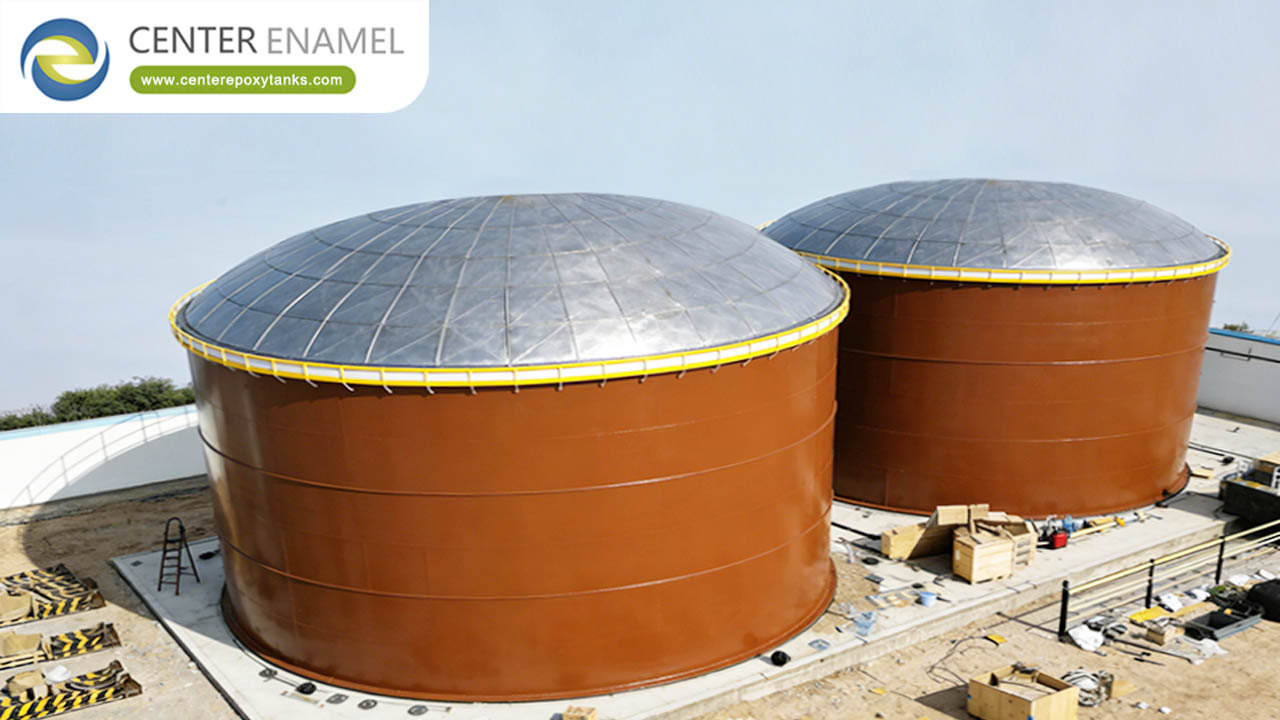
5 Tips for New Tank Construction: From Site Preparation to Commissioning
Tank construction looks simple from a distance: a foundation, a shell, a roof. In practice, most budget overruns and early-life failures trace to the same handful of decisions — soil assumptions, coating quality, erection sequencing, and testing discipline — made before the first plate is ever cut.
These five tips for new tank construction cover the decisions that determine whether a project lands on schedule and the tank serves for 30 years: standards-first design, real geotechnical work, factory-verified coating, erection sequencing that fits the site, and testing that ends in clean commissioning documentation.
1. Tip 1: Fix the Standard Before the Sketch
The design code chosen on day one disciplines every later decision.
· Match code to service: API 650 for atmospheric fuel and water, AWWA D100 for welded municipal water, AWWA D103-09 for bolted coated tanks, ASME VIII where pressure applies.
· Lock site loads early: Wind, seismic, and snow data from the actual site — not regional defaults — anchor the structural calculations.
· Plan appurtenances now: Nozzles, manways, ladders, vents, and instrumentation located on drawings cost nothing; relocating them in steel is expensive.
· Decide bolted vs welded: If schedule, site labor, or future expansion matter, factory-coated bolted construction usually wins before design even begins.
2. Tip 2: Spend Real Money on the Foundation and Geotech
Every tank failure investigation eventually points down.
· Bore the site: Soil borings and settlement analysis set the foundation type — slab, ring wall, or piled — and detect fill that must be replaced.
· Design settlement limits: Uniform settlement is tolerable; edge tilt is not. Differential limits keep doors, piping, and floating roofs working.
· Control moisture: A foundation crown and perimeter drainage keep water away from the tank bottom — the most corrosion-prone square meters of the whole asset.
· Verify before steel arrives: Survey the completed foundation flatness before panel delivery; retrofitting a shell to an out-of-tolerance base wastes the factory's precision.
3. Tip 3: Choose Factory-Coated, Tested Surfaces — and Verify Erection Quality
Coating and erection quality are where 30-year tanks are actually made.
· Prefer factory coating: GFS panels fired at 820-930 deg C or FBE powder systems holiday-tested at 1,500 V arrive certified — site coating inherits weather risk instead.
· Sequence for the site: Jacking erection builds from the top down at ground level, cutting work-at-height exposure; scaffold builds suit other layouts — pick deliberately.
· Control the small crew: A trained 12-person crew with calibrated tools erects a mid-size bolted tank in days; torque records document every joint.
· Test like it matters: Water-fill or hydrostatic tests per the standard, weld NDE where applicable, and a punch-list walkthrough produce the commissioning file — the tank's birth certificate.
Data Table: New Tank Construction Phase Checklist
Phase | Key Verification | Common Failure |
Design | Code, site loads, appurtenance layout | Missing seismic data |
Geotech/foundation | Borings, settlement calc, flatness survey | Edge tilt, water pooling |
Fabrication | Coating certs, 1,500 V holiday test, traceability | Site coating weathered |
Erection | Torque records, jacking sequence, QA hold points | Untrained crew substitutions |
Testing/commissioning | Water fill test, NDE reports, punch list closed | Undocumented acceptance |
Frequently Asked Questions (FAQ)
Q1: What are the most important steps in new tank construction?
Standards-first design, verified geotechnical foundations, factory-coated and holiday-tested materials, disciplined erection with torque documentation, and full hydrostatic testing through commissioning. Projects that shortcut the foundation or coating phases pay for it within the first maintenance cycle.
Q2: How long does new tank construction take?
Factory-coated bolted tanks ship in roughly 30 days for standard 1,000-10,000 m3 configurations, with field erection by a 12-person crew in days to weeks — a 2008 Olympic-project tank was completed in 15 days. Field-welded tanks typically need several months including site coating and curing.
Q3: Why is the tank foundation so critical?
Because every load the tank ever carries transmits through it. Uniform settlement is manageable, but differential tilt distorts shells, binds floating roofs, and fractures connected piping. Professional borings, settlement analysis, and a flatness survey before steel arrives prevent the most expensive class of tank defect.
Q4: What tests are required before a new tank enters service?
A water-fill (hydrostatic) test to verify shell and bottom integrity per API 650 or AWWA standards, weld NDE where welded construction applies, coating holiday verification for coated systems, and a closed punch list generating the commissioning dossier. Clean-water disinfection cycles apply additionally for potable service.


