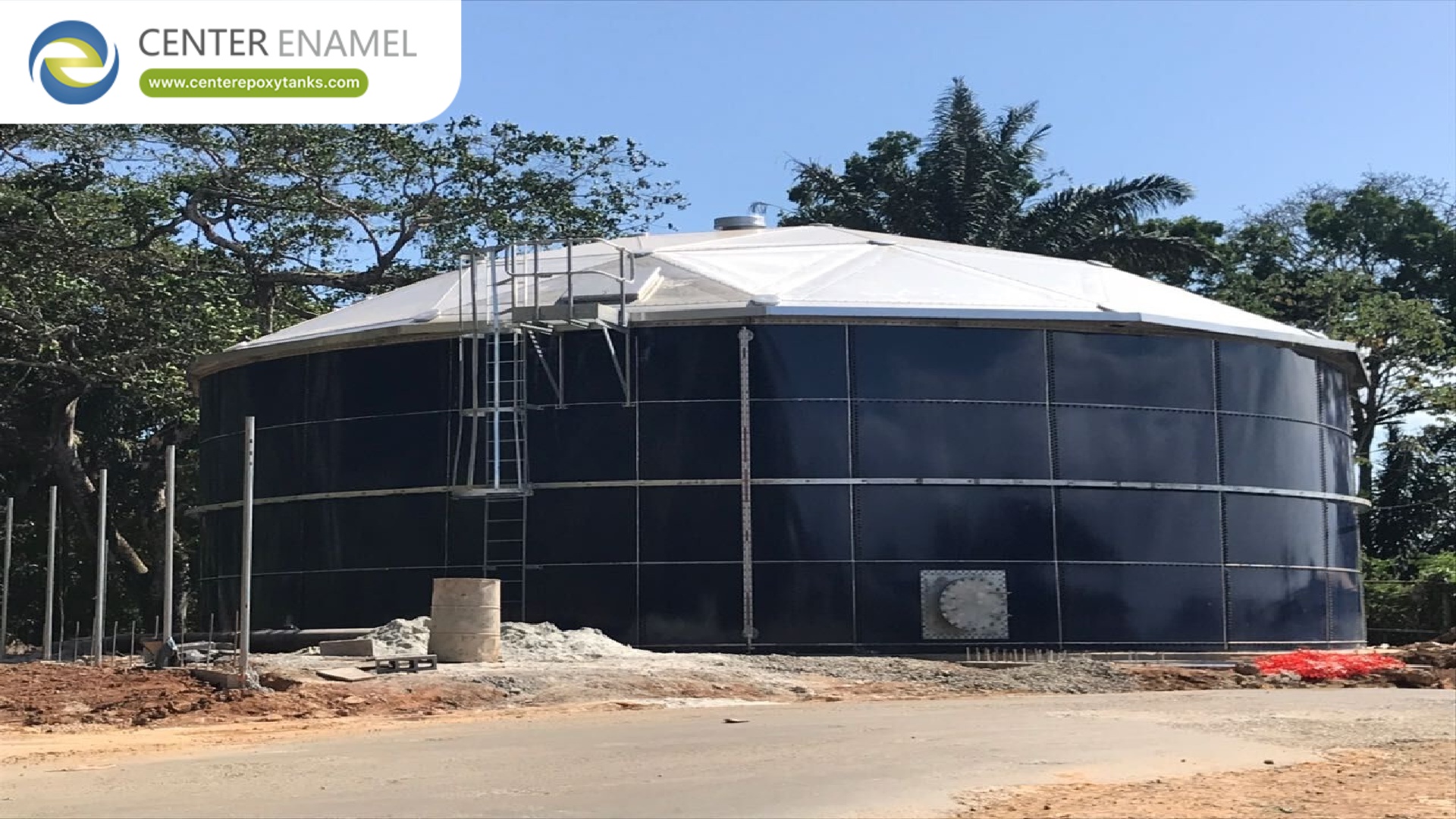
In the aerospace and aviation sectors, the quality of fuel is not merely an operational concern—it is a critical safety imperative. Aviation fuels, such as Jet A and Jet A-1, are highly refined hydrocarbons that must adhere to stringent purity standards from the refinery to the wing tip. Any presence of moisture, particulates, or oxidative degradation products can lead to engine failure, fuel system icing, or microbial corrosion. For airports, strategic fuel reserves, and logistics hubs, managing an Aviation Fuel Tank infrastructure requires a zero-tolerance approach to contamination. Shijiazhuang Zhengzhong Technology Co., Ltd (Center Enamel), as a premier China Floating Roofs Manufacturer, delivers the definitive solution to these challenges. By utilizing precision-engineered Floating Roofs, we provide an advanced containment system that eliminates the air-liquid interface, ensuring that aviation fuel remains in its most pristine state while optimizing terminal safety and efficiency.
Industry Pain Points: The High Stakes of Aviation Fuel Containment
Operating an Aviation Fuel Tank farm involves navigating a series of high-stakes industry pain points where failure is not an option:
Water Contamination and Phase Separation: Aviation fuel is hygroscopic. In traditional fixed-roof tanks, "tank breathing" draws in atmospheric moisture. This water can condense and settle at the bottom of the tank, creating a breeding ground for "fuel bugs" (microbial growth) that can clog aircraft filters and corrode the tank shell.
Particulate and Dust Ingress: Aircraft engines require fuel that is free from microscopic particulates. Traditional vents in fixed-roof tanks allow wind-blown dust and atmospheric pollutants to enter, which can compromise the fuel's ISO cleanliness rating.
Oxidative Stability and Gums: Exposure to oxygen in the tank's headspace triggers oxidative reactions, leading to the formation of gums and resins. These degradation products can interfere with the high-precision fuel injection systems of modern turbine engines.
Evaporative Loss and VOC Emissions: Even though jet fuel has lower volatility than gasoline, the cumulative evaporative loss in large-scale storage hubs represents a significant financial drain and an environmental compliance risk.
Safety Risks from Static and Vapors: The accumulation of flammable vapors in a tank's headspace creates a risk of fire or explosion, especially during rapid filling operations where static electricity can be generated.
Product Definition: The Barrier for Aviation Purity
To resolve these vulnerabilities, Center Enamel defines aviation storage excellence through our advanced Floating Roofs. These structures are buoyant, impermeable decks designed to float directly on the surface of the fuel, moving vertically to eliminate the reactive headspace.
Internal Floating Roof (IFR) Architecture: For the aviation sector, we specialize in internal floating roofs installed beneath a fixed outer roof. This "Double-Shield" design protects the fuel from both the weather and the oxidative effects of the atmosphere.
High-Buoyancy Geodesic Framing: Our roofs utilize a series of independent, closed-cell pontoons and a rigid structural frame. This geodesic design ensures the deck remains stable and level, even during high-flow fueling operations common at major international airports.
Aviation-Grade Material Selection: As a specialized China Floating Roofs Manufacturer, we utilize high-specification aluminum alloys that are naturally non-sparking and resistant to the chemical profile of aviation fuels. These materials ensure that no metallic flakes or rust enter the fuel stream.
Precision Rim Sealing Systems: We incorporate specialized primary and secondary seals that are chemically compatible with kerosene-based fuels. These seals provide a gas-tight interface with the tank shell, blocking the ingress of moisture and pollutants
Integrated Solution Advantages: Seamless Technical Synergy
The true strength of choosing Center Enamel lies in our integrated solution advantages. We do not simply supply a component; we deliver a unified containment ecosystem for the aviation industry.
Synergy with Aluminum Dome Roofs: When Floating Roofs are paired with our Aluminum Dome Roofs, the Aviation Fuel Tank is protected by a maintenance-free, weather-tight shield. The dome reflects solar radiation, maintaining stable internal fuel temperatures and further reducing moisture condensation.
Compatibility with Professional Infrastructure: Our roofs are designed to integrate with automated tank gauging (ATG) systems, high-level alarms, and specialized sampling ports, allowing operators to monitor fuel quality in real-time.
Brand Backer and Engineering Confidence: With three decades of leadership, Center Enamel acts as a powerful brand backer. By sourcing both the enclosure and the floating deck from a single China Floating Roofs Manufacturer, airport authorities eliminate technical conflicts.
Environmental Leakage Risk Mitigation: By suppressing the release of vapors and the ingress of rainwater, our integrated solutions ensure the facility meets the most stringent environmental air and water quality standards.
Product Advantages and Performance Parameters
Choosing Center Enamel Floating Roofs for your aviation assets provides several transformative technical advantages:
Superior Vapor Recovery and Inventory Preservation: By eliminating the air-liquid interface, our roofs reduce evaporative losses by a massive margin, preserving the high-value inventory of the Aviation Fuel Tank.
Zero-Contamination Guarantee: Our roofs block the ingress of moisture, dust, and wildlife. This prevents the formation of sludge and microbial growth, ensuring the fuel remains within the strict parameters of AFQRJOS and ASTM D1655.
Lightweight Structural Integrity: The high strength-to-weight ratio of the aluminum geodesic design minimizes the dead load on the tank wall. This is critical when retrofitting older airport infrastructure.
Enhanced Operational Safety: By removing the explosive vapor space, our roofs significantly reduce the risk of fire. Furthermore, our integrated grounding systems prevent the accumulation of static charges during fuel transfer.
Risk Assessment and Environmental Seepage Prevention
A comprehensive risk assessment is a vital component of our engineering process for every aviation project:
Purity Risk Mitigation: We analyze the potential for atmospheric contamination and design seal systems that maintain fuel integrity under all weather conditions.
Resilience to Extreme Weather: Our roofs are engineered to withstand the dynamic forces caused by rapid filling and emptying, as well as seismic activity or high wind loads when paired with our external domes.
Environmental Seepage Protection: Our risk assessment includes the implementation of advanced sealing systems to prevent any external contaminants from seeping into the reservoir and to prevent fuel vapors from escaping.
Maintenance and Interruption Analysis: We design for a maintenance-free lifecycle. The use of non-corrosive alloys eliminates the need for periodic anti-corrosion treatments, ensuring the fuel supply remains continuous.
Manufacturing Excellence and Company Core Competitiveness
The core competitiveness of Shijiazhuang Zhengzhong Technology Co., Ltd (Center Enamel) is rooted in our role as a global leader in the storage industry for over thirty years.
Advanced CNC Precision Fabrication: Our manufacturing excellence is driven by automated CNC technology. Every strut, node, and panel of our Floating Roofs is produced with rigorous dimensional accuracy, ensuring a perfect fit and a leak-free structure on-site.
Massive Production Power: As a specialized China Floating Roofs Manufacturer, we operate large-scale, ISO-certified facilities capable of supporting massive aviation infrastructure projects in over one hundred countries.
Factory-Controlled Quality Assurance: By producing components in a controlled environment, we ensure that every installation is consistent, reliable, and free from the defects common in manual field fabrication.
Global Supply Chain Integrity: With three decades of experience, we provide seamless logistics and technical support, ensuring that our containment solutions are delivered and installed to the highest international standards.
International Standards, Installation, and Maintenance
Every Floating Roofs unit produced by Center Enamel is designed to meet the world’s most demanding engineering and safety protocols:
Compliance with International Standards: Our designs follow API 650 Appendix H, ISO 28765, and relevant AWWA standards. This compliance provides the brand backer required for acceptance by international aviation authorities.
Simplified and Safe Installation Process: The modular, bolted construction eliminates the need for on-site welding ("hot work"). This is a critical safety advantage when retrofitting existing Aviation Fuel Tank units that may contain residual flammable vapors.
Reduced Lifecycle Costs: The durability of our materials ensures that the roofs remain structurally sound with only minimal periodic inspection, eliminating the need for expensive recurring anti-corrosion treatments.
Product Maintenance Efficiency: Because our aluminum components do not rust or flake, the internal cleaning of the tank becomes faster and less frequent, reducing operational downtime for the terminal.
Optimizing the Standard for Aviation Fuel Storage
The strategic implementation of high-performance Floating Roofs within Aviation Fuel Tank infrastructure represents the pinnacle of modern liquid containment engineering. By addressing the critical industry pain points of moisture ingress, particulate contamination, and oxidative degradation, Center Enamel provides a solution that ensures aviation fuel remains pure, safe, and ready for flight. Our position as a premier China Floating Roofs Manufacturer is built on three decades of expertise, advanced CNC manufacturing, and a commitment to meeting international quality standards. Through our precision engineering and integrated solution approach, we help airport and terminal operators protect their valuable fuel assets, comply with safety regulations, and ensure the long-term reliability of the global aviation supply chain.


