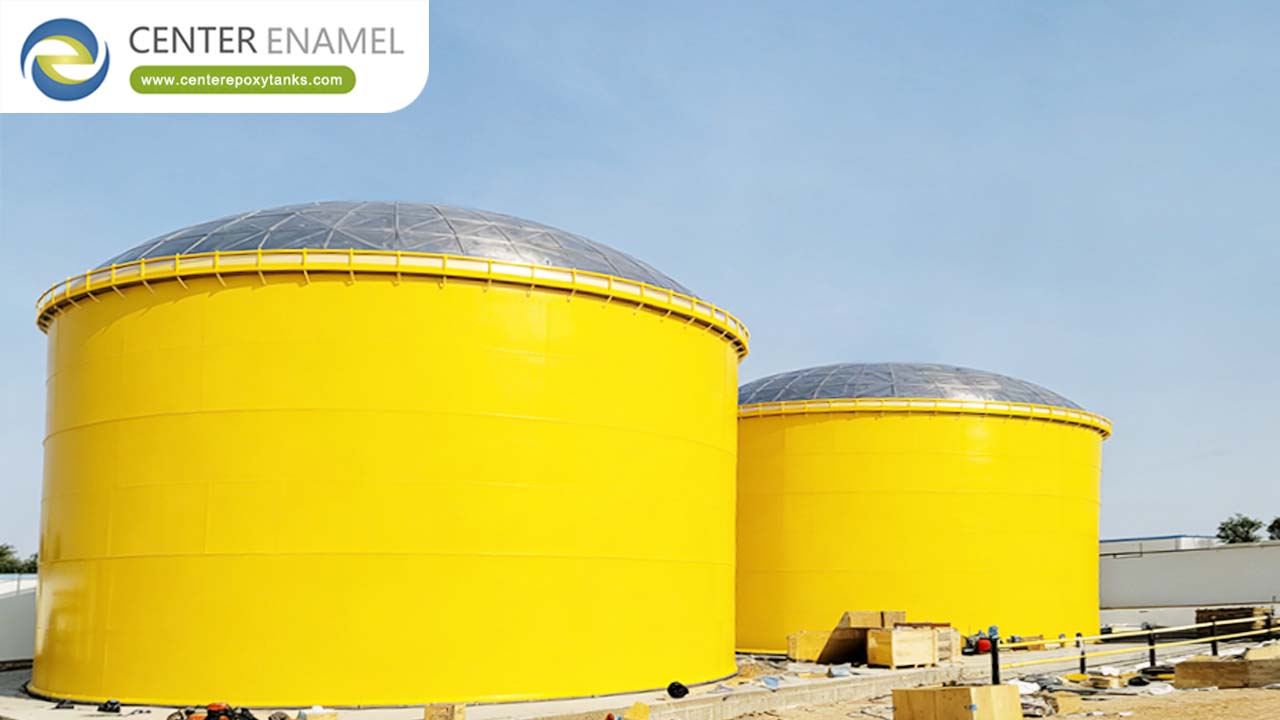
What is the Difference Between Welded and Bolted Tanks?
The primary difference between bolted tanks and welded tanks lies in their manufacturing and installation processes. Bolted tanks are engineered from pre-fabricated, factory-coated steel panels that are shipped to the site and bolted together using heavy-duty sealants. They offer rapid installation, superior factory-applied coatings, and easy relocation. Welded tanks, conversely, are constructed by welding raw steel plates together entirely on-site. While welded tanks accommodate massive capacities and high-pressure storage, they require extensive field-coating, weather-dependent installation, and higher on-site labor costs.
Core Comparisons for B2B Procurement
When engineering industrial liquid and bulk storage systems—especially for wastewater treatment, chemical storage, or biogas engineering—choosing between bolted and welded tanks significantly impacts both upfront CAPEX and long-term OPEX.
1. Construction and Installation Speed
Bolted Tanks: Engineered for speed. The steel panels are pre-cut, rolled, and coated in a controlled factory environment. Once shipped to the global project site, a small crew can assemble the tank using scaffolding or a specialized jacking system in a fraction of the time. Installation is rarely delayed by weather conditions.
Welded Tanks: Require a highly skilled, specialized labor force for on-site welding, grinding, and sandblasting. The process is labor-intensive and highly susceptible to weather delays (rain, high humidity, or extreme cold can halt welding and coating).
2. Coating Quality and Corrosion Resistance
Bolted Tanks (Factory-Applied): Bolted systems allow for advanced, high-performance coatings like Glass-Fused-to-Steel (GFS) or fusion-bonded epoxy. GFS involves firing glass to steel at temperatures over 800°C (1500°F), creating an impermeable barrier with exceptional chemical and abrasion resistance. This is highly advantageous for aggressive environments like industrial wastewater or anaerobic digesters.
Welded Tanks (Field-Applied): Must be coated on-site after the welding process is complete. Field coating is vulnerable to environmental contamination, humidity, and human error, which can compromise the integrity of the coating and lead to premature corrosion and rust.
3. Expansion, Relocation, and Maintenance
Bolted Tanks: Highly modular. If a facility needs to increase storage capacity, engineers can easily add rings to the top of an existing bolted tank. Furthermore, bolted tanks can be dismantled, relocated, and reassembled at a new site. Maintenance usually involves simply replacing damaged panels or tightening bolts.
Welded Tanks: Permanent structures. Expanding a welded tank requires complex, costly field modifications, and relocation is impossible without destroying the tank.
Key Takeaway: For projects prioritizing rapid deployment, modularity, and premium corrosion resistance (like GFS technology), bolted tanks yield a superior ROI. Welded tanks remain necessary for high-pressure storage or exceptionally massive, singular storage volumes.
Side-by-Side Evaluation Matrix
Feature | Bolted Storage Tanks | Welded Storage Tanks |
Assembly Location | Factory-fabricated panels, field-assembled | Fully fabricated and welded on-site |
Installation Speed | Fast (days to weeks) | Slow (weeks to months) |
Coating Application | Factory-applied (e.g., GFS, Epoxy) | Field-applied (susceptible to weather) |
Expandability | High (can add rings/panels) | Low (requires permanent field modification) |
Relocation | Yes (can be dismantled) | No (permanent structure) |
Standard Compliance | AWWA D103, EN 15282, ISO 28765 | API 650, AWWA D100 |
Frequently Asked Questions (FAQ)
Which tank is more cost-effective?
While material costs fluctuate, bolted tanks generally offer lower total lifecycle costs. The savings stem from drastically reduced on-site labor, zero weather delays, and fewer maintenance requirements due to the superiority of factory-applied coatings.
Do bolted tanks leak?
Modern bolted tanks do not leak when installed correctly. They utilize high-performance sealants (such as specialized mastics or elastomeric rubbers) engineered to withstand extreme temperatures, UV exposure, and aggressive chemicals, forming a watertight and gastight seal between the steel panels.
What are the maximum capacities for each?
Bolted tanks typically scale up to roughly 20,000 cubic meters (approx. 5 million gallons), which covers the vast majority of industrial, municipal, and wastewater applications. For projects requiring capacities significantly beyond this threshold, field-erected welded tanks are typically required.
Why is Glass-Fused-to-Steel (GFS) strictly a bolted tank technology?
The GFS enameling process requires fusing glass to steel inside large, high-temperature industrial furnaces (over 800°C). This extreme thermal process can only be performed on individual panels in a factory environment; it cannot be replicated on-site with raw steel plates.


