·
What is an FBE Mesophilic Digester?
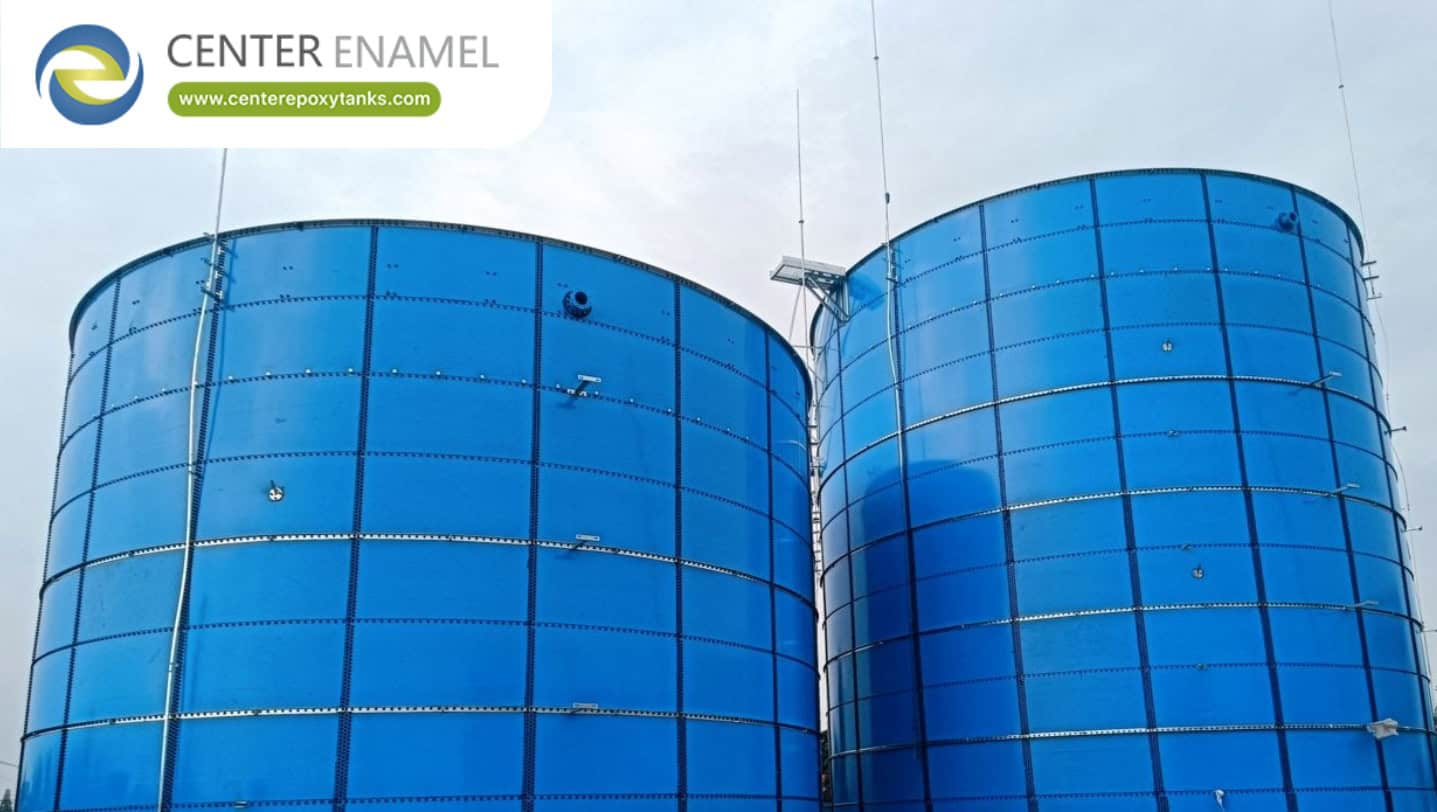
An FBE (Fusion Bonded Epoxy) mesophilic digester is an advanced modular, bolted steel industrial containment vessel engineered specifically to facilitate anaerobic digestion processes within the optimal mesophilic temperature range (typically 30°C to 38°C or 86°F to 100°F). These specialized biological reactors break down organic waste, municipal sewage sludge, agricultural manure, and industrial food processing effluents to produce renewable biogas (methane) and stabilize organic matter.
In wastewater treatment plants and renewable energy facilities, anaerobic digestion environments are notoriously corrosive. The biological breakdown of sulfur-rich organic materials generates hydrogen sulfide ($H_2S$), volatile fatty acids, and moisture condensation, which can rapidly degrade standard carbon steel or cause concrete degradation. FBE mesophilic digesters combine the high structural tensile strength of carbon steel panels with a factory-applied thermoset epoxy powder coating thermally fused to the substrate. This creates an impermeable, chemically inert, and continuous interior barrier designed to withstand harsh biological gases and corrosive liquids over decades of continuous operation.
The Engineering and Fusion-Bonding Process
The reliability, chemical resistance, and protective endurance of an FBE mesophilic digestion tank depend on a precise, factory-controlled manufacturing workflow:
1.
Substrate Surface Preparation (Shot Blasting): Premium structural steel plates undergo automated grit or shot blasting to achieve an optimal anchor profile (conforming to rigorous standards like SSPC-SP 10), completely removing mill scale, oxidation, and surface oils.
2.
3.
Electrostatic Powder Application: High-performance thermoset epoxy powder is applied uniformly across both sides of the steel panels using advanced electrostatic spray equipment.
4.
5.
Thermal Cross-Link Firing: Coated sheets enter high-performance thermal ovens (ranging from 150°C to 250°C), where the epoxy powder melts, flows, and chemically cross-links into a dense, continuous polymer film.
6.
7.
Rigorous Quality Control & Holiday Testing: Every individual panel undergoes strict dry film thickness verification and high-voltage holiday spark testing (typically at 1,100V to 1,500V) to guarantee absolute zero pinholes or micro-discontinuities.
8.
Technical Performance Matrix: Digestion Tank Technologies
Technical Parameter | FBE Bolted Steel Mesophilic Digesters | Cast-in-Place Concrete Digesters | Traditional Field-Welded Steel Vessels |
Hydrogen Sulfide ($H_2S$) & Acid Resistance | Superior; cross-linked FBE barrier resists corrosive biological gases, organic acids, and moisture | Prone to biogenic sulfide corrosion (concrete crown corrosion) and sulfuric acid attack over time | Subject to internal oxidation, scaling, and weld-seam corrosion under high humidity |
Installation Velocity | Rapid modular bolted assembly; significantly reduces project lead times and civil delays | Extremely slow; requires extensive formwork, pouring, and multi-week concrete curing | Slow; requires intensive field welding, plate rolling, and non-destructive testing |
Modularity & Scalability | Easily expanded, modified, or relocated as biogas plant capacity requirements grow | Permanent civil structure; expansion or relocation is virtually impossible without demolition | Rigid structural footprint; difficult to modify or expand without heavy cutting |
Lifecycle Maintenance | Minimal maintenance required; smooth interior surface simplifies sludge management and cleaning | Requires periodic crack injection, joint sealing, and waterproof membrane renewal | Requires frequent abrasive sandblasting and full interior/exterior repainting |
Key Advantages in Biogas and Wastewater Treatment Facilities
1. Superior Protection Against Biogenic Sulfide Corrosion
Anaerobic digestion naturally releases hydrogen sulfide gas, which combines with condensation to form corrosive sulfurous and sulfuric acids. Unprotected steel or concrete structures suffer from rapid wall thinning and structural deterioration. The dense, cross-linked FBE coating isolates the structural steel from these aggressive biogas byproducts.
2. Optimized Thermal Performance for Mesophilic Stability
Mesophilic bacteria operate best within a steady 30°C to 38°C temperature window. FBE bolted steel digesters can be easily integrated with external insulation jackets and heating coils, ensuring precise thermal regulation and maximizing biological methane production efficiency.
3. Rapid Modular Erection Without Hot Work
Wastewater and biogas plants often expand operations in restricted or active zones where open-flame welding introduces severe safety risks. FBE digesters utilize a prefabricated, bolted panel design assembled via high-strength hardware and elastomeric sealants, completely eliminating hazardous field welding.
Frequently Asked Questions (FAQ)
Q: What is an FBE mesophilic digester used for?
A: An FBE mesophilic digester is used as an anaerobic biological reactor to break down organic waste, municipal sludge, and agricultural manure within a temperature range of 30°C to 38°C, generating renewable biogas and stabilizing waste.
Q: Why do mesophilic digestion tanks require specialized coatings like FBE?
A: Anaerobic digestion generates corrosive gases like hydrogen sulfide ($H_2S$) and organic acids that react with moisture to attack standard steel and concrete. Fusion bonded epoxy coatings provide an impermeable, chemically inert barrier that prevents structural corrosion.
Q: How are the panels of an FBE digester joined together to contain biogas?
A: The modular steel panels are assembled using high-tensile structural bolts and specialized gas-tight, chemical-resistant elastomeric or polyurethane sealants engineered to maintain a 100% airtight seal under operational pressure.
Q: What is the expected service life of an FBE mesophilic digestion tank?
A: When manufactured in strict compliance with international industrial design codes (such as AWWA D103 or ISO standards) and properly maintained, an FBE digester is engineered for a dependable operational lifespan exceeding 30 years.


