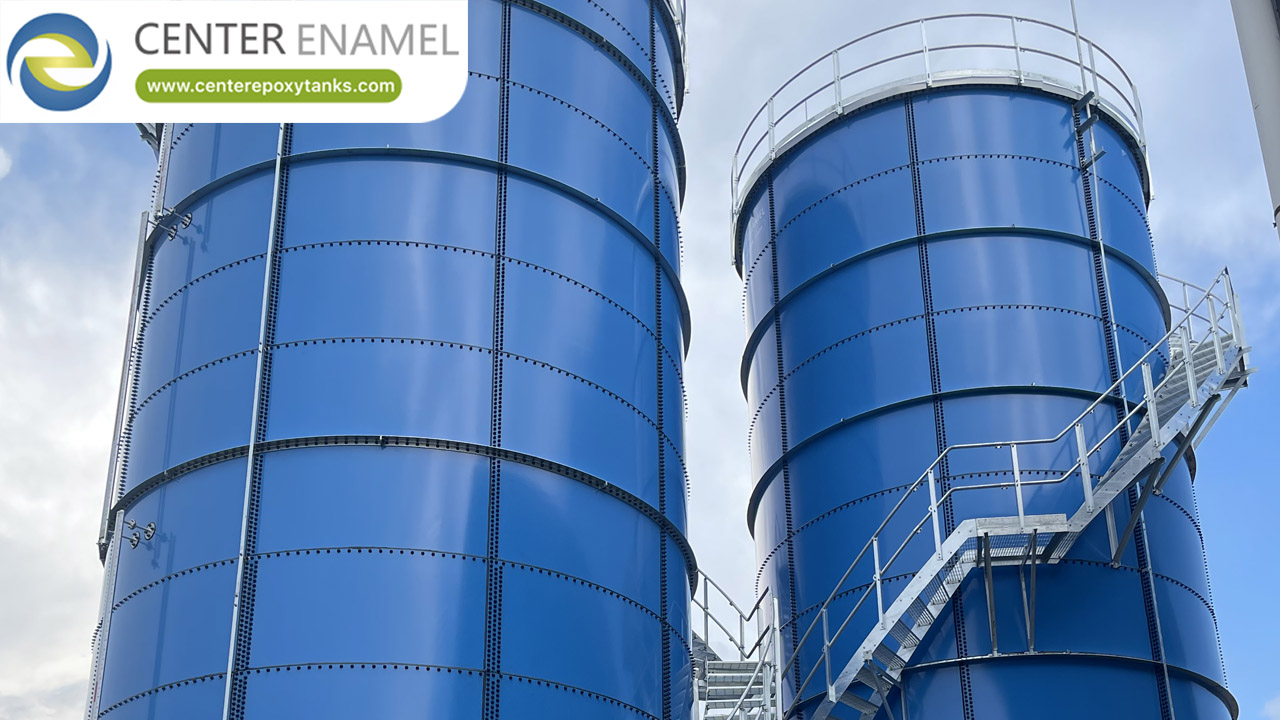
What is an FBE Dry Fertilizers Storage Tank?
An FBE (Fusion Bonded Epoxy) dry fertilizers storage tank is an advanced modular, bolted steel industrial container engineered specifically to securely store bulk granular fertilizers, urea, ammonium nitrate, monoammonium phosphate (MAP), diammonium phosphate (DAP), and blended agricultural nutrients under strictly controlled, moisture-resistant, and corrosion-protected conditions.
In the agricultural supply chain and bulk fertilizer distribution sector, storing dry chemical fertilizers presents severe engineering challenges. Many commercial fertilizers are highly hygroscopic (absorbing moisture from the air) and chemically reactive. When standard galvanized steel or concrete silos are exposed to residual fertilizer dust and humidity, chemical salts can rapidly strip zinc coatings, causing accelerated corrosion, pitting, and structural degradation. FBE dry fertilizer storage tanks combine the exceptional structural tensile strength of carbon steel panels with a factory-applied thermoset epoxy powder coating that is thermally fused to the substrate. This creates an impenetrable, chemically inert, and ultra-smooth interior barrier designed to safeguard product integrity and ensure long-term structural longevity over decades of service.
The Engineering and Fusion-Bonding Process
The reliability, chemical resistance, and protective endurance of an FBE dry fertilizer storage tank depend on a precise, factory-controlled manufacturing workflow:
1.
Substrate Surface Preparation (Shot Blasting): Premium structural steel plates undergo automated grit or shot blasting to achieve an optimal anchor profile (conforming to rigorous industrial standards like SSPC-SP 10), removing all surface oxidation, mill scale, and residual oils.
2.
3.
Electrostatic Powder Application: Specially formulated, high-performance thermoset epoxy powder is applied uniformly across both sides of the steel panels using automated electrostatic spray equipment.
4.
5.
Thermal Cross-Link Firing: The coated sheets enter high-performance thermal ovens (ranging from 150°C to 250°C), where the epoxy powder melts, flows, and chemically cross-links into a dense, continuous protective polymer film.
6.
7.
Rigorous Quality Control & Holiday Testing: Every individual panel undergoes strict dry film thickness verification and high-voltage holiday spark testing (typically at 1,100V to 1,500V) to guarantee absolute zero pinholes or micro-discontinuities.
8.
Technical Performance Matrix: Fertilizer Storage Technologies
Technical Parameter | FBE Bolted Steel Fertilizer Tanks | Traditional Galvanized Steel Silos | Cast-in-Place Concrete Silos |
Chemical & Salt Resistance | Superior; cross-linked FBE barrier resists aggressive fertilizer salts and chemical residues | Vulnerable; fertilizer dust and moisture rapidly corrode and strip standard zinc galvanizing | Prone to chemical attack, concrete spalling, and degradation from acidic fertilizer salts |
Moisture & Caking Defense | Impermeable, sealed bolted design blocks moisture ingress and humidity fluctuations | Corrugations and joints can allow moisture leaks, triggering fertilizer caking | Prone to micro-cracking, moisture seepage, and hardening of stored bulk material |
Interior Friction & Flow | Glass-like FBE finish minimizes friction, promoting smooth mass flow and preventing bridging | Moderate friction; rough spots can trap fertilizer dust and cause material hang-ups | High friction due to concrete texture; requires frequent cleaning and maintenance |
Installation Velocity | Rapid modular bolted assembly; significantly reduces project lead times on-site | Rapid erection, though sheet alignment requires precise gasket placement | Extremely slow; requires extensive formwork, pouring, and multi-week curing |
Key Advantages in Agricultural and Bulk Distribution Terminals
1. Superior Resistance to Fertilizer Salt Corrosion
Dry fertilizers release fine dust particles that settle on tank walls. In the presence of humidity, these chemical residues create an aggressive corrosive environment that destroys conventional galvanized steel. The dense, cross-linked polymer barrier of an FBE tank isolates the structural steel from direct chemical contact, eliminating rust failure.
2. Ultra-Smooth Interior Prevents Caking and Bridging
Fertilizers tend to absorb moisture, clump together, and form hard blockages inside silos. The ultra-smooth, non-porous interior finish of an FBE coating significantly reduces wall friction, ensuring consistent mass flow discharge and preventing material hang-ups during unloading operations.
3. Rapid Modular Erection and Long-Term Reliability
Agribusiness facilities require robust storage that can be deployed quickly without extensive on-site civil delays. FBE fertilizer tanks utilize prefabricated bolted panel assemblies that eliminate hazardous field welding while delivering a dependable structural lifespan exceeding 30 years.
Frequently Asked Questions (FAQ)
Q: What is an FBE dry fertilizer storage tank used for?
A: An FBE dry fertilizer storage tank is used to securely store bulk granular fertilizers, urea, ammonium nitrate, phosphate blends, and agricultural nutrient compounds under moisture-resistant, corrosion-protected conditions.
Q: Why do dry fertilizers require specialized coatings like Fusion Bonded Epoxy?
A: Many dry fertilizers are hygroscopic and chemically reactive. When mixed with humidity, they form corrosive salts that rapidly destroy standard galvanized steel or concrete silos. FBE coatings provide an inert chemical barrier that prevents this corrosion.
Q: How do FBE tanks prevent dry fertilizer from caking inside the silo?
A: The glass-like, non-porous interior finish of the FBE coating dramatically lowers wall friction compared to traditional concrete or corrugated steel, promoting smooth gravity discharge and preventing fertilizer caking and bridging.
Q: What is the expected service life of an FBE dry fertilizer storage tank?
A: When manufactured in strict compliance with international industrial design codes (such as AWWA D103) and properly maintained, an FBE fertilizer storage tank is engineered for a dependable operational lifespan exceeding 30 years.


