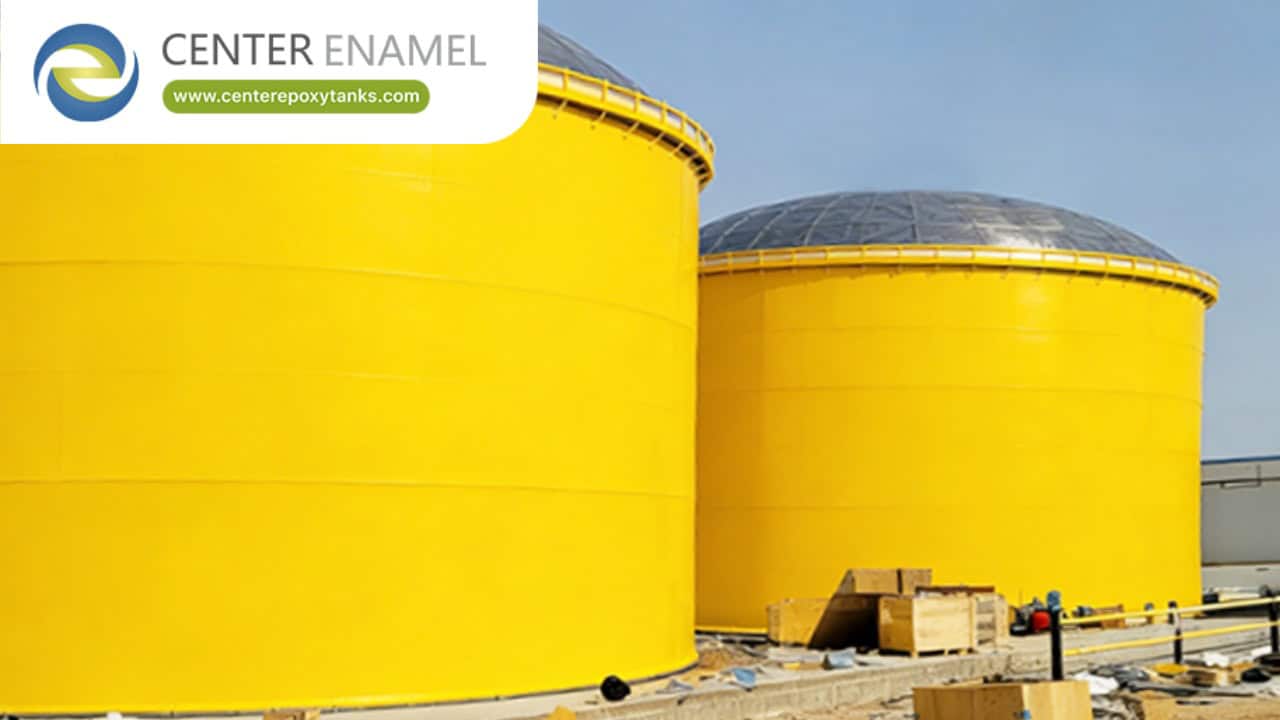
What Is a Welded Steel Municipal Sewage Tank? Infrastructure, Engineering, and Wastewater Containment
In municipal civil infrastructure, rapid urban expansion requires robust, high-capacity sanitation systems capable of handling millions of gallons of domestic and commercial wastewater daily. From primary collection lift stations and flow equalization basins to advanced biological treatment reactors and sludge holding silos, public utilities demand absolute structural reliability. To satisfy these rigorous environmental and hydraulic standards, city planners and municipal engineers specify the welded steel municipal sewage tank.
Constructed from heavy-gauge carbon or stainless steel plates joined through continuous, full-penetration shop or field welding, these specialized tanks form a monolithic, hermetically sealed containment structure engineered specifically to withstand the aggressive chemical and biological volatility of municipal sewage. As a globally trusted leader in advanced liquid storage manufacturing, Shijiazhuang Zhengzhong Technology Co., Ltd. (Center Enamel) delivers precision-engineered welded steel sewage tanks designed to optimize urban wastewater treatment and safeguard public health worldwide.
Core Functions in Municipal Wastewater Treatment
Unlike standard clean water reservoirs, a municipal sewage tank must perform complex fluid management across various stages of the treatment cycle:
1.
Flow Equalization (EQ): Captures and buffers fluctuating diurnal sewage flows from urban networks, stabilizing hydraulic loads and organic concentrations before they enter downstream biological treatment processes.
2.
3.
Primary and Secondary Clarification: Acts as a containment vessel where suspended solids settle out of the wastewater stream or where biological flocs are separated from treated effluent.
4.
5.
Sludge Holding and Biosolids Storage: Stores waste-activated sludge (WAS) and digested biosolids prior to dewatering, stabilization, or final land application.
6.
Engineering Superiority: Conquering the Sewage Environment
Sewage environments present severe operational hazards, including fluctuating pH levels, abrasive suspended grit, and the generation of corrosive hydrogen sulfide ($H_2S$) gas in the vapor headspace above the waterline. Welded steel construction provides distinct structural advantages:
·
Monolithic Leak-Proof Integrity: Continuous shop or field welding fuses steel plates into a unified, seamless shell, eliminating joint separation and gasket failure pathways to protect surrounding municipal groundwater tables from contamination.
·
·
Advanced Internal Barrier Protection: Interior walls are treated with high-build or 100% solids epoxy coatings (or fabricated from high-grade stainless steel) to provide exceptional resistance to biological acids and chemical attack.
·
·
High Structural Flexibility: Unlike rigid concrete structures that can crack under differential soil settling or seismic activity, welded steel offers superior structural ductility and load-bearing resilience.
·
Data Table: Comprehensive Comparison of Municipal Sewage Tank Technologies
Technical Parameter | Welded Steel Municipal Sewage Tanks | Cast-in-Place Concrete Basins | Bolted Steel Storage Tanks |
Structural Integrity | Monolithic welded steel shell; absolute zero-leak performance and high seismic flexibility | Massive monolithic structure; highly prone to concrete micro-cracking, spalling, and seepage over time | Modular panels utilizing perimeter elastomeric gaskets and sealing compounds |
Corrosion & Gas Defense | Superior when paired with 100% solids epoxy or stainless steel against H2S attack | Vulnerable to microbial induced corrosion (MIC) and sulfuric acid concrete deterioration | Dependent on panel coating quality and gasket chemical compatibility in headspace zones |
Installation & Commissioning Profile | Efficient shop fabrication with precise field erection and rigorous NDE weld testing | Slow, multi-month multi-stage formwork, pouring, and curing timeline | Rapid modular panel assembly using high-tensile structural hardware |
Primary Municipal Application | Large municipal EQ basins, primary clarifiers, digestion units, and sludge silos | Massive municipal wastewater treatment plants and massive primary clarifiers | Compact package plants, regional pump stations, and auxiliary holding tanks |
Frequently Asked Questions (FAQ)
Q: What is a welded steel municipal sewage tank?
A: It is a heavy-duty industrial storage vessel constructed from continuously welded steel plates, designed to collect, buffer, and process municipal sewage and wastewater within public utility systems.
Q: How do welded steel tanks combat hydrogen sulfide ($H_2S$) corrosion?
A: Welded sewage tanks utilize high-performance interior barrier coatings—such as 100% solids epoxy applied over near-white metal surface preparation—or corrosion-resistant stainless steel alloys to withstand aggressive H2S gas in the headspace.
Q: Why do municipal engineers choose welded steel over concrete for sewage applications?
A: Welded steel tanks offer faster installation timelines, zero structural porosity, superior seismic flexibility, and easier lifecycle modification or expansion compared to traditional site-built concrete basins.
Q: What standards govern the design of welded municipal water and wastewater tanks?
A: They are typically engineered in accordance with rigorous international standards such as AWWA D100 (Welded Carbon Steel Tanks for Water Storage), API 650, and ISO 9001 quality management benchmarks.


