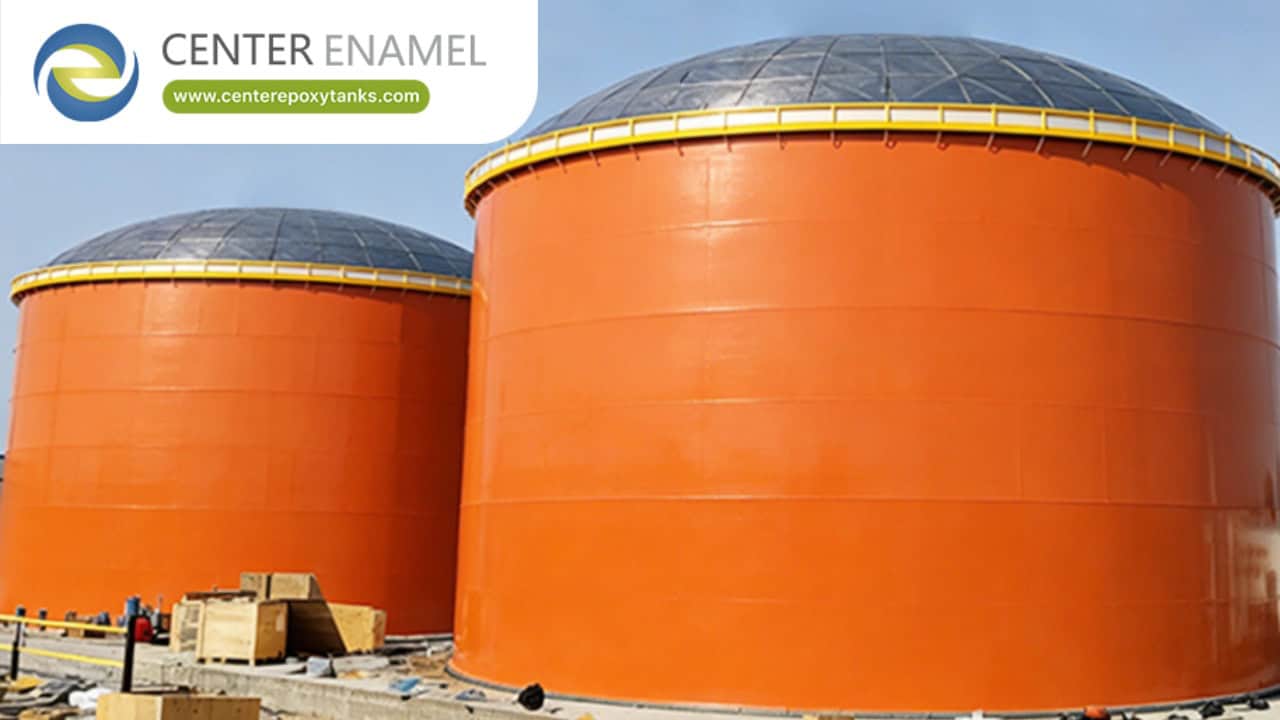
What Is a Welded Carbon Steel Tank? Design, Fabrication, and Applications
In the global industrial bulk liquid storage sector, selecting the correct structural vessel architecture is vital for safety, capital efficiency, and long-term asset reliability. A welded carbon steel tank is an aboveground storage vessel constructed by welding together steel plates to form a seamless, liquid-tight shell and roof structure.
Engineered in strict accordance with international standards such as API 650 and AWWA D100, welded carbon steel tanks are the premier choice for heavy-duty industrial containment, offering unmatched structural rigidity, high-pressure tolerance, and long-term durability for petroleum products, chemicals, and water reserves.
1. Structural Design and Fabrication Standards
The defining characteristic of a welded carbon steel tank is its permanent, fused joint construction, which eliminates mechanical fasteners in favor of continuous structural welds.
Plate-by-Plate Erection: Tanks are fabricated from high-tensile carbon steel plates (such as ASTM A36 or ASTM A516) rolled to match the radius of the vessel. In field-erected configurations, successive horizontal rings (courses) and vertical seams are welded sequentially.
API 650 Compliance: Governing standards mandate rigorous non-destructive examination (NDE)—including radiographic testing of welds, vacuum box testing of floor plates, and magnetic particle inspection—to ensure zero defect tolerances.
Foundation and Shell Integration: Welded carbon steel tanks are anchored securely to reinforced concrete ringwall or slab foundations, ensuring stability against hydrostatic pressures and environmental wind or seismic loads.
Data Table: Welded Carbon Steel Tanks vs. Bolted Steel Tanks
Engineering Parameter | Welded Carbon Steel Tank | Bolted Carbon Steel Tank |
Primary Construction Method | Continuous structural field or shop welding | Factory-coated panels joined with structural bolts and sealants |
Leak Prevention Profile | Fused steel joints provide permanent, seamless liquid containment | Relies on precision bolt torque, gaskets, and elastomeric sealants |
Initial Fabrication Time | Longer on-site erection and welding duration | Rapid modular assembly and installation |
Typical Tank Capacity | Excellent for massive, high-volume bulk terminals (exceeding 10,000 m³) | Highly scalable for municipal, industrial, and agricultural storage |
Maintenance & Inspection | Requires periodic exterior painting and weld non-destructive testing | Requires periodic bolt torque checks and perimeter seal inspections |
2. Key Industrial Applications
Due to their superior structural strength and seamless integrity, welded carbon steel tanks are deployed across diverse heavy-industry environments:
Petroleum Refining and Crude Oil Terminals: Storing crude oil, refined distillates, diesel, bunker fuel, and intermediate refinery feedstock under rigorous environmental safety protocols.
Chemical Processing and Petrochemicals: Housing non-volatile industrial solvents, liquid fertilizers, and process chemicals when paired with specialized internal epoxy or phenolic lining systems.
Municipal Water and Fire Suppression: Maintaining massive municipal potable water reserves, raw water clarifier feeds, and dedicated high-capacity fire protection water storage systems.
3. Corrosion Mitigation and Longevity
Because carbon steel is inherently susceptible to oxidation, welded tanks integrate comprehensive anti-corrosion engineering:
Internal Linings: High-performance multi-coat epoxy or polyurethane linings are applied to internal surfaces to isolate the carbon steel from corrosive liquid media.
Exterior Coating Systems: Industrial-grade exterior paint systems protect the steel shell from atmospheric moisture, UV radiation, and weathering.
Cathodic Protection: Sacrificial anode systems or impressed current setups are frequently installed to prevent galvanic corrosion on tank bottom plates resting against foundation pads.
Frequently Asked Questions (FAQ)
Q: What is a welded carbon steel tank?
A: A welded carbon steel tank is an aboveground industrial storage container built by fusing high-strength carbon steel plates together with continuous structural welds to create a permanent, liquid-tight containment vessel.
Q: What standards govern the design and fabrication of welded steel storage tanks?
A: Welded carbon steel tanks are primarily designed, fabricated, and inspected in accordance with API 650 for petroleum and chemical storage, and AWWA D100 for municipal water storage tanks.
Q: How do you prevent rust and corrosion in a welded carbon steel tank?
A: Corrosion is prevented through a combination of engineered internal tank linings, high-performance exterior protective paint systems, proper corrosion allowances during structural design, and cathodic protection.
Q: Why choose a welded carbon steel tank instead of a bolted tank?
A: Welded tanks are chosen for massive, high-volume bulk storage applications where permanent, fused structural seams and maximum pressure tolerance are required, particularly in large-scale petroleum and petrochemical terminals.


