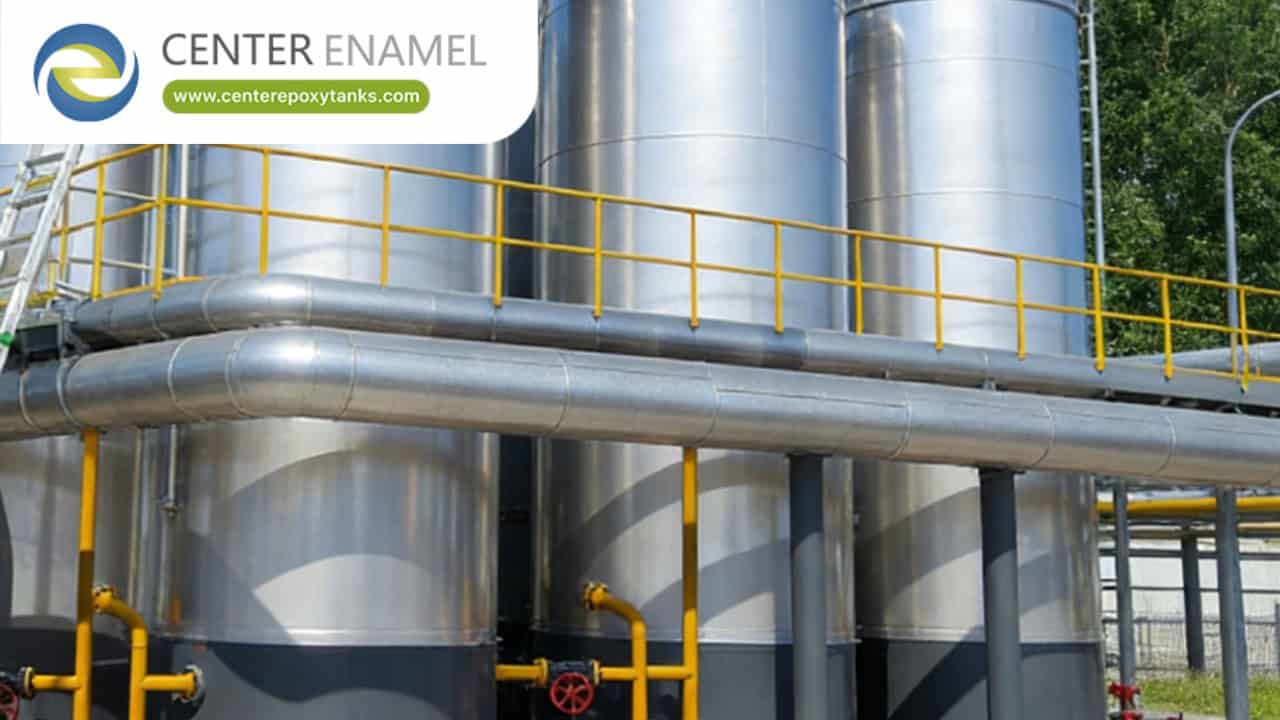
What Is a Sulfuric Acid (H2SO4) Storage Tank? Engineering Standards, Material Compatibility, and Safety Protocols
Sulfuric acid (H2SO4) is one of the most widely produced and consumed industrial chemicals globally, serving vital roles in fertilizer manufacturing, petroleum refining, water treatment, chemical synthesis, and metal processing. However, because concentrated and dilute sulfuric acid solutions are highly corrosive, reactive, and hazardous to personnel and the environment, standard chemical containers are completely unsuitable for their containment.
A sulfuric acid storage tank is a heavily engineered industrial containment vessel constructed from specialized fully killed carbon steel or corrosion-resistant polymers designed to safely store H2SO4 across various concentration ranges while managing passivation chemistry, thermal effects, and fugitive vapor emissions.
1. The Passivation Principle and Corrosion Control
Unlike many acids that rapidly dissolve metals, concentrated sulfuric acid (93% to 98% concentration) can be safely stored in unlined carbon steel tanks due to a unique chemical phenomenon known as passivation:
Iron Sulfate Film Formation: When concentrated H2SO4 contacts carbon steel, a dense, protective microscopic layer of ferrous sulfate (FeSO4) forms on the metal surface, effectively halting further rapid corrosion.
Fluid Velocity Limits: To maintain this protective passivation film, fluid velocity inside piping and near tank inlets must remain strictly controlled (typically under 0.61 , m/s or 2 , ft/s) to prevent shear erosion from stripping away the iron sulfate barrier.
Concentration Thresholds: Carbon steel is generally suitable for acid concentrations above 70% at ambient temperatures. Below this threshold, the acid becomes increasingly active, requiring specialized alloys, fluoropolymer linings, or fiberglass-reinforced plastic (FRP).
2. Governing Engineering Standards and Design Codes
Sulfuric acid vessels must conform to strict structural and anti-corrosion frameworks to prevent catastrophic containment failures:
NACE SP0294: The benchmark standard for the design, fabrication, and inspection of tanks storing concentrated sulfuric acid and oleum at ambient temperatures, outlining specific carbon steel plate thicknesses and weld joint quality.
API 650: Governs the mechanical design of large, welded vertical aboveground steel storage tanks, modified with specific corrosion allowances (typically a minimum of 6 , mm or 1/4 , inch extra shell thickness).
Data Table: Sulfuric Acid Storage Tank Specification Matrix
Tank Configuration | Primary Shell Material | Acid Concentration Range | Key Corrosion Protection Features | Governing Codes |
Bulk Aboveground Vertical Tank | Fully Killed Carbon Steel | 93% - 98% Concentrated | Thick plate design, no internal heating coils, dedicated dry air vent | API 650 / NACE SP0294 |
Dilute Acid Storage Vessel | FRP (Vinyl Ester Resin) or Lined Steel | 10% - 70% Dilute | Chemical-resistant resin liner or fluoropolymer barrier | ASTM D3299 / RTP-1 |
Oleum & High-Strength Vessel | Specialized Carbon Steel / Alloy 20 | 100%+ Oleum (SO3 mix) | Heat-traced vents, specialized weld inspection | ASME Sec. VIII / API 620 |
3. Essential Safety and Moisture Management Infrastructure
Because sulfuric acid is heavily hygroscopic (it readily absorbs moisture from the atmosphere), improper venting can dilute the acid at the surface, destroying the passivation layer and accelerating tank corrosion.
Desiccant Air Dryers: Tank breathers must be fitted with silica gel or automated air-drying systems to ensure that air entering the tank headspace during fluid withdrawal is completely dry.
Secondary Containment Dikes: In compliance with environmental and OSHA regulations, sulfuric acid storage facilities must feature secondary containment systems engineered to hold at least 110% of the volume of the largest primary tank, protected with acid-resistant brick or epoxy coatings.
Frequently Asked Questions (FAQ)
Q: What is a sulfuric acid storage tank?
A: A sulfuric acid storage tank is an industrial containment vessel engineered from specialized carbon steel or corrosion-resistant polymers to safely store H2SO4 while preventing severe corrosion and environmental leaks.
Q: Why can carbon steel be used to store concentrated sulfuric acid?
A: Concentrated sulfuric acid (93% to 98%) reacts with carbon steel to form a stable, protective iron sulfate passivation film that prevents further rapid corrosion of the metal.
Q: Why is moisture control critical in a sulfuric acid tank?
A: Sulfuric acid is hygroscopic and absorbs atmospheric moisture. If moisture dilutes the acid concentration near the surface, the protective iron sulfate layer breaks down, causing accelerated local corrosion.
Q: What secondary containment requirements apply to sulfuric acid storage?
A: Storage facilities must be surrounded by concrete dikes or containment basins lined with acid-resistant coatings capable of capturing at least 110% of the primary tank volume.


