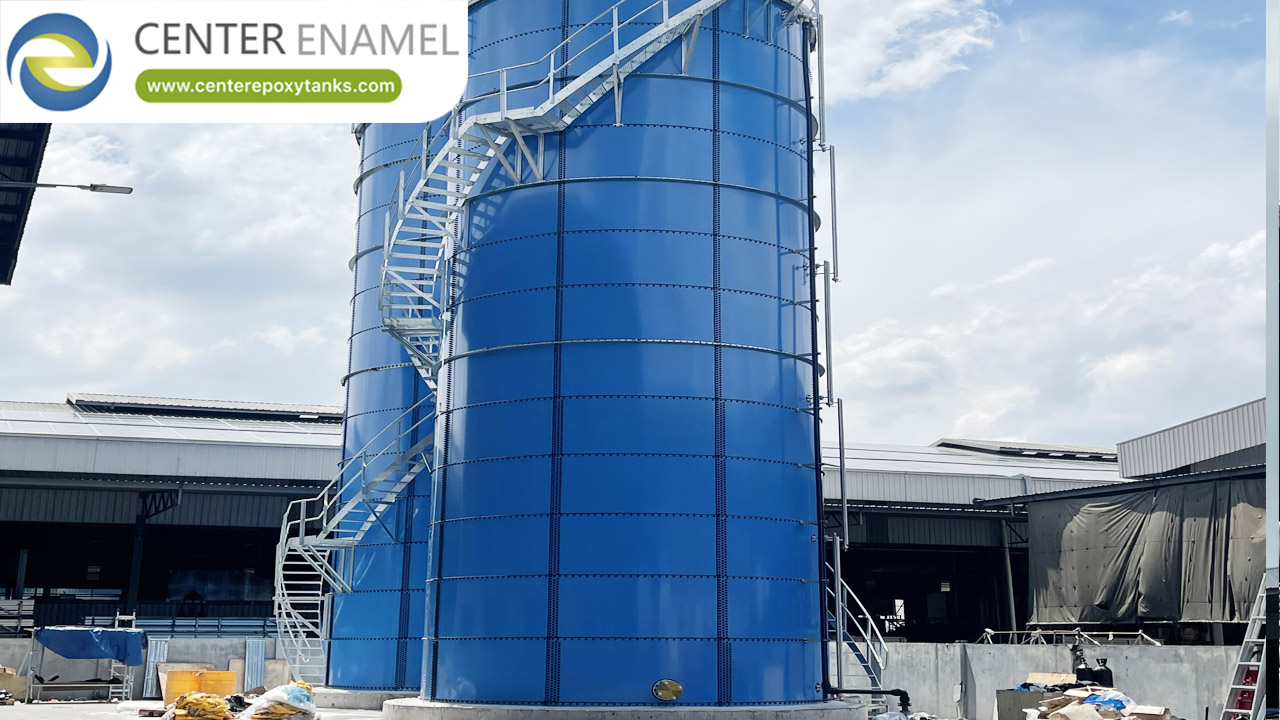
What is a Fusion Bonded Epoxy Tank?
A fusion bonded epoxy (FBE) tank is an advanced modular, bolted steel storage container whose steel panels are protected by a high-performance thermoset polymer coating. Unlike field-painted tanks that are prone to premature blistering or bare steel tanks vulnerable to oxidation, FBE tanks utilize a factory-applied fusion process. In this process, specialized epoxy powder is electrostatically sprayed onto grit-blasted steel sheets and thermally cured in automated tunnel ovens.
The result is a permanent, molecular bond between the epoxy and the steel substrate, creating an exceptionally durable, chemically inert, and corrosion-resistant barrier designed for municipal, industrial, and agricultural liquid containment.
The Manufacturing and Coating Process
The superior performance of an FBE tank stems from its stringent, controlled factory manufacturing workflow:
Surface Preparation (Shot Blasting): Steel sheets (typically conforming to standards like IS 2062 or equivalent carbon steel) undergo automated shot or grit blasting to achieve a pristine "white metal" finish, establishing the ideal anchor profile for coating adhesion.
Electrostatic Powder Application: High-grade epoxy resin powder (such as Resicoat) is applied uniformly across both sides of the steel panel using automated electrostatic spray guns.
Thermal Curing: The coated panels pass through a precision heating oven (typically between 150°C and 250°C), causing the epoxy powder to melt, flow, and chemically cross-link into a dense, continuous film.
Quality Control & Holiday Testing: Every individual panel undergoes strict quality inspections, including dry film thickness (DFT) tests and high-voltage holiday spark testing (often at 1,500V or 1,100V) to guarantee zero surface micro-discontinuities or pinholes.
Technical Performance Matrix: Storage Tank Technologies
Technical Parameter | Fusion Bonded Epoxy (FBE) Bolted Tanks | Cast-in-Place Concrete Tanks | Traditional Field-Welded Steel Tanks |
Coating Integrity & Application | Factory-baked fusion-bonded epoxy; 100% holiday tested | Porous concrete surfaces; requires periodic waterproof linings | Field-applied liquid coatings; vulnerable to weather variations |
Installation Speed | Rapid modular assembly using bolted panels (weeks) | Extremely slow formwork, pouring, and curing (months) | Moderate to slow; requires extensive field welding and NDE testing |
Corrosion & Chemical Resistance | Excellent; chemically inert across a wide pH range (typically 3 to 13) | Moderate; prone to carbonation and acid attack from wastewater | Vulnerable to internal oxidation and rust scaling over time |
Maintenance Over Lifespan | Minimal maintenance required; long service life (30+ years) | Requires routine crack injection and waterproofing re-application | Requires periodic abrasive blasting and full exterior/interior repainting |
Key Applications of FBE Tanks
Due to their structural adaptability and certified safety parameters, fusion bonded epoxy tanks are deployed across diverse sectors:
Municipal Water & Wastewater: Widely utilized for potable water storage (compliant with NSF/ANSI 61), raw water reservoirs, municipal sewage treatment, and fire protection reserves.
Industrial Effluent Management: Storing aggressive industrial wastewater, chemical process water, and Leachate with broad pH tolerance.
Agricultural and Biogas Sectors: Acting as liquid manure storage tanks, agricultural irrigation reservoirs, and liquid-zone anaerobic digesters.
Frequently Asked Questions (FAQ)
Q: What is the main difference between a Glass-Fused-to-Steel tank and a Fusion Bonded Epoxy tank?
A: While both are high-performance bolted steel tanks engineered to standards like AWWA D103, Glass-Fused-to-Steel (GFS) utilizes a vitreous glass coating fused to steel at extreme temperatures (800°C–900°C), whereas FBE tanks use a high-grade thermoset epoxy polymer coating fused at lower thermal curing ranges. Both offer exceptional corrosion resistance, though GFS provides superior hardness against abrasive slurries.
Q: Are fusion bonded epoxy tanks safe for drinking water storage?
A: Yes. Interior FBE coatings utilized in potable water applications comply strictly with health and safety standards such as NSF/ANSI/CAN 61, ensuring they do not leach harmful chemicals or support microbial growth.
Q: How are FBE tank panels joined together without leaking?
A: The modular panels are assembled using specialized high-tensile structural bolts and sealed at the lap joints with high-performance, elastic polyurethane (PU) or elastomeric sealants that maintain a 100% watertight and gas-tight seal.
Q: What is the expected lifespan of a fusion bonded epoxy tank?
A: When manufactured and installed in accordance with international design codes such as AWWA D103 and properly maintained, FBE tanks are engineered to deliver a reliable service life exceeding 30 years.


