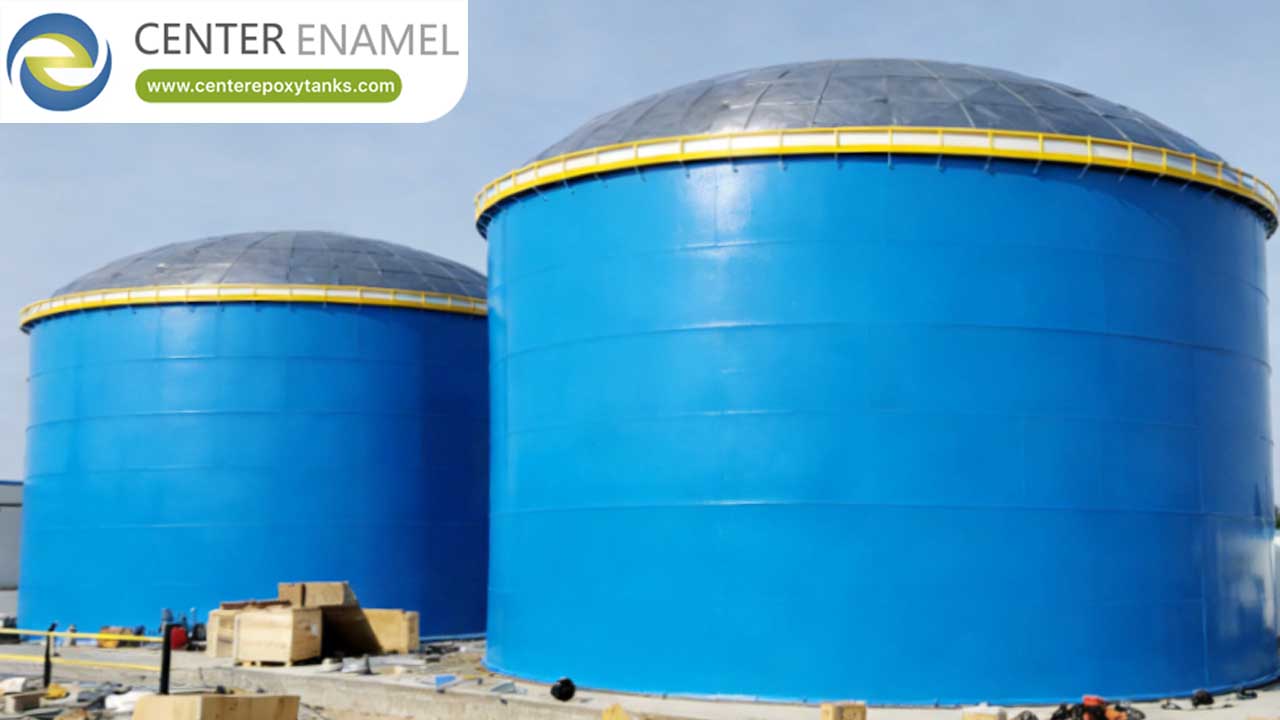
What Are Clarifiers & Thickeners?
Clarifiers and thickeners are circular steel or concrete sedimentation tanks that separate solids from liquids by gravity. Clarifiers polish water by removing settled solids; thickeners concentrate sludge to high solids content. Both use rotating rake mechanisms, engineered feed wells, and settled-solids removal systems.
What Are Clarifiers and Thickeners?
A clarifier's job is clean overflow: feed enters a center well, solids settle as the water rises and radiates outward, clarified water spills over peripheral weirs, and a rotating rake plows settled solids to a center hopper for withdrawal. The same geometry in thickener duty runs denser: deeper solids beds, slower rakes, and torque ratings sized to move a genuine sludge blanket, concentrating waste sludge from a few percent solids toward 10 to 30 percent for dewatering downstream.
Steel construction suits both vessels well — factory-fabricated tanks with epoxy or GFS coatings resist the corrosion regime of wastewater, and the complete package (tank, bridge or center column, drive, rake, weirs) can be engineered and supplied as one mechanical system. Municipal plants, mine sites, and industrial process water circuits all run on these two workhorses.
The Engineering Inside a Simple-Looking Tank
A clarifier looks like a quiet pond; it is actually a hydraulic machine. Short-circuiting, density currents, and rake overload are design failures that no chemical dosing can fix.
l Feed well design errors short-circuit flow and carry solids over the weirs.
l Undersized rake torque stalls in thickened sludge beds.
l Wind on large open tanks drives circulation patterns that resuspend solids.
Clarifier and Thickener Design Sequence
A properly specified unit follows this engineering path:
1. Process Sizing: Surface overflow rate and solids loading — from jar testing and plant data — set the required diameter and depth for the separation duty.
2. Mechanism Engineering: Drive torque, rake configuration, and lifting provisions are rated for the maximum solids loading, not the average.
3. Tank and Coating Design: Steel shell, bridge or center-pier structure, weirs, and scrapers are detailed with corrosion protection matched to the wastewater chemistry.
4. Commissioning and Tuning: Feed distribution, blanket level, and rake load are tuned at startup to reach design overflow clarity and underflow density.
Clarifier vs Thickener Duty
Duty Parameter | Clarifier | Thickener |
Primary Objective | Clarified overflow water quality | Concentrated underflow solids |
Typical Feed | Treatment process water, mixed liquor | Waste sludge from clarifiers or reactors |
Solids Concentration | Low feed solids, light settled blanket | High feed solids, deep compression bed |
Mechanism Rating | Standard torque for skimming and raking | High torque with overload protection and lift |
Downstream Partner | Filtration or disinfection | Dewatering by press, centrifuge, or drying beds |
Clarifier and Thickener Applications
l Primary and secondary clarification at municipal plants
l Sludge thickening ahead of dewatering equipment
l Mine process water clarification and tailings thickening
l Industrial wastewater solids removal and recycle
l Drinking water sedimentation after coagulation
l Biogas digestate solids separation
Key Advantages of Packaged Steel Clarifiers and Thickeners
1. Process Performance Engineered In
Overflow rates, feed wells, and rake torques designed for the actual water chemistry deliver clarity numbers that generic tanks promise but don't reach.
2. Coated Steel Speed and Corrosion Economics
Factory-coated steel vessels install in a fraction of concrete construction time and resist wastewater attack for decades with standard recoating cycles.
3. Single-Vendor Mechanical Responsibility
Tank, drive, rake, and weir system supplied as one package means one performance guarantee and one spare-parts list.
Quality Standards and Proven References
Center Enamel provides design, fabrication, construction, and aftermarket services for storage tanks and silos under ISO 9001 and ISO 45001 certified quality systems, with EN 1090 structural steel certification. With three decades of experience and projects delivered to more than 100 countries — including biogas and wastewater references for Paques and Veolia and industrial references for PetroChina and Sinopec — the company supports tank assets from commissioning through decades of inspection-driven service.
Frequently Asked Questions (FAQ)
Q: What size clarifier does my plant need?
A: Diameter follows from design flow divided by the surface overflow rate appropriate to the application — a process calculation that water data, not vendor catalogs, must drive.
Q: What is the difference between a clarifier and a thickener?
A: Geometrically similar, operationally opposite: clarifiers optimize overflow clarity at low solids; thickeners optimize underflow concentration with high-torque rakes in deep beds.
Q: Can steel clarifiers replace old concrete basins?
A: Yes — coated steel clarifiers and thickeners are routinely installed as capacity upgrades or replacements, often faster and at lower cost than concrete rehabilitation.
Q: What is the expected lifespan of a professionally engineered steel tank?
A: Steel tanks designed and built to recognized codes (API 650, API 620, AWWA D100, or ASME Section VIII) and maintained under scheduled inspection, coating, and repair programs routinely deliver service lives exceeding 30 years — and tanks managed under API 653-class integrity programs commonly remain in safe service for 50 years or more.


