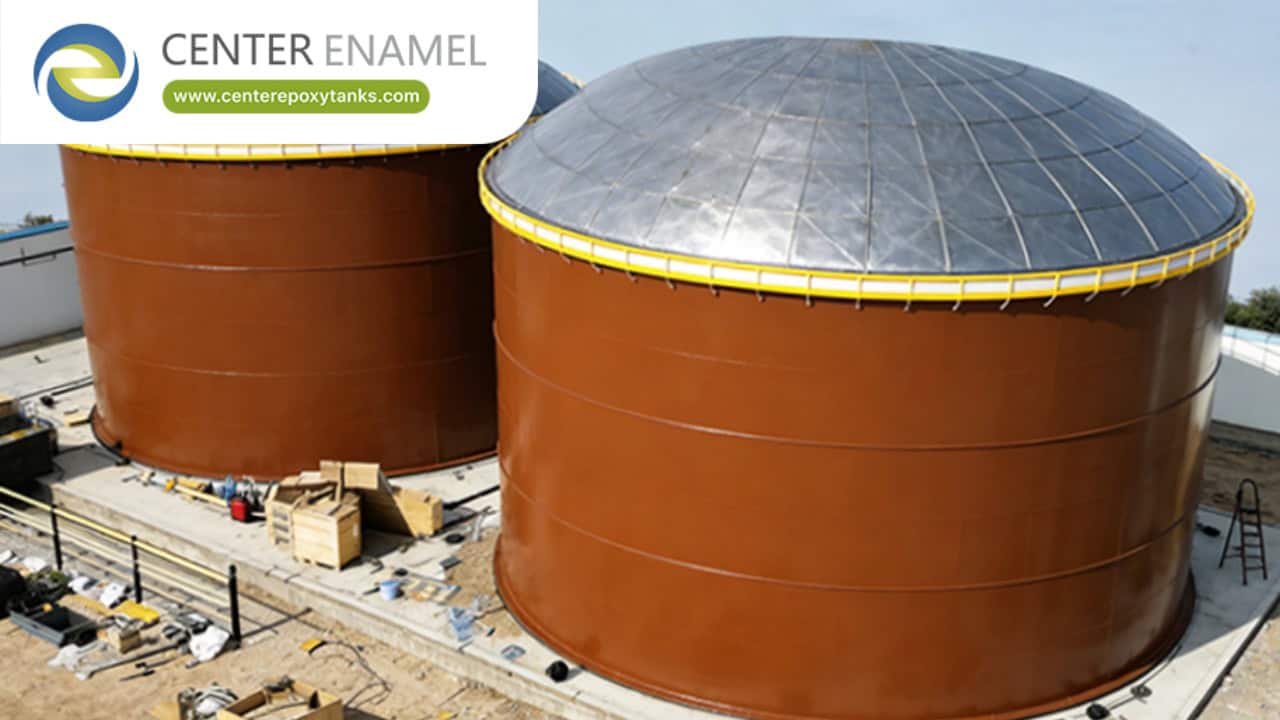
Welded Steel Drinking Water Tanks: Monolithic Engineering for Safe Municipal and Industrial Potable Water Storage
In municipal water distribution, rural utility districts, and heavy industrial facilities, maintaining a secure, uncompromised supply of safe drinking water is a critical public health priority. As populations grow and water infrastructure faces heightened environmental and regulatory scrutiny, specifying the right storage vessel is paramount. For large-scale capacity and absolute structural reliability, welded steel drinking water tanks represent the gold standard of civil engineering.
Constructed from high-grade carbon steel plates joined via continuous field-welding procedures, these tanks form a monolithic, leak-tight structure capable of withstanding extreme environmental pressures, seismic events, and dynamic hydraulic loads. As a globally recognized leader in advanced liquid storage manufacturing, Shijiazhuang Zhengzhong Technology Co., Ltd. (Center Enamel) delivers precision-engineered welded steel water tanks designed in strict compliance with the world’s most stringent sanitary and structural standards.
Engineering Excellence: Compliance with AWWA D100 and NSF/ANSI 61
Potable water containment requires adherence to rigid safety and construction standards to prevent contamination and ensure long-term physical integrity:
·
AWWA D100 Compliance: The American Water Works Association standard governs the design, fabrication, and erection of welded carbon steel tanks for water storage. It dictates precise calculations for shell thickness, wind load resistance, and seismic stability tailored to earthquake-prone regions.
·
·
NSF/ANSI/CAN 61 Potable Safety: Interior barrier coatings and lining systems must comply strictly with health effects standards, ensuring that harmful extractable compounds (such as solvents and volatile chemicals) do not leach into the water supply. Modern specifications align with updated extractable limits under current NSF and AWWA D102 standards.
·
·
Monolithic Field-Welded Seams: Unlike mechanical joints or bolted panels, continuous full-penetration welding fuses steel plates into a unified barrier, entirely eliminating gasket degradation paths and providing absolute leak prevention over decades of service.
·
Data Table: Comparison of Potable Water Storage Tank Technologies
Technical Parameter | Field-Erected Welded Steel Tanks | Bolted Steel Storage Tanks | Cast-in-Place Concrete Tanks |
Primary Design Standard | AWWA D100, ASME | AWWA D103, ISO 28765 | ACI Structural Concrete Standards |
Potable Lining Compliance | NSF/ANSI 61 certified high-solids epoxies or polyurethanes | Factory powder-coated NSF 61 panels | Field-applied NSF 61 coatings over concrete substrates |
Capacity & Scaling Limits | Unlimited high-capacity vertical scaling | Bounded by standard panel sizing dimensions | Massive permanent structures; non-relocatable |
Structural Joint Integrity | Monolithic welded steel shell; zero risk of gasket slip | High-tensile bolted connections with specialized seals | High compressive strength; vulnerable to joint cracking |
Primary Municipal Application | Large municipal water towers, municipal reserves, standpipes | Community water systems, booster stations, rural reserves | Large underground vaults, clearwells, and ground basins |
Protecting Water Quality Through Advanced Coatings and Testing
To safeguard public health, welded steel drinking water tanks undergo rigorous quality control during both fabrication and installation:
1.
Surface Preparation and Application: Interior steel surfaces are abrasive-blasted to a near-white finish (SSPC-SP10) to achieve optimal mechanical bonding for NSF/ANSI 61-certified barrier coatings.
2.
3.
Rigorous Non-Destructive Examination (NDE): Field welds are thoroughly inspected using radiographic (RT), ultrasonic (UT), or vacuum box testing to verify structural soundness before the tank is commissioned.
4.
5.
Hydrostatic and Disinfection Protocols: Tanks undergo complete hydrostatic testing at pressures specified by AWWA guidelines, followed by strict AWWA-compliant disinfection procedures prior to entering service.
6.
Frequently Asked Questions (FAQ)
Q: Why choose a welded steel tank for municipal drinking water storage?
A: Welded steel tanks offer unmatched structural strength, unlimited capacity scaling, and monolithic leak-tightness. They are engineered to handle high seismic loads and severe weather while maintaining long-term durability for municipal water networks.
Q: Do welded steel water tanks comply with drinking water safety standards?
A: Yes. High-quality welded steel potable water tanks are designed in accordance with AWWA D100 structural standards, and their interior linings comply strictly with NSF/ANSI/CAN 61 health effects requirements.
Q: How are field welds tested on a welded steel water tank?
A: All field-welded joints undergo rigorous Non-Destructive Examination (NDE)—including radiographic, ultrasonic, and vacuum testing—performed by certified inspectors to guarantee complete structural integrity and prevent leaks.
Q: What is the expected lifespan of a properly maintained welded steel water tank?
A: With routine inspections, proper cathodic protection, and periodic maintenance of interior coatings in accordance with AWWA standards, a welded steel water tank can deliver a reliable operational lifespan exceeding 40 to 50 years.


