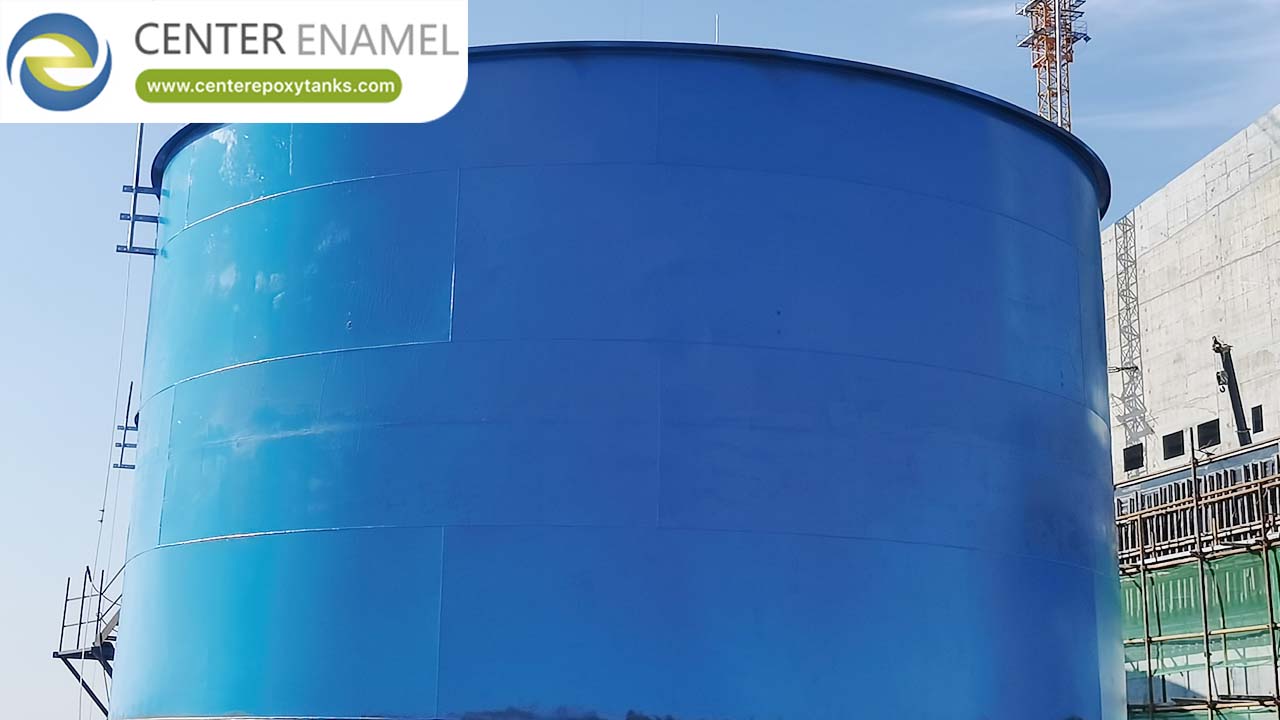
Welded Steel Aviation Gasoline (Avgas) Storage Tanks: Technical Engineering & Procurement Guide
Aviation Gasoline (Avgas, such as Avgas 100LL) is a highly volatile, Class I flammable liquid used in piston-engine aircraft. Unlike standard commercial hydrocarbons or jet fuels, Avgas contains specialized anti-knock additives—specifically tetraethyllead (TEL)—and must adhere to zero-tolerance purity metrics. Sourcing bulk storage systems from a premium welded steel tank manufacturer requires absolute fidelity to stringent global aviation protocols.
While bolted configurations have transformed municipal water and dry bulk sectors, field-erected or shop-fabricated welded steel tanks remain mandatory for large-scale Avgas storage. A continuous, seamless welded pressure vessel eliminates the microscopic leak paths, vapor loss risks, and gasket degradation vulnerabilities associated with bolted joints. This guide outlines the engineering specifications, metallurgical mandates, and quality assurance gates essential for global Avgas infrastructure projects.
1. Regulatory Framework & Engineering Codes
Aviation fuel storage infrastructure does not allow for generic tank fabrication. Compliance with international defense and civilian aviation standards is a strict operational barrier.
API 650 (Vertical, Field-Erected Containment)
For large-capacity airport fuel farms and distribution terminals, tanks are engineered using the API 650 design standard. To calculate the exact shell plate thicknesses for each ring course, structural engineers utilize the One-Foot Method to withstand hydrostatic loading:
UL 142 & UL 2085 (Shop-Built Systems)
For regional airports, FBOs (Fixed-Base Operators), and decentralized refueling stations, pre-engineered shop-built aboveground storage tanks (ASTs) are utilized.
● UL 142: Governs steel aboveground tanks for flammable liquids, typically mandating a double-wall steel design to provide 110% integral secondary containment.
● UL 2085: Imposes a strict fire-protected standard, requiring specialized insulation media encased between double steel walls to survive intensive thermal exposure without losing structural integrity.
EI 1594 & NFPA 407
The Energy Institute’s EI 1594 and NFPA 407 dictate the specific layout, electrical grounding, and component configurations for aviation fuel facilities, ensuring that static charge generation and vapor accumulation are entirely mitigated.
2. Metallurgy & Internal Linings: The Zero-Zinc Rule
In standard industrial fluid storage, galvanization or zinc-rich primers provide effective, cost-efficient sacrificial protection. However, in aviation gasoline infrastructure, zinc, copper, and cadmium are strictly prohibited.
The Metallurgical Constraint: Direct contact between Avgas and zinc triggers an aggressive reaction with fuel additives, generating insoluble zinc soaps. These soaps quickly clog aircraft fuel filters and fuel injection systems, leading to catastrophic mid-flight engine starvation.
Therefore, Avgas tank interiors must either feature raw, high-grade stainless steel (Grade 304L or 316L) or be fabricated from high-yield carbon steel finished with an EI 1541 approved internal lining system.
● Coating Matrix: The standard internal choice is a 100% solids, liquid-applied white epoxy coating.
● The Clarity Mandate: The coating must be stark white or light pastel. This color profile is critical for maintenance technicians conducting visual inspections, allowing them to instantly detect settled particulate matter, microbial growth, or trace water accumulation during routine quality checks.
3. Specialized Avgas Technical Architecture
To maintain fuel purity from delivery to aircraft wing, custom welded steel aviation tanks must integrate specific mechanical systems:
● Cone-Down Bottom & Sump System: Unlike traditional flat-bottom oil tanks, aviation tanks utilize a 1:50 downward sloped floor leading to a central water collection sump. Water from condensation naturally migrates to the lowpoint, where it can be periodically skimmed off via a dedicated drain valve before entering the refueling stream.
● Floating Suction Arms: Water and particulate matter naturally settle at the bottom of a tank. To ensure only pristine product is extracted, a mobile interior piping arm floats directly below the fuel surface, continuously drawing product from the cleanest upper layer of the liquid column.
● Inlet Deflectors (Low-Velocity Filling): Fast-flowing fuel creates high static electricity—a severe hazard for highly volatile Avgas. Welded internal inlet lines feature specialized diffusers or sloped deflectors to eliminate product splashing and minimize static charge accumulation during transfer cycles.
4. Procurement Vetting Matrix
Global engineering procurement contractors (EPCs) must thoroughly vet potential manufacturers. Generic steel shops cannot be relied upon for high-liability aviation fueling assets.
Technical Evaluation Criterion | Certified Aviation Tank Manufacturer | Commodity Steel Shop |
Primary Code Certifications | Active API 650, UL 142, or UL 2085 stamps | Basic regional welding certificates only |
Interior Lining Competency | Confirmed EI 1541 multi-layer epoxy tracking | Standard primers or industrial zinc-rich coatings |
Weld Defect Protocols | 100% Radiographic (RT) and Ultrasonic (UT) testing | Visual weld validation or random spot testing |
Cleanliness Execution | White-metal blast (SSPC-SP10) + post-blast vacuum | Standard sandblasting with remaining mill scale |
Component Integration | Pre-engineered ports for floating suctions & sumps | Generic flange orientations without structural baffles |
5. Frequently Asked Questions (FAQ)
Q: Why is Grade 304L/316L stainless steel preferred over coated carbon steel for small-scale Avgas ASTs?
A: While stainless steel carries a higher initial material capital cost, it entirely eliminates the long-term risk of coating degradation. Internal epoxy coatings can eventually blister, chip, or scratch during cleanings. For small to mid-sized tanks (under 50,000 liters), stainless steel offers a zero-maintenance, lifetime solution that eliminates any chance of coating flake contamination in the fuel supply.
Q: How does a double-wall welded tank handle vapor monitoring?
A: The narrow interstitial space between the inner structural shell and outer containment skin is equipped with an electronic leak detection probe or vacuum gauge. If the inner wall develops a microscopic tear, or the outer skin suffers mechanical damage, the system instantly logs a pressure differential or fluid ingress alarm on the master control panel long before environmental contamination occurs.
Q: What type of vapor recovery system is integrated into an aviation gasoline tank?
A: Because Avgas has a high vapor pressure, tank designs include dedicated Stage I vapor recovery connections. When a delivery tanker unloads fuel into the tank, the displaced volatile vapors are routed back into the tanker's sealed cargo hold rather than venting into the atmosphere, ensuring strict environmental compliance and minimizing product loss.
Sourcing a welded steel aviation gasoline storage tank demands an uncompromising focus on fuel stability, safety engineering, and strict code compliance. By focusing your procurement framework on certified API 650/UL standards, eliminating prohibited reactive metals like zinc, and deploying specialized clear-span internal floating architectures, you acquire an infrastructure asset designed to protect fuel purity and maintain operational security for decades.


