Floating Roofs for Fuel Storage Tanks: Engineering Emission Control, Safety, and Efficiency
In petroleum refineries, fuel distribution terminals, and bulk storage depots, containing volatile liquids such as gasoline, diesel, jet fuel, and crude oil demands rigorous containment engineering. When petroleum products are stored in traditional fixed-roof tanks, a vapor-air pocket forms between the liquid surface and the roof. As ambient temperatures fluctuate and tanks are filled or emptied, this space expands and contracts, driving continuous breathing and working losses that release harmful volatile organic compounds (VOCs) into the atmosphere.
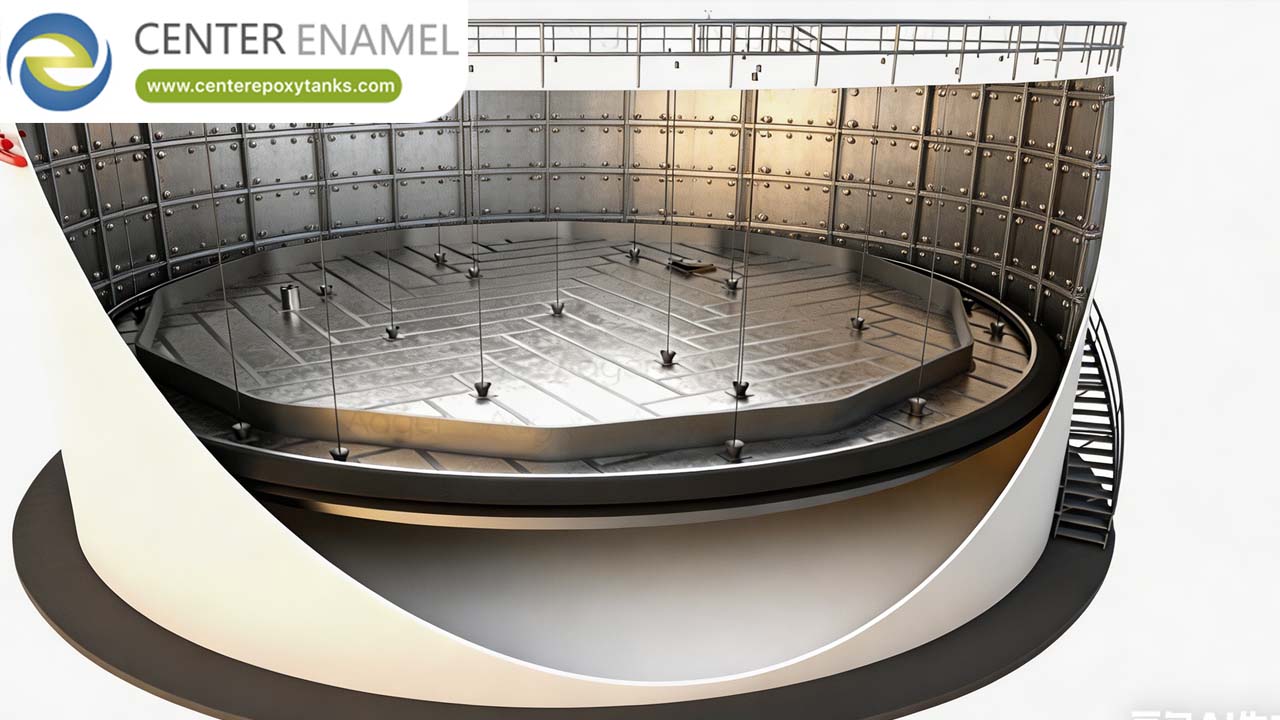
To eliminate this vapor space, optimize fuel recovery, and meet strict environmental regulations, industry operators utilize a floating roof. Designed to float directly on the surface of the stored liquid product, a floating roof moves vertically with changing liquid levels, effectively suppressing evaporation, reducing fire risks, and maximizing asset protection.
Core Types of Floating Roof Systems
Floating roofs for fuel storage tanks fall into two primary configurations based on tank design and environmental exposure:
External Floating Roofs (EFRs): Utilized in open-top aboveground cylindrical tanks, EFRs are directly exposed to the elements. They feature specialized designs—such as pontoon decks or double-deck structures—that provide high buoyancy and structural rigidity. Pontoons divide the roof into sealed compartments, ensuring the deck remains buoyant even if a single compartment is compromised.
Internal Floating Roofs (IFRs): Installed inside permanent fixed-cone or dome-roof tanks, IFRs combine the weather protection of a fixed roof with the vapor suppression of a floating deck. This dual-barrier design shields the stored fuel from wind and rain while preventing evaporative emissions.
Key Engineering Mechanisms for Emission Control and Safety
The operational integrity of floating roof tanks relies on several interdependent engineering components:
Vapor Space Elimination: By resting directly on the liquid fuel, floating roofs eliminate virtually all vapor-air mixtures above the product, cutting evaporative losses by up to 99% compared to bare fixed-roof tanks.
Advanced Rim Seal Systems: The annular gap between the outer perimeter of the floating deck and the interior wall of the tank shell is protected by mechanical shoe seals, liquid-mounted foam seals, or secondary wiper seals. These flexible barriers maintain continuous contact with the tank wall during liquid level fluctuations to prevent vapor leaks.
Anti-Rotation and Guidance Systems: To ensure smooth vertical movement without binding or tilting against the tank shell during filling and emptying cycles, floating roofs are equipped with rigid rolling ladders, anti-rotation cables, and guide poles.
Data Table: Comprehensive Comparison of Fuel Storage Roof Technologies
Technical Parameter | External Floating Roofs (EFR) | Internal Floating Roofs (IFR) | Traditional Fixed-Roof Tanks (No Floating Deck) |
Emission Control & VOC Suppression | Excellent; eliminates vapor space (open-top design requires rim seals) | Superior; dual barrier (fixed roof plus floating deck) minimizes all vapor loss | Poor; massive breathing and working losses releasing high VOC volumes |
Weather & Environmental Exposure | Fully exposed to rain, snow, solar radiation, and wind loads | Protected from external weather elements by the permanent fixed outer roof | Fully protected from weather, but generates severe internal vapor pockets |
Maintenance & Operational Overhead | Requires active drain management, seal inspections, and rainwater clearing | Low maintenance; protected from weather, reducing mechanical wear on seals | Moderate structure maintenance, but incurs high ongoing product loss |
Primary Industrial Application | Large-scale crude oil and high-volume refined fuel storage terminals | Volatile gasoline, naphtha, and refined distillate storage | Stable heavy fuel oils, asphalt, and non-volatile liquid storage |
Frequently Asked Questions (FAQ)
Q: What is the primary purpose of a floating roof in fuel storage tanks?
A: It floats directly on top of the liquid fuel to eliminate the internal vapor space, significantly reducing volatile organic compound (VOC) evaporation losses, preventing odor emissions, and enhancing fire safety.
Q: What is the difference between an internal and an external floating roof?
A: An external floating roof operates inside an open-top tank exposed directly to the weather, whereas an internal floating roof is installed inside a permanent fixed-cone or dome-roof tank, combining weather protection with vapor suppression.
Q: How do rim seals prevent fuel vapor leakage on floating roofs?
A: Rim seals (such as mechanical shoes or liquid-filled tubes) bridge the narrow gap between the floating deck edge and the tank wall, maintaining a flexible, gas-tight barrier as the roof moves up and down.
Q: What international engineering standards govern floating roof design?
A: Floating roof storage tanks are designed, fabricated, and tested in accordance with rigorous global standards, most notably API Standard 650 (including Appendix C for external floating roofs and Appendix H for internal floating roofs).


