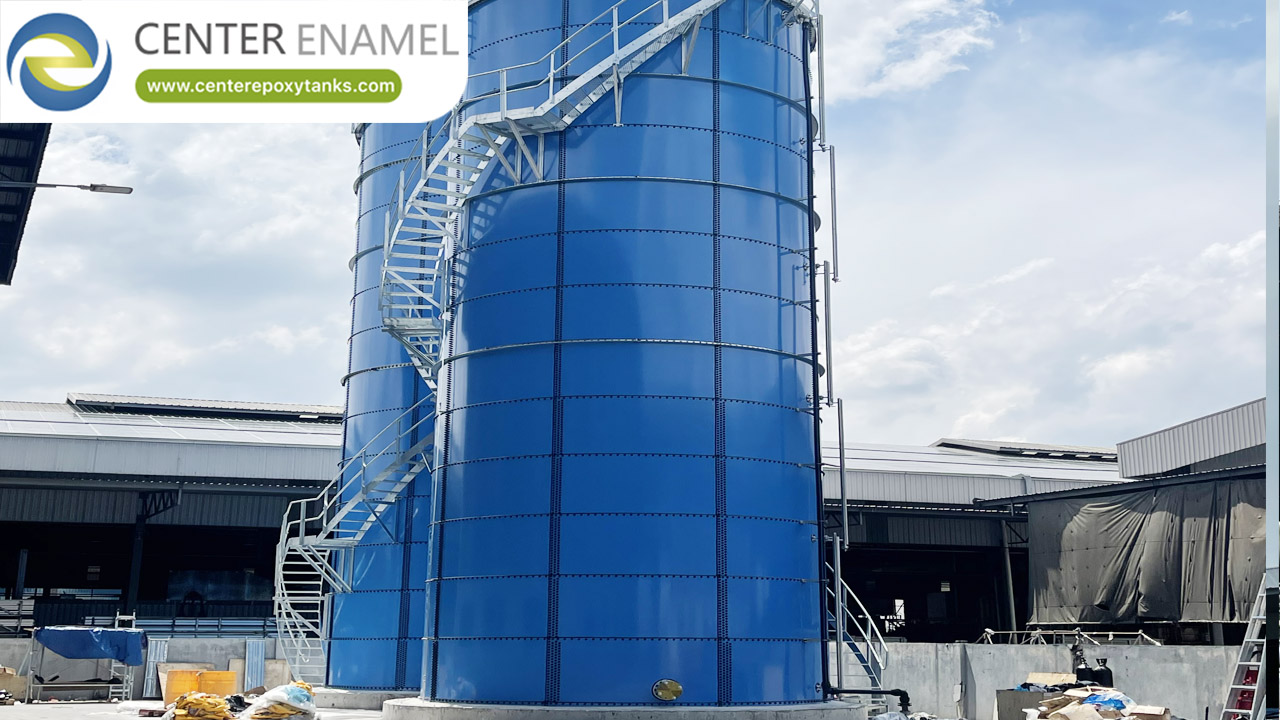
Water Tanks for Sugar Industry Wastewater: Engineering High-Performance Effluent Treatment and Storage
The sugar manufacturing sector—encompassing both sugarcane and sugar beet processing—is a water-intensive industry that generates massive volumes of high-strength industrial effluent. Derived from cane washing, juice extraction, evaporation condensates, and equipment sanitation, sugar mill wastewater is heavily laden with dissolved sugars, molasses residues, bagasse particles, and organic acids.
Because this effluent exhibits extremely high Biochemical Oxygen Demand (BOD) and Chemical Oxygen Demand (COD), standard water storage and municipal treatment infrastructure are inadequate. Treating and storing sugar mill wastewater requires specialized, highly durable water tanks for sugar industry wastewater designed to withstand organic corrosion, variable pH levels, and fluctuating seasonal production volumes.
Core Engineering Challenges in Sugar Effluent Containment
Designing wastewater tanks for sugar mills requires solving unique chemical and operational hurdles:
High Organic Loading and Rapid Decomposition: Sugars and organic residues ferment rapidly, generating organic acids that lower pH and create a corrosive environment. Tanks utilized for equalization, primary clarification, and anaerobic digestion must feature inert internal barriers to prevent structural degradation.
Seasonal Flow Fluctuations: Sugar processing is heavily seasonal, causing wastewater volumes and organic loads to peak dramatically during crushing campaigns while dropping significantly during off-seasons. Storage tanks must accommodate these volatile hydraulic surge conditions without compromising structural integrity.
Temperature and Chemical Variations: Effluent streams from boiler blowdowns and evaporator condensates often carry elevated temperatures and sudden chemical shifts from cleaning cycles, requiring robust materials that resist thermal shock and chemical attack.
Data Table: Comprehensive Comparison of Sugar Industry Wastewater Tank Options
Technical Parameter | Glass-Fused-to-Steel (GFS) Bolted Tanks | Cast-in-Place Concrete Basins | Traditional Field-Welded Steel Tanks |
Corrosion & Acid Resistance | Superior; inert glass-steel bond resists organic acids, sugars, and sulfides | Vulnerable to concrete spalling, carbonation, and acid erosion | High susceptibility to pitting and weld corrosion over time |
Installation Speed | Rapid modular bolting completed in weeks without weather delays | Slow civil construction requiring complex framing and multi-week curing | Complex field welding, crane staging, and on-site coating work |
Modularity & Capacity Expansion | High; bolted panel design allows straightforward future expansion | Permanent monolithic structure; impossible to expand without rebuilding | Rigid welded structure; difficult to alter or modify safely |
Maintenance Profile | Near-zero maintenance; smooth surface inhibits biofilm and sludge buildup | Moderate; requires joint sealant replacement and crack patching | High; demands regular sandblasting, inspection, and recoating cycles |
Frequently Asked Questions (FAQ)
Q: Why do sugar industry wastewater tanks require specialized engineering?
A: Sugar mill effluent contains very high levels of dissolved sugars, organic acids, and suspended solids that cause rapid biological activity, fermentation, and acid corrosion, which quickly degrade standard water tanks.
Q: What are the best tank materials for sugar mill effluent treatment?
A: Glass-Fused-to-Steel (GFS) bolted tanks and fusion-bonded epoxy (FBE) coated tanks are widely considered the industry standard because they combine the structural strength of steel with an inert, chemical-resistant interior barrier.
Q: How do sugar mills handle seasonal wastewater volume fluctuations?
A: Mills utilize modular bolted storage tanks and large equalization reservoirs that can be easily scaled or expanded to absorb peak organic and hydraulic loads during active crushing seasons.
Q: Can GFS tanks withstand the anaerobic digestion processes used in sugar wastewater treatment?
A: Yes. GFS tanks are completely impervious to biogas, hydrogen sulfide (H2S), and organic acids, making them ideal for Upflow Anaerobic Sludge Blanket (UASB) reactors and biological sludge holding tanks.


