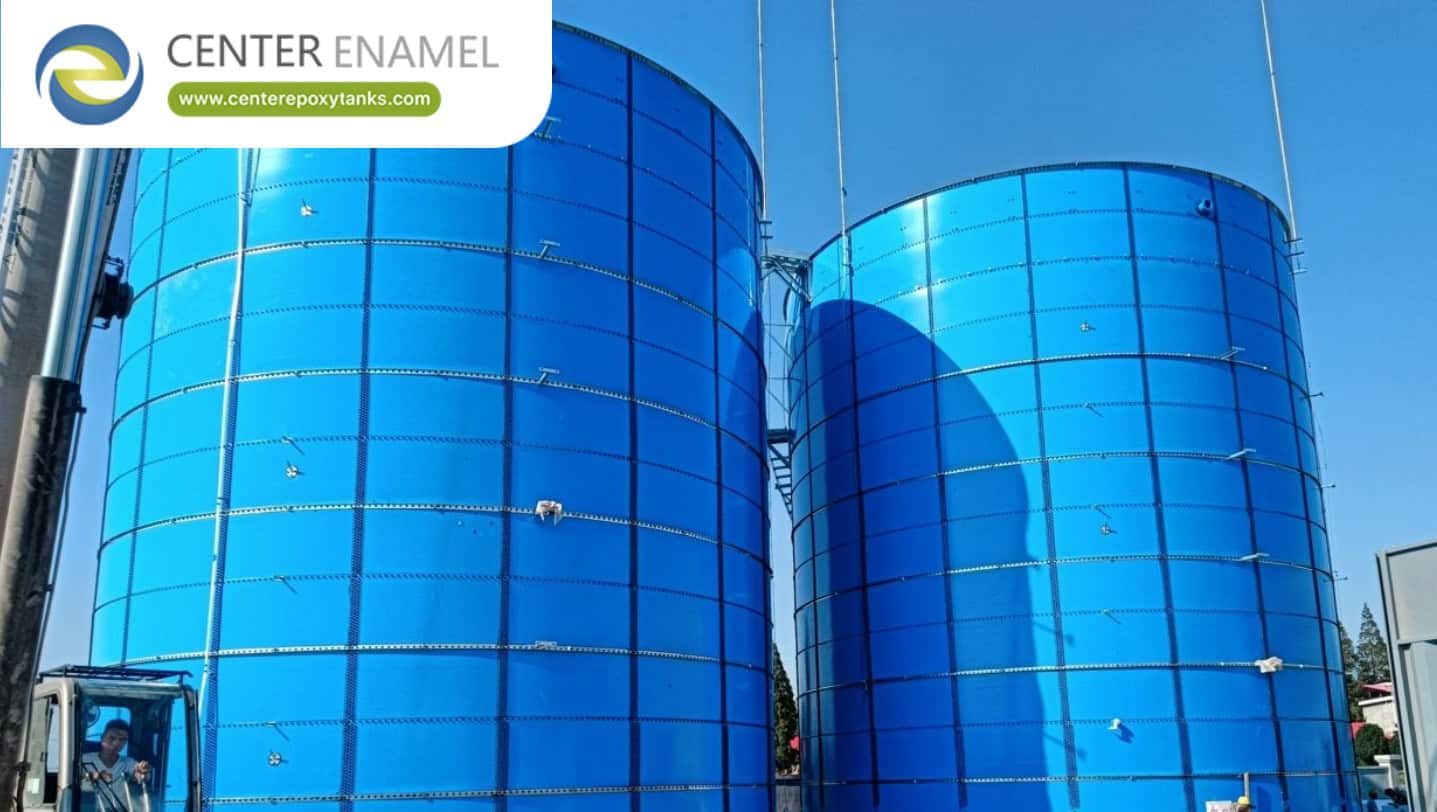
Water Tanks for Dairy Processing Wastewater: Engineering Reliable Storage and Corrosion Defense
Dairy processing plants—including milk bottling facilities, cheese plants, yogurt production lines, and whey processing operations—generate massive volumes of high-strength industrial wastewater. Because dairy effluent is rich in milk solids, dissolved lactose, proteins, and residual fats, oils, and grease (FOG), it decomposes rapidly. This decomposition generates aggressive volatile fatty acids (VFAs) that drop the pH and create an intensely corrosive environment. Furthermore, daily Clean-in-Place (CIP) sanitization cycles introduce concentrated caustics and acids into the waste stream.
To withstand these harsh operating conditions without pitting, leaking, or degrading, modern dairy facilities rely on advanced epoxy-coated bolted steel tanks—specifically those engineered with Fusion Bonded Epoxy (FBE) technology. These high-capacity containment systems combine the structural resilience of industrial steel with an inert, thermally fused polymer barrier designed explicitly for complex organic effluents.
Unique Chemical and Physical Challenges of Dairy Effluent Containment
Designing water and wastewater tanks for dairy processing requires addressing severe multi-vector stress factors:
Rapid Organic Acid Generation: Spilled milk, whey, and organic residues break down rapidly, producing high concentrations of corrosive VFAs. Storage tanks must feature a chemically inert interior lining to prevent acid-induced pitting and structural thinning.
Fats, Oils, and Grease (FOG) Adhesion: Dairy waste contains substantial butterfat and lipid content. Non-porous, smooth interior coatings are essential to prevent heavy grease accumulation and simplify routine maintenance and biological cleaning cycles.
Aggressive CIP Chemical Fluctuations: Plant cleaning regimes alternate between heavy alkaline washes and concentrated acid rinses. The storage vessel's coating must maintain structural integrity and chemical stability across wide, fluctuating pH ranges.
Biogenic Odor and Sulfide Attack: Anaerobic breakdown zones in equalization or holding tanks can produce hydrogen sulfide ($H_2S$) gas, which oxidizes in tank headspaces to form sulfuric acid. High-grade corrosion defenses are mandatory to protect upper shell plates and roof structures.
Core Applications Across Dairy Wastewater Treatment Plants (WWTP)
Epoxy-coated bolted steel tanks fulfill critical functions across every stage of a dairy processing wastewater treatment workflow:
Equalization and Flow Balancing Basins: Because production cycles and CIP cleaning schedules cause massive hourly and daily fluctuations in wastewater volume and organic loading, large-capacity EQ tanks stabilize flow rates for downstream biological treatment units.
Anaerobic Digestion and Hydrolysis Tanks: Used for high-strength organic pre-treatment, these enclosed tanks capture biogas while breaking down high Chemical Oxygen Demand (COD) loads under rigorous anaerobic conditions.
Biological Aeration and Clarification Storage: Holding tanks designed to manage activated sludge processes, nutrient dosing, and treated effluent prior to safe municipal discharge or water reclamation.
Data Table: Comprehensive Comparison of Dairy Wastewater Storage Options
Technical Parameter | Bolted Fusion-Bonded Epoxy Tanks | Cast-in-Place Concrete Basins | Uncoated Welded Carbon Steel Tanks |
Organic Acid & VFA Resistance | Superior; inert thermoset FBE matrix completely resists volatile fatty acids and dairy waste | Moderate; vulnerable to concrete carbonation, acid spalling, and joint degradation | Poor; unprotected carbon steel corrodes rapidly when exposed to acidic dairy effluents |
FOG & Hygiene Management | Smooth, non-porous interior surface prevents lipid adhesion and eases washdowns | Porous concrete surface can trap organic residues, fostering bacterial growth | Moderate, but susceptible to rust scaling that traps organic grease deposits |
Installation Speed & Rigging | Rapid modular bolting completed in weeks with minimal heavy civil equipment | Slow civil construction requiring weeks of framing, pouring, and curing | Slow field erection involving complex heavy welding and manual coatings |
Volumetric Scalability | High; modular bolted design allows easy capacity expansion or future relocation | Permanent monolithic structure; impossible to scale without total reconstruction | Rigid structure; expanding capacity requires complex field cutting and welding |
Frequently Asked Questions (FAQ)
Q: Why is dairy processing wastewater so corrosive to standard industrial tanks?
A: Dairy effluent contains high concentrations of organic milk solids, sugars, and fats that decompose rapidly into volatile fatty acids (VFAs). Combined with frequent chemical flushes from Clean-in-Place (CIP) systems, this creates an aggressive, fluctuating pH environment that corrodes unprotected metals.
Q: How do fusion bonded epoxy (FBE) tanks protect against organic acid attack?
A: The FBE coating process applies a thermoset epoxy powder onto grit-blasted steel at high temperatures (around 200°C), creating a dense, cross-linked, and chemically inert polymer barrier that completely isolates the steel substrate from corrosive organic acids and liquids.
Q: Can epoxy-coated bolted steel tanks handle heavy fats, oils, and grease (FOG)?
A: Yes. High-grade FBE linings feature an ultra-smooth, non-porous surface texture that prevents dairy fats and lipids from adhering to tank walls, making routine cleaning and biological processing much more efficient.
Q: What international standards govern the manufacture of tanks used in food and dairy wastewater applications?
A: Quality tanks are engineered and fabricated in strict compliance with globally recognized standards such as AWWA D103 for bolted steel tanks, ISO 28765, and rigorous quality assurance benchmarks including high-voltage holiday testing.


