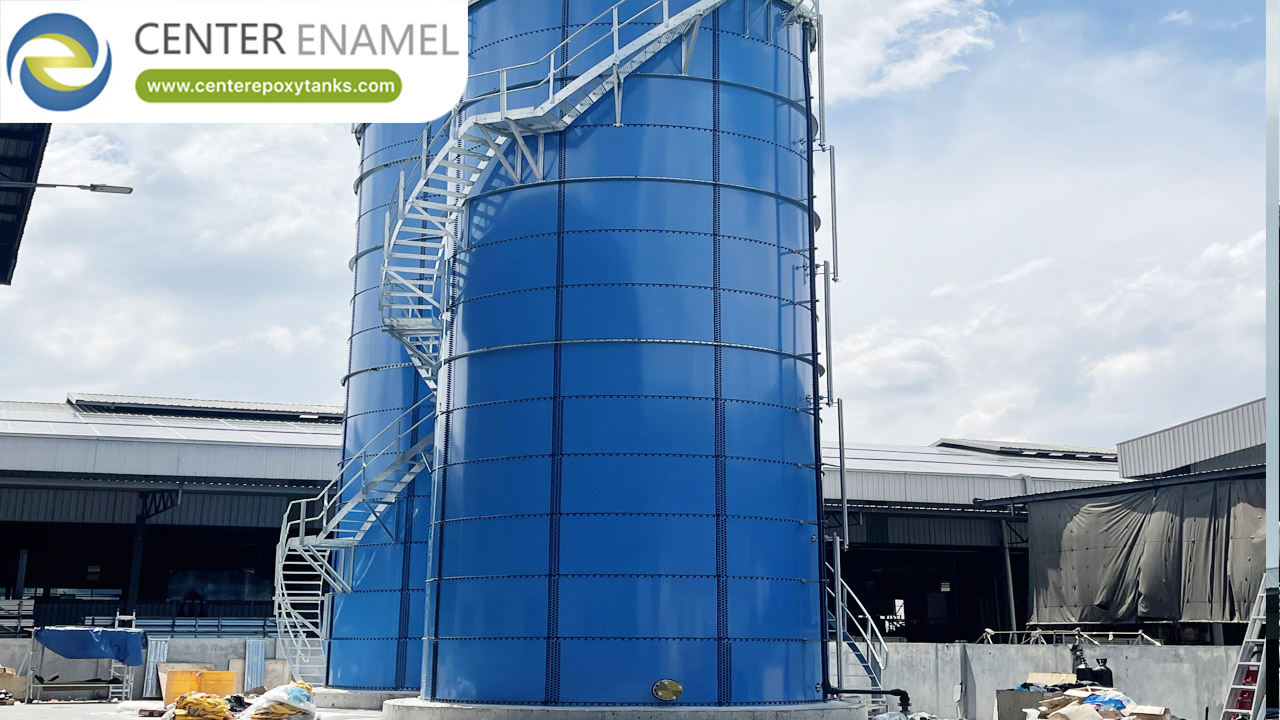
Water Tanks for Dairy Farm Wastewater: Engineering Reliable Agricultural Effluent Containment
Modern dairy farming operations generate massive volumes of wastewater daily, stemming from milking parlor washdowns, sanitation cycles, manure handling, and milkhouse operations. This high-strength effluent is rich in organic matter, suspended solids, nitrogen, phosphorus, and volatile fatty acids. If not properly contained and managed, agricultural wastewater poses severe environmental risks, including groundwater contamination, nutrient runoff, and regulatory penalties.
To prevent structural failure and environmental contamination, dairy operators require specialized containment infrastructure. Standard commercial water tanks or untreated carbon steel vessels rapidly degrade when exposed to aggressive organic slurries and corrosive biological byproducts. Consequently, modern agricultural facilities increasingly standardize on advanced dairy farm wastewater tanks engineered with high-performance corrosion defense and modular structural resilience.
Core Operational Challenges in Dairy Wastewater Management
Dairy effluent is a complex, chemically demanding substance. Designing effective storage infrastructure requires addressing several key operational hurdles:
High Organic and Chemical Aggressiveness: The decomposition of milk solids, manure, and cleaning chemicals generates organic acids and hydrogen sulfide (H2S) gases that aggressively corrode unprotected metal and degrade porous concrete.
Seasonal and Volumetric Fluctuations: Farm wastewater generation fluctuates based on herd size, seasonal weather events, and mandatory washout routines, necessitating flexible storage capacities that can handle heavy surges without overflow.
Strict Environmental Regulatory Compliance: Environmental protection agencies enforce rigid guidelines regarding zero-leakage containment, secondary spill prevention, and nutrient management plans (NMPs) for agricultural operations.
Engineering Superiority: Epoxy-Coated Bolted Steel Tanks
To meet these demanding environmental and structural criteria, premium bolted steel tanks utilizing Fusion Bonded Epoxy (FBE) technology have become the gold standard for dairy wastewater and effluent containment:
Factory-Controlled Precision: High-tensile steel plates are abrasive-grit blasted and uniformly coated with specialized thermoset epoxy powders under strict factory conditions, followed by high-temperature thermal curing to achieve an irreversible cross-linked molecular bond.
Impenetrable Corrosion Defense: The smooth, non-porous FBE barrier prevents agricultural slurries, organic acids, and moisture from contacting the underlying steel, eliminating rust, pitting, and structural thinning.
Rapid Modular Installation: Prefabricated bolted panels are shipped efficiently in standard containers and erected on-site by specialized crews in a fraction of the time required for traditional concrete construction, minimizing farm disruption.
Technical Performance Matrix: Agricultural Wastewater Storage Solutions
Technical Parameter | Factory-Applied Epoxy-Coated Bolted Tanks | Cast-in-Place Concrete Basins | Field-Welded Carbon Steel Tanks |
Corrosion & Effluent Resistance | Exceptional resistance to organic acids, dairy slurries, and biological wastewater | Susceptible to concrete carbonation, chemical leaching, and manure-induced spalling | Prone to internal oxidation and weld-seam pitting without constant recoating |
Construction Velocity & Modularity | Rapid modular bolted assembly completed in weeks | Slow civil construction requiring extensive formwork and multi-week curing | Slow, labor-intensive field welding and weather-dependent coating inspections |
Structural Scalability & Relocation | Modular design allows easy panel addition, capacity upgrades, or future relocation | Permanent monolithic structure; impossible to modify, expand, or relocate easily | Fixed structure requiring complex cutting, hot work, and re-welding |
Lifecycle Maintenance Overhead | Low ongoing maintenance; high-durability surface resists solid accumulation and scaling | Moderate to high remediation costs if structural micro-cracking or concrete degradation occurs | High ongoing maintenance overhead for periodic sandblasting and complete tank repainting |
Frequently Asked Questions (FAQ)
Q: Why are specialized tanks necessary for dairy farm wastewater?
A: Dairy farm wastewater contains high concentrations of organic waste, suspended solids, and cleaning chemicals that break down standard materials. Specialized tanks featuring corrosion-resistant coatings prevent structural degradation, chemical leakage, and environmental contamination.
Q: How do epoxy-coated steel tanks withstand acidic agricultural effluent?
A: Factory-applied fusion bonded epoxy (FBE) coatings create a chemically inert, non-porous barrier that isolates the underlying steel from organic acids, manure slurries, and corrosive biological byproducts generated during wastewater decomposition.
Q: Can dairy wastewater storage tanks be expanded if the farm herd grows?
A: Yes. Because epoxy-coated bolted steel tanks feature a modular panel construction, facility operators can easily unbolt and add vertical rings or lateral panels to increase storage volume as farm capacity expands, avoiding the need to build an entirely new tank.
Q: What maintenance is required for dairy effluent storage tanks?
A: Maintenance is minimal compared to concrete or field-painted steel. Routine inspections involve checking exterior bolt torque, evaluating perimeter seal integrity, and periodically clearing accumulated organic sludge from the tank floor to maintain optimal working capacity.


