Farm Water Tanks: Essential Agricultural Infrastructure for Irrigation and Livestock Management
In modern agriculture, water security is the single most critical factor determining farm productivity, profitability, and resilience against climate volatility. Whether managing multi-acre crop irrigation systems, providing continuous hydration for livestock, or ensuring emergency water reserves for fire protection, agricultural operations require robust, dependable liquid containment.
Traditional surface water sources, such as open ponds and streams, are increasingly vulnerable to severe evaporation losses, chemical runoff, and drought depletion. To combat these risks, agricultural enterprises rely on advanced farm water tanks. Modern farm water storage systems combine high-durability materials, smart monitoring capabilities, and efficient rainwater harvesting configurations to ensure an uninterrupted, year-round water supply.
Core Types and Materials of Farm Water Storage
Selecting the correct water storage container depends on farm size, water source, mobility requirements, and application objectives:
Polyethylene (Poly) Tanks: Highly popular for small to mid-scale farms, polyethylene tanks account for a major share of agricultural water storage. Molded from UV-stabilized, food-grade resins, these lightweight tanks resist corrosion, prevent rust, and are easy to transport and install across different farm sectors.
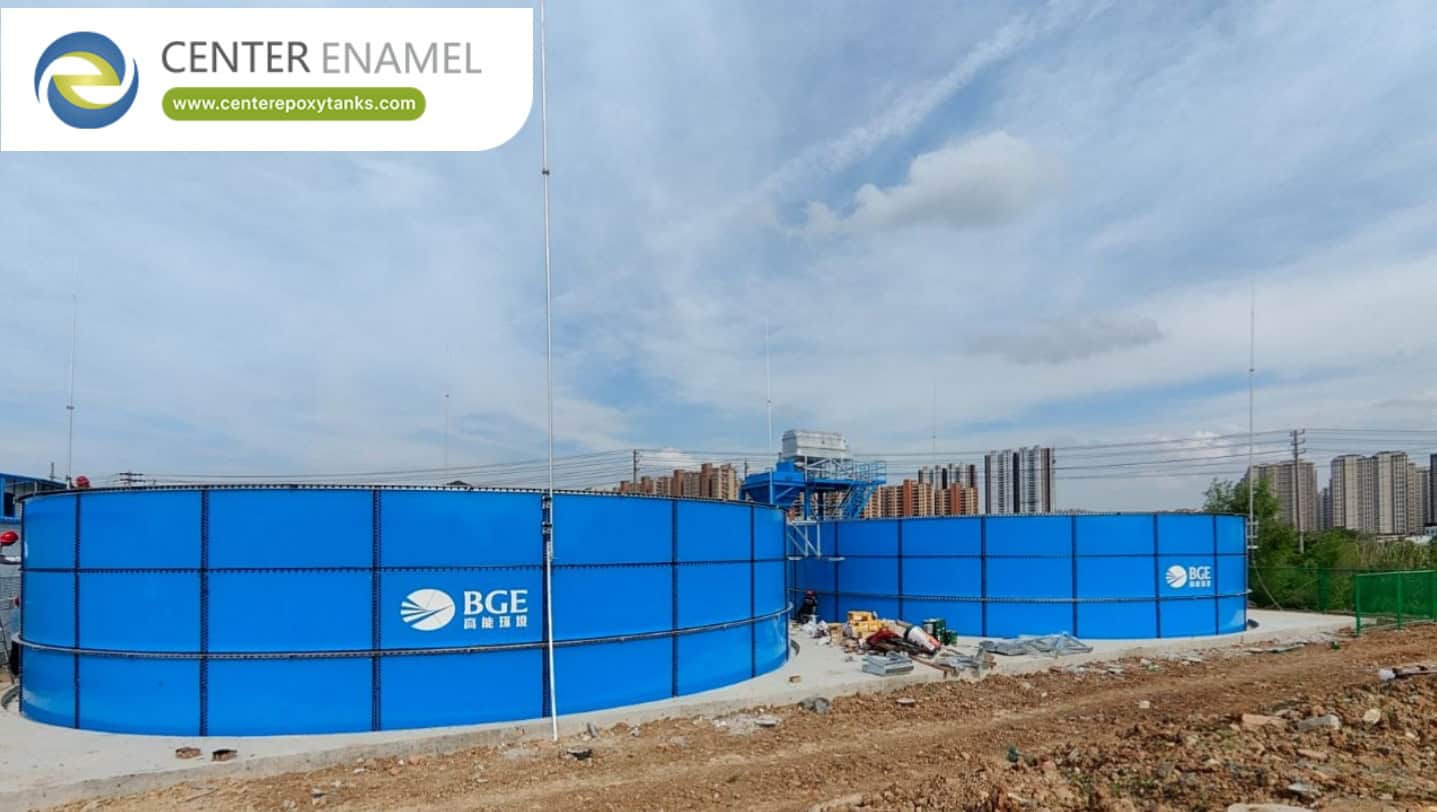
Modular Steel and Galvanized Tanks: Engineered for large-scale operations, modular steel tanks (including glass-fused-to-steel and heavy-duty corrugated options) provide massive volume capacities. Equipped with specialized antimicrobial liners (such as Aqualiner Fresh), they offer exceptional structural integrity and decades of service life for intensive irrigation and livestock feeding stations.
Collapsible Bladder and Portable Tanks: Ideal for remote pastures, temporary chemical-free spray applications, or mobile livestock watering, flexible bladder tanks offer quick deployment and compact storage when empty.
Strategic Benefits of On-Farm Water Management
Integrating dedicated farm water tanks into daily agricultural workflows delivers immediate operational advantages:
Drought and Climate Resilience: Capturing excess rainfall from barn roofs and shedding structures shields the farm from fluctuating water utility prices and unexpected supply shortages.
Evaporation Minimization: Unlike open earthen dams which can lose up to 50 percent of their stored water to solar evaporation in dry months, closed-deck farm tanks protect precious water resources.
Livestock Health and Productivity: Clean, temperature-regulated drinking water directly improves livestock weight gain, milk production, and overall herd immunity.
Data Table: Comprehensive Comparison of Farm Water Tank Technologies
Technical Parameter | Polyethylene (Poly) Tanks | Modular Steel / Galvanized Tanks | Flexible Bladder Tanks |
Capacity Scale | Small to mid-range (typically 500 to 15,000 gallons) | Massive bulk storage (up to 500,000+ liters / large volume) | Flexible portable sizing (50 to 10,000+ gallons) |
Corrosion & UV Resistance | Excellent polymer resistance; requires UV stabilization compounds | High-durability coatings or galvanized layers with inner liners | High-strength fabric coated against UV and weathering |
Installation & Mobility | Lightweight; easily moved and installed on simple pad foundations | Field-assembled modular panels requiring solid concrete ring bases | Highly portable, collapsible, and rapid to deploy |
Expected Lifespan | 10 to 20 years depending on UV exposure and grade | 25 to 40+ years with proper liner and structural maintenance | 5 to 12 years depending on deployment frequency |
Frequently Asked Questions (FAQ)
Q: What size farm water tank do I need for my property?
A: Tank sizing depends on your primary use cases, such as daily livestock consumption rates, acreage under irrigation, and local rainfall catchment potential. A standard rule of thumb is to calculate peak daily water demand multiplied by the number of dry-spell days you expect to weather without replenishment.
Q: How can I prevent algae growth inside my farm water tank?
A: Algae requires sunlight to grow. You can prevent algal blooms by using opaque, UV-blocking tank materials (such as dark-pigmented poly or covered steel tanks), installing tight-fitting access hatches, and utilizing specialized antimicrobial internal liners.
Q: Are polyethylene farm water tanks safe for drinking water?
A: Yes. High-quality agricultural poly tanks are manufactured from virgin, FDA-compliant, food-grade polyethylene resins, ensuring that stored water remains safe and free from toxic chemical leaching for both humans and livestock.
Q: Can farm water tanks be integrated with rainwater harvesting systems?
A: Absolutely. Most farms utilize existing barn roofs, machine sheds, and storage buildings equipped with gutters and downpipes to channel massive volumes of clean rainwater directly into primary storage tanks, significantly reducing reliance on groundwater bores.


