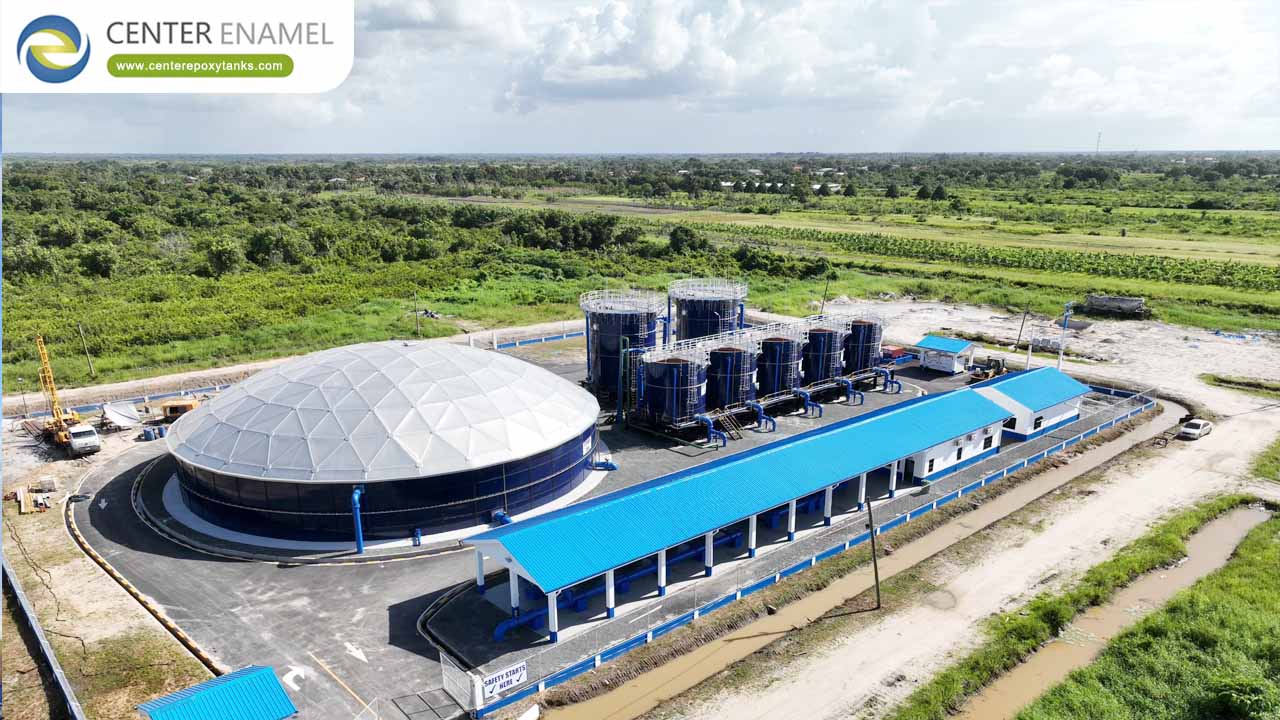
Agricultural Water Tanks: Essential Storage Solutions for Farm Irrigation and Livestock Management
Modern agriculture faces increasing challenges, from unpredictable rainfall patterns and declining groundwater levels to the rising costs of resource management. To maintain consistent crop yields and ensure animal welfare, efficient on-farm water management is paramount. At the heart of any reliable agricultural operation lies a robust containment infrastructure: agricultural water tanks.
Whether utilized for rainwater harvesting, high-capacity pivot irrigation buffering, or stock water delivery, choosing the right agricultural water storage tank directly influences operational resilience and long-term farm profitability.
Core Applications of Water Storage on Modern Farms
Agricultural water tanks serve multiple critical functions across contemporary farming operations:
Precision Irrigation Buffering: Providing a steady, pressurized reserve for drip or center-pivot irrigation systems, preventing direct reliance on erratic well pumps or municipal water allocations.
Livestock Hydration: Ensuring continuous, clean drinking water for cattle, horses, and poultry, which is directly tied to daily weight gain and dairy production metrics.
Rainwater Harvesting: Capturing and retaining seasonal precipitation from large barn and greenhouse rooflines to reduce groundwater extraction costs and promote sustainability.
Emergency Fire Suppression: Maintaining dedicated water reserves on-site to protect rural farm structures and equipment against wildfire threats.
Key Material Options for Agricultural Water Containment
Selecting the optimal tank material depends on storage volume, geographic climate, and installation constraints:
Polyethylene (Poly) Tanks: The most popular choice for mid-sized farm applications. Crafted from UV-stabilized, food-grade polyethylene resins compliant with FDA regulations, these seamless tanks resist solar degradation, inhibit algae growth, and offer exceptional portability.
Fiberglass Reinforced Plastic (FRP) Tanks: Ideal for aggressive water chemistries or underground burial. Fiberglass tanks provide a high strength-to-weight ratio, complete immunity to rust, and long service spans without intensive maintenance.
Modular Steel Tanks: The premier choice for large-capacity commercial farming operations. Engineered for high-volume irrigation and bulk storage, steel tanks offer superior structural strength and massive volumetric scalability, often reinforced with specialized internal liners to prevent corrosion.
Data Table: Comprehensive Comparison of Agricultural Water Tank Solutions
Technical Parameter | Polyethylene (Poly) Tanks | Fiberglass (FRP) Tanks | Modular Steel Tanks |
Capacity Range | Small to mid-range (500 to 15,000 gallons) | Moderate to large (1,000 to 50,000+ gallons) | High-volume commercial scale (10,000 to 1,000,000+ gallons) |
Corrosion Resistance | Excellent; inert polymer structure | Superior; naturally rust-proof and chemical resistant | Excellent when coated or lined with specialized protective finishes |
Installation & Mobility | Highly lightweight; easily relocated with basic equipment | Moderate weight; requires careful handling during placement | Heavy structural assembly; permanent high-capacity installation |
Expected Lifespan | 10 to 15 years | 20 to 30 years | 30 to 50+ years |
Frequently Asked Questions (FAQ)
Q: What size agricultural water tank do I need for my farm?
A: Tank sizing depends on your primary use case. For livestock, calculate approximately 10 to 15 gallons per head daily for mature cattle. For irrigation, calculate peak daily water requirements multiplied by the number of buffer days desired during dry spells.
Q: Are polyethylene farm water tanks safe for drinking water?
A: Yes. High-quality agricultural polyethylene tanks are molded from virgin, FDA-compliant food-grade resins that are safe for human and animal consumption.
Q: How can I prevent algae growth in outdoor agricultural water tanks?
A: Choose opaque, UV-stabilized tanks that block sunlight penetration. Regularly inspecting and cleaning the tank, or using safe, approved agricultural water clarifiers, also prevents algae blooms.
Q: Can agricultural water tanks be used for rainwater harvesting?
A: Absolutely. Many farms utilize gutters and downspouts connected to storage tanks to capture runoff from large agricultural buildings, reducing reliance on groundwater wells.


