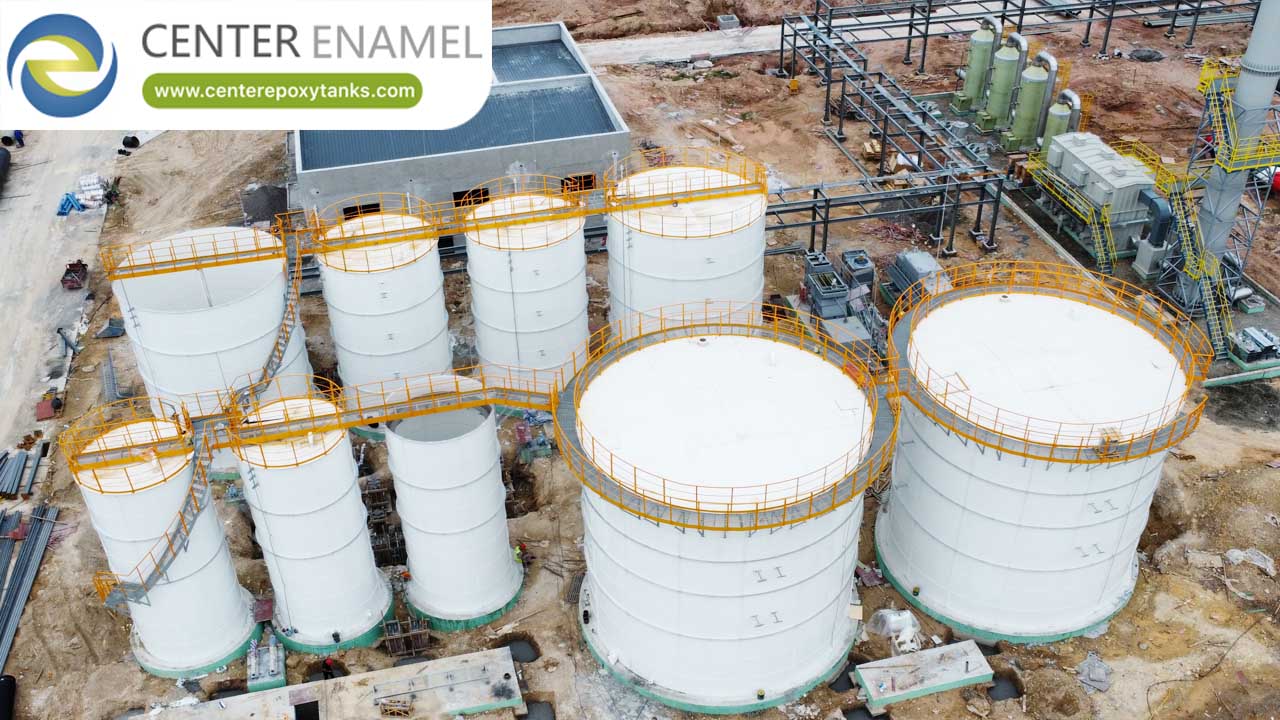
Wastewater Sludge Holding Tanks: Engineered Solutions for Industrial & Municipal Management
Managing wastewater sludge is one of the most demanding tasks in treatment plant operations. Because sludge is chemically aggressive, biologically active, and often abrasive, the storage infrastructure must be engineered to withstand rigorous conditions while preventing environmental contamination.
Unlike standard water storage, a sludge holding tank must manage high viscosity, corrosive gases like hydrogen sulfide (H2S), and the mechanical vibration caused by mixing equipment. For these reasons, choosing the right material and design is critical to minimizing operational downtime and long-term maintenance costs.
Critical Engineering Features for Sludge Containment
A sludge holding tank is an active mechanical component of the treatment process, not a passive vessel. Facility managers and engineers should prioritize these three design pillars:
1. Mechanical Resistance (Corrosion & Abrasion)
Sludge contains grit and suspended solids that can scour protective coatings.
Glass-Fused-to-Steel (GFS): The glass-like surface is physically hard, resisting mechanical abrasion from grit, and chemically inert, making it immune to acid/alkali attack.
Stainless Steel: Provides long-term resistance to moisture and chemical profiles, particularly in municipal sludge applications where low chloride levels are present.
2. Geometric Design for Viscous Flow
Sludge thickening and storage requires specific bottom geometry to prevent dead zones where solids can settle and harden.
Conical/Sloped Bottoms: Essential for gravity-assisted drainage and complete sludge removal.
Agitation Integration: Tanks must be engineered to support top-mounted or side-mounted mixers/agitators, which induce torque and vibration.
3. Odor and Emission Control
Sludge digestion and storage produce gases that can create odor issues and contribute to structural degradation.
Comparative Material Matrix
Material | Corrosion Resistance | Abrasion Resistance | Maintenance Needs | Typical Lifespan |
Glass-Fused-to-Steel | Excellent (Inert) | High | Minimal | 30–50+ Years |
Stainless Steel | Excellent | High | Very Low | 40–50+ Years |
Coated Carbon Steel | Low (Needs recoating) | Moderate | High | 15–20 Years |
Reinforced Concrete | Moderate (Needs lining) | Low | Moderate | 20–30 Years |
Why Bolted Modular Tanks Lead the Industry
For municipal and industrial sludge applications, bolted steel tanks (such as GFS or factory-coated steel) are increasingly preferred over field-welded concrete or carbon steel options.
Factory Quality Control: Unlike site-poured concrete or field-welded steel, bolted panels are coated in a controlled factory environment. This ensures 100% coating consistency and removes the variability of on-site conditions.
Rapid Deployment: Modular panels are "flat-packed," reducing shipping costs and allowing for assembly in remote or space-constrained areas where large cranes or welding crews might be impractical.
Expandability: As treatment demand increases, modular tanks can often be expanded or relocated, providing the flexibility concrete structures lack.
Frequently Asked Questions (FAQ)
Q: Why is Glass-Fused-to-Steel (GFS) better than concrete for sludge?
A: Concrete is porous and can be susceptible to acid attack from H₂S and other sludge-derived chemicals, leading to cracking and leaching. GFS tanks are non-porous and chemically inert, offering a significantly longer lifespan with virtually no need for surface repair.
Q: How do I manage sludge viscosity in a holding tank?
A: The tank must be engineered with reinforced connections to support industrial mixers or agitators. Additionally, selecting a tank with a sloped or conical bottom ensures that viscous sludge is directed toward the outlet, preventing "bridging" or clogging.
Q: What standards should my sludge holding tank meet?
A: Look for tanks compliant with AWWA D103 (the standard for bolted steel tanks) and NSF/ANSI 61 (if the system includes water reuse components). Compliance ensures that the tank is structurally rated for the density and weight of stored sludge.
Q: How do I control odors in a sludge holding tank?
A: Odor management is best handled by installing a gastight cover and an active ventilation system. By maintaining slight negative pressure within the tank, you can route odors to a biofilter, activated carbon system, or chemical scrubber.


