Used Motor Oil Storage Tanks: Industrial Engineering & Procurement Guide
Used motor oil (waste oil) is a complex feedstock that requires specialized storage infrastructure. As environmental regulations tighten, the demand for high-integrity, leak-proof storage tanks is increasing for recycling facilities, refineries, and logistics hubs. Sourcing from a professional Chinese manufacturer offers a strategic advantage in terms of production scale, customization, and cost-efficiency. This guide outlines the engineering benchmarks, safety features, and procurement considerations required to secure storage assets that meet rigorous international standards (API 650, NFPA 30).
1. Engineering for Waste Oil: The Critical Requirements
Used motor oil is not a simple fluid; it contains heavy metals, sludge, water, and acidic compounds. Standard fuel tanks are often insufficient. An industrial waste oil tank must be engineered with the following priorities:
● Chemical Resistance: The interior lining must be resistant to acidic breakdown and solvent-like components found in used oil. Factory-applied epoxy coatings are the industry standard for this application.
● Viscosity Management: Used oil thickens in cold environments. Our tanks are engineered to integrate external insulation or internal heat-tracing systems, ensuring the product remains pumpable year-round.
● Spill Prevention (SPCC Compliance): Secondary containment is mandatory. We provide tank configurations with integrated bunding or double-walled designs to prevent soil and groundwater contamination, ensuring strict adherence to environmental safety mandates.
2. Bolted Steel: The Global Standard for Storage
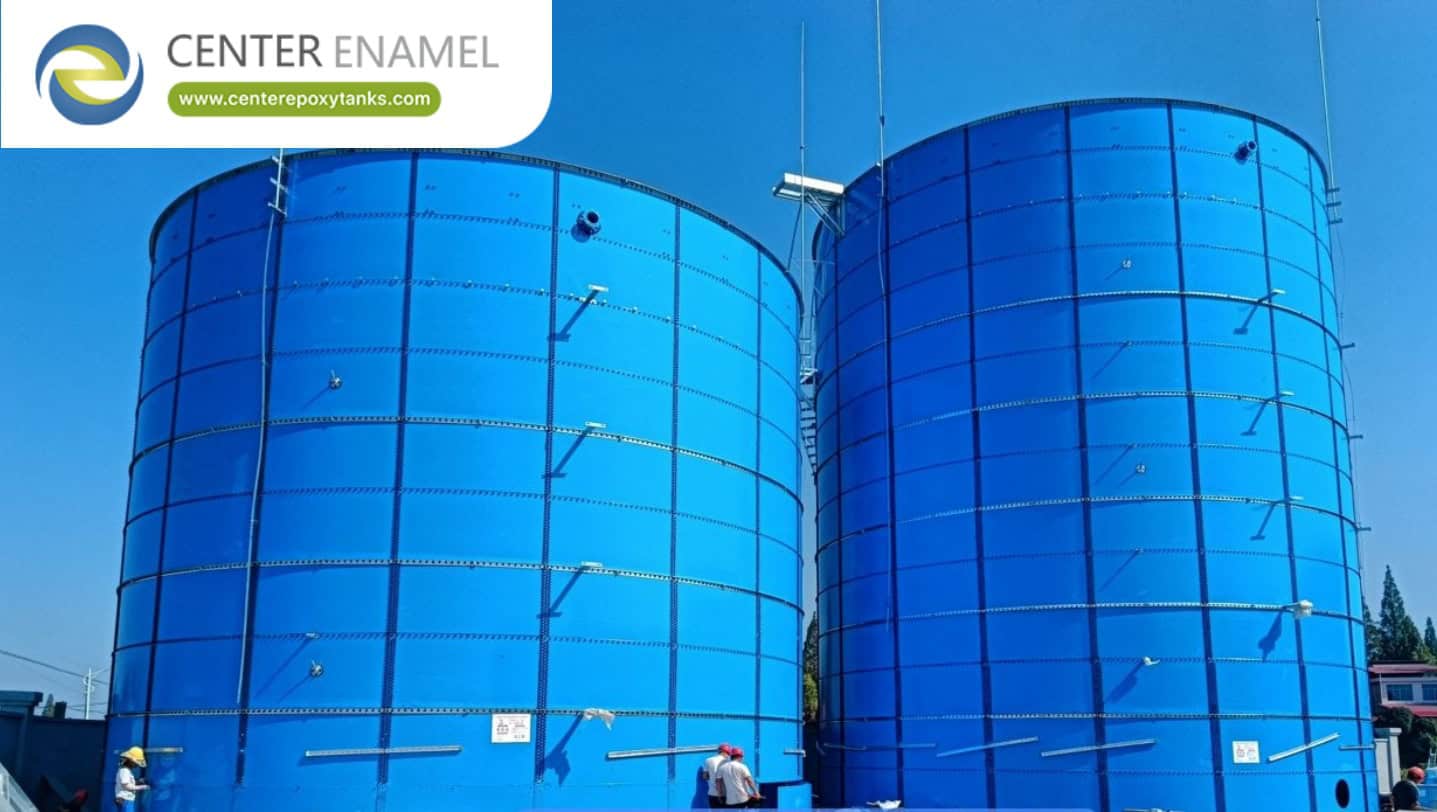
While field-welded tanks were once the norm, factory-coated bolted steel tanks have become the preferred choice for waste oil storage due to quality control and logistics.
● Controlled Coating: Every panel is grit-blasted to SSPC-SP10 (Near-White Metal) and coated in a temperature-controlled facility. This ensures a uniform coating thickness that is impossible to replicate in field-welded "on-site" painting scenarios.
● Modular Logistics: Tank panels are flat-packed into standard 40ft containers. This allows us to ship massive storage volumes (up to 20,000 m3 and beyond) globally at a fraction of the cost of transporting pre-welded structures.
● Rapid Field Assembly: Modular bolted panels can be assembled by local teams using provided blueprints, significantly reducing the "hot work" risks and site-time associated with large-scale industrial projects.
3. Procurement Matrix: Vetting Your Manufacturer
When evaluating Chinese tank manufacturers for sensitive waste oil storage, procurement teams should prioritize the following technical KPIs:
Evaluation Metric | The "Trusted Manufacturer" Standard | The High-Risk Supplier |
Coating Integrity | Automated line, Holiday-tested (100% check) | Manual spray, inconsistent thickness |
Material Quality | Certified Structural Steel (e.g., Q345B) | Recycled or low-grade carbon steel |
Leak Detection | Integrated sensors and vacuum test data | No formal leak verification records |
Documentation | Full Weld Procedure Specs & Mill Test Reports | Minimal to no documentation |
Logistics | Proven export experience (Flat-pack ready) | Limited export/logistics capabilities |
4. Frequently Asked Questions (FAQ)
Q: Can these tanks handle high-sludge content waste oil?
A: Yes. We incorporate side-entry manways and cone-down floor designs. This structural modification allows for easier sludge removal and tank cleaning, minimizing downtime during scheduled maintenance.
Q: How do you handle regional seismic or wind load requirements?
A: Our engineering team utilizes Finite Element Analysis (FEA) software to calculate the exact plate thickness and bolt spacing required for your specific site conditions. Whether the tank is located in a high-wind coastal zone or an earthquake-prone region, we provide the stamped calculations to meet your local building codes.
Q: Are these tanks compatible with oil recycling/refining plant layouts?
A: Yes. We design our tanks with universal flange compatibility, allowing them to connect seamlessly with standard industrial pumping, heating, and filtration skids.
Procuring storage infrastructure for used motor oil requires a focus on structural longevity and environmental compliance. By selecting a manufacturer that emphasizes automated factory coating, strict API 650/ASME compliance, and a modular shipping approach, you ensure your project meets both its operational goals and its environmental obligations.
Are you currently specifying storage capacity for a waste oil recycling project, and would you like to review our structural load-bearing calculations for your site’s specific environmental conditions?


