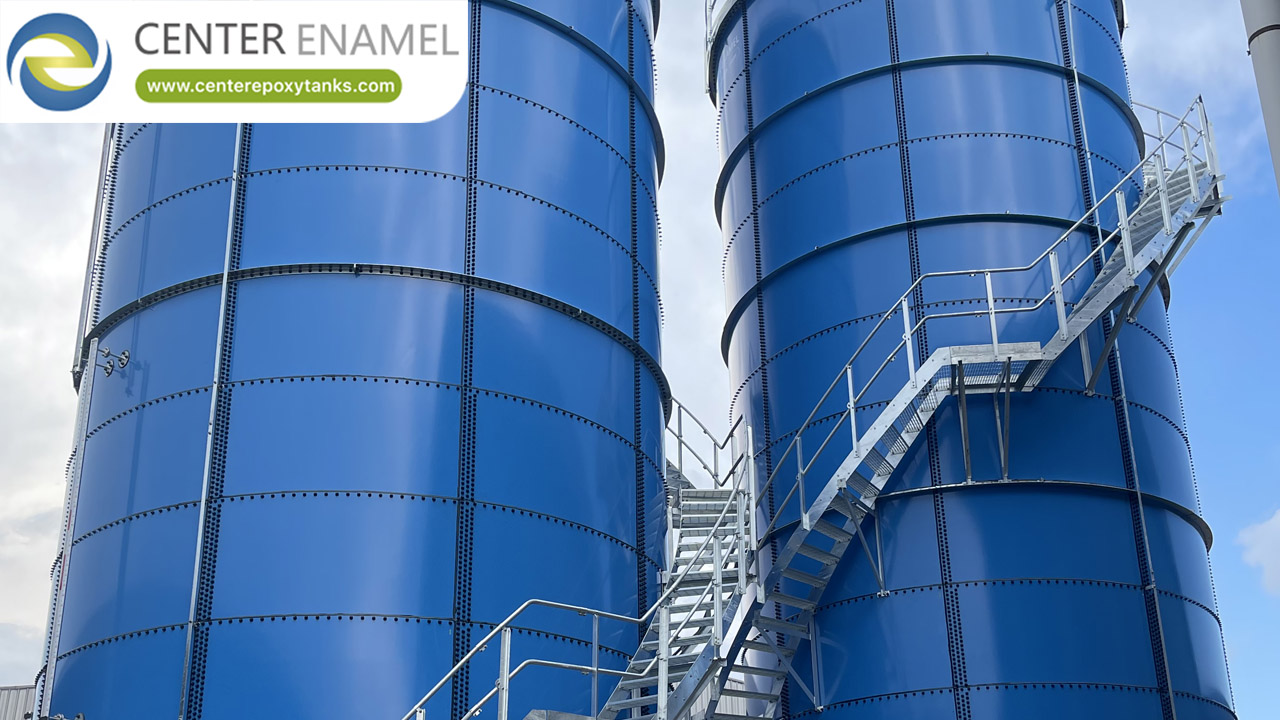
The Superior Durability of Fusion Bonded Epoxy (FBE) Tanks in Fire Water Systems
Fire water systems are the last line of defense in industrial safety. Unlike process water, fire water must remain available, uncontaminated, and ready at a moment’s notice for decades. Fusion Bonded Epoxy (FBE) bolted steel tanks provide this critical reliability by eliminating the primary failure point of fire suppression infrastructure: corrosion.
The Engineering Challenge: Why Fire Water Tanks Fail
Fire water storage is often neglected until it is needed most. Traditional storage solutions, such as concrete or field-welded carbon steel, face two major threats:
Internal Corrosion: Over time, standing water causes rust in carbon steel or leaching in concrete, which leads to sludge buildup, valve clogging, and reduced flow rates.
Structural Degradation: Concrete cracking and rebar oxidation can lead to slow leaks or catastrophic tank failure, rendering the fire suppression system useless during an emergency.
The FBE Advantage: Molecular Fusion
Unlike liquid-applied coatings that rely on mechanical adhesion (which can peel or flake), FBE is a thermoset polymer barrier fused to steel panels in a factory-controlled environment at temperatures exceeding 200C. This creates a chemically cross-linked, monolithic barrier that is essentially inseparable from the steel substrate.
Performance Matrix: Fire Water Storage Solutions
Feature | FBE Bolted Steel | Reinforced Concrete | Field-Welded Steel |
Corrosion Resistance | Excellent (Inert) | Low (Subject to Spalling) | Moderate (Needs Painting) |
Water Purity | High (Non-leaching) | Low (Porous) | Moderate (Rust risk) |
Maintenance | Minimal | High (Crack Repair) | High (Periodic Coating) |
Installation Speed | Fast (Modular) | Slow (Pour & Cure) | Moderate |
Expected Lifespan | 30+ Years | 20–25 Years | 15–20 Years |
Strategic Benefits for Industrial Fire Safety
1. Zero-Rust Guarantee
Because the FBE barrier prevents the water from ever touching the steel, the risk of "red water" or sediment buildup—which can clog sprinkler heads and nozzles—is eliminated. Your fire water stays clean, clear, and ready.
2. Modular Reliability
Fire suppression system requirements often change as facilities expand. Our bolted steel design allows for easy capacity increases or relocation. Unlike concrete tanks, which are permanent fixtures, FBE tanks can be reconfigured to match the evolving footprint of your plant.
3. Compliance and Standards
FBE tanks are engineered to meet and exceed international fire protection standards, including NFPA 22 (Standard for Water Tanks for Private Fire Protection) and AWWA D103. This simplifies the permitting process and provides engineers with the documented structural integrity required for high-risk industrial environments.
4. Reduced Total Cost of Ownership (TCO)
The durability of FBE technology means that the budget previously allocated for periodic structural painting, concrete crack injection, or valve cleaning can be reallocated to other safety initiatives. The low-maintenance lifecycle of FBE tanks is the most cost-effective long-term strategy for facility managers.
Frequently Asked Questions (FAQ)
Q: Why is FBE preferred over concrete for fire water storage?
A: Concrete is naturally porous and prone to cracking due to thermal expansion and contraction. Over time, these cracks lead to water leakage and rebar corrosion. FBE-coated steel is non-porous, chemically inert, and provides a much tighter, more predictable containment barrier.
Q: Does the FBE coating require cathodic protection?
A: No. Because our factory-applied FBE creates a complete, continuous dielectric barrier, there is no need for complex cathodic protection systems, which significantly simplifies your long-term maintenance requirements.
Q: Are FBE tanks compliant with NFPA 22?
A: Yes. FBE bolted tanks are a widely accepted solution under NFPA 22 guidelines for fire water storage. They are designed to meet the rigorous structural load and durability requirements set forth by these standards.
Q: How does FBE compare to Glass-Fused-to-Steel (GFS)?
A: Both are high-performance options. FBE is often preferred for fire water because it provides exceptional impact resistance during installation and is highly repairable in the field, whereas glass coatings can be brittle and prone to chipping.
Q: What is the lifespan of an FBE fire water tank?
A: With proper installation and routine visual inspection, FBE tanks typically offer a service life of 30+ years with virtually zero structural maintenance, making them an excellent investment for long-term facility infrastructure.
Are you specifying storage infrastructure for a new industrial fire suppression project or upgrading your facility's aging water reservoirs? [Contact our engineering team] today for a technical proposal or capacity analysis tailored to your site's fire code requirements.


