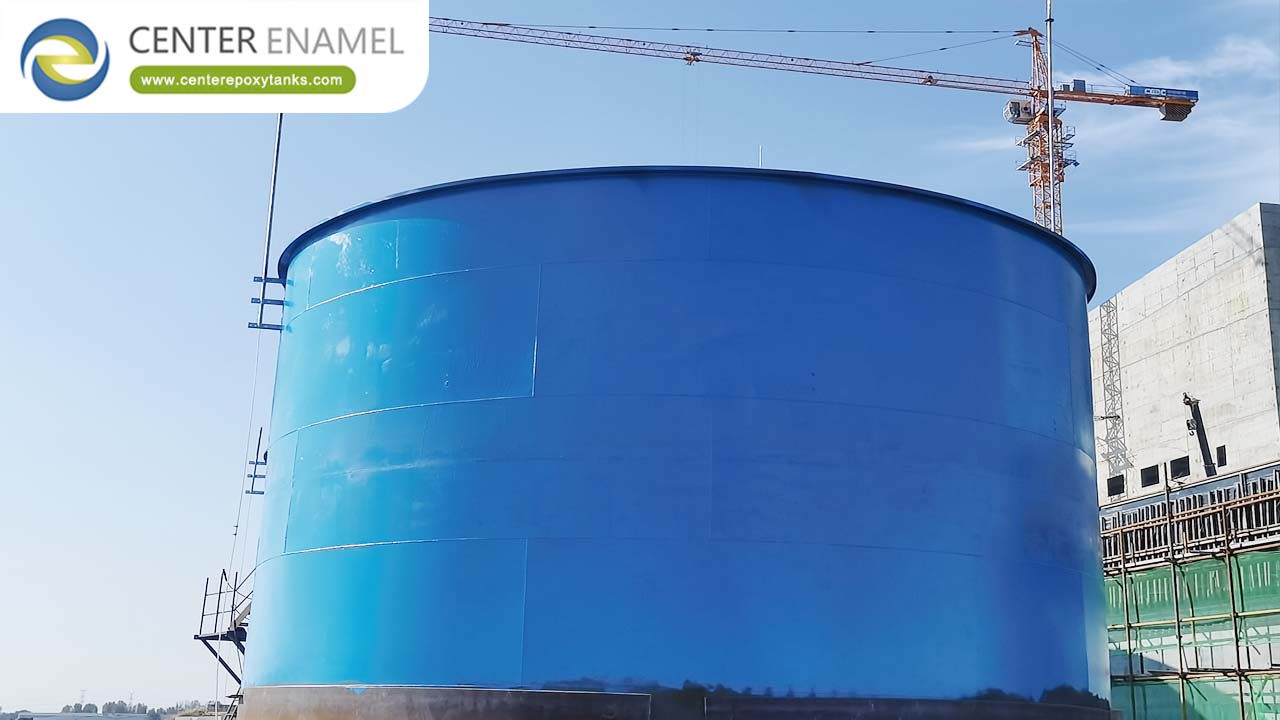
Steel Welded Water Tanks: The Engineering Benchmark for Industrial Storage
Steel welded water tanks are high-capacity, monolithic storage vessels engineered for maximum structural reliability and leak prevention in industrial and municipal applications. Unlike modular bolted systems, welded tanks are fabricated by fusing steel plates into a single, seamless structure, eliminating the need for gaskets, bolts, or seals that can degrade over time. These tanks are designed to meet stringent international standards—such as API 650, AWWA D103, and ASME—making them the preferred solution for large-scale fire suppression, process water storage, and municipal potable water reserves where structural integrity and zero-leakage performance are critical.
The Engineering Philosophy: Monolithic Integrity
In industrial facility management, water storage is a foundation of operational safety—particularly for fire protection and continuous production cooling. The welded steel tank is often selected over other methods because it is a "set-and-forget" infrastructure investment.
Zero Leakage Risk: Because the tank is welded on-site, the shell becomes a single piece of steel. There are no gaskets that can dry out, no bolt holes that can corrode, and no mechanical joints that can vibrate loose.
High Hydrostatic Strength: Welded construction provides superior resistance to the massive pressures exerted by large volumes of water. The uniform distribution of stress across the welded seams allows for the construction of extremely tall, large-diameter tanks that would be structurally compromised if built with bolt-together modular panels.
Superior Corrosion Protection: After fabrication, the internal and external surfaces of a welded tank are typically sandblasted to a Sa 2.5 standard and coated with high-performance epoxy or polyurethane systems. This creates a barrier against oxidation that is more uniform and durable than field-applied coatings on other tank types.
Comparative Overview: Storage Technologies
Feature | Welded Steel Tank | Bolted Steel Tank | Concrete (RCC) Tank |
Structural Design | Monolithic (Seamless) | Modular (Segmented) | Massive (Civil build) |
Leak Prevention | Guaranteed (No joints) | Sealant dependent | Prone to micro-cracking |
Installation | Field-Erected | Rapid Modular Build | Slow/Labor intensive |
Maintenance | Minimal (Coating only) | Moderate (Bolt/Gasket checks) | High (Structural repairs) |
Lifespan | 30–50+ Years | 20–30 Years | Variable |
Engineering Compliance & Quality Control
For procurement managers, the quality of a welded tank is defined by its adherence to rigorous industry codes. Professional manufacturers provide detailed documentation verifying:
API 650 Compliance: Utilizing the global standard for welded tanks, ensuring the thickness and welding procedures are matched to the specific diameter, height, and seismic zone of the site.
Non-Destructive Testing (NDT): 100% of critical structural welds are verified using X-ray, Ultrasonic Testing (UT), or Magnetic Particle Inspection (MPI). This ensures that even subsurface weld defects are identified before the tank is commissioned.
Seismic & Wind Load Verification: Every tank design undergoes Finite Element Analysis (FEA) to ensure it can withstand the specific environmental stresses of the installation location, including local wind speeds and peak ground acceleration in seismic zones.
Frequently Asked Questions (FAQ)
Q: Are welded tanks suitable for potable water?
A: Yes. When specified with NSF/ANSI-61 certified food-grade interior linings, welded steel tanks are the standard for municipal potable water storage because they provide a clean, secure, and inert environment.
Q: How does the installation of a welded tank differ from a bolted tank?
A: Bolted tanks are essentially "pre-fabricated kits" assembled by a small crew. Welded tanks require a more specialized team of certified welders and NDT technicians to erect the tank on-site. While the installation process is more rigorous, the result is a significantly more robust and durable structure.
Q: What is the maintenance protocol for a welded water tank?
A: Maintenance is minimal. It typically involves annual visual inspections of the exterior coating and periodic internal inspections to check for sediment accumulation or coating wear. Because the structure itself is monolithic, there is no need to perform "bolt-tightening" or "gasket-replacement" campaigns.
Partnering for Infrastructure Longevity
A water storage tank is a multi-decade asset. Choosing the welded steel route is a commitment to structural quality and operational uptime. By partnering with manufacturers who prioritize certified welding, advanced NDT testing, and professional project management, you ensure your facility's water storage infrastructure will perform reliably for generations.
Are you evaluating storage options for a large-scale industrial project?
Contact our technical engineering team to request a structural feasibility analysis, discuss welding certifications, or receive a project proposal tailored to your specific water volume and site-load requirements.


