Steel Oil Tank Vapor Control: Roofs, Seals, Recovery
Vapor control on oil tanks captures or destroys the hydrocarbons that would otherwise escape at the roof. For steel oil tank vapor control the tools are floating roofs, seals, and vapor-recovery units working together.
What Is Steel Oil Tank Vapor Control?
Oil tank vapor control is the set of design measures that limit hydrocarbon emissions from storage: floating roofs shrink the vapor space, mechanical seals close the rim gap, and vapor-recovery units (VRUs) or thermal oxidizers capture or destroy the remaining stream.
How Does It Work?
A floating or internal floating roof removes most of the headspace, so little vapor forms. What remains at the seal and gauge is routed through a vapor line to a VRU (compressing and returning hydrocarbon to product) or to a flare/oxidizer. Pressure-vacuum vents protect the roof while keeping losses low.
Key Types, Components, and Features
· Floating roof + seals:primary emission cut at the source.
· Vapor recovery unit (VRU):compresses and returns hydrocarbon.
· Thermal oxidizer / flare:destroys non-condensable vapor.
· Carbon / enclosed vent:captures odor and light ends.
Applications
· Refineries and crude terminals
· Gasoline and light-fuel storage
· Waste-oil and slop handling
· Sites under tight air permits
Technical Considerations
· Standards:API 650 roof rules; local air-permit emission limits; OSHA for vapor-space entry.
· Seals:primary + secondary rim seal condition drives most leakage.
· VRU:sized to breathing and turnover vapor rate.
· Monitoring:tank gauging and VRU meters confirm performance.
Key Engineering Parameters
Design Parameter | Typical Value / Range | Why It Matters |
Vapor-loss cut | Up to 99% with floating roof | Emission control |
Roof type | EFR / IFR | Vapor-space removal |
Seals | Primary + secondary | Leak control |
VRU | Compress + recover HC | Product recovery |
Oxidizer | Destroy non-condensable | Compliance |
Standards | API 650 + air permit | Code |
Monitoring | VRU meters / gauging | Performance |
Emission limit | Permit-specific | Design driver |
Project Case Study
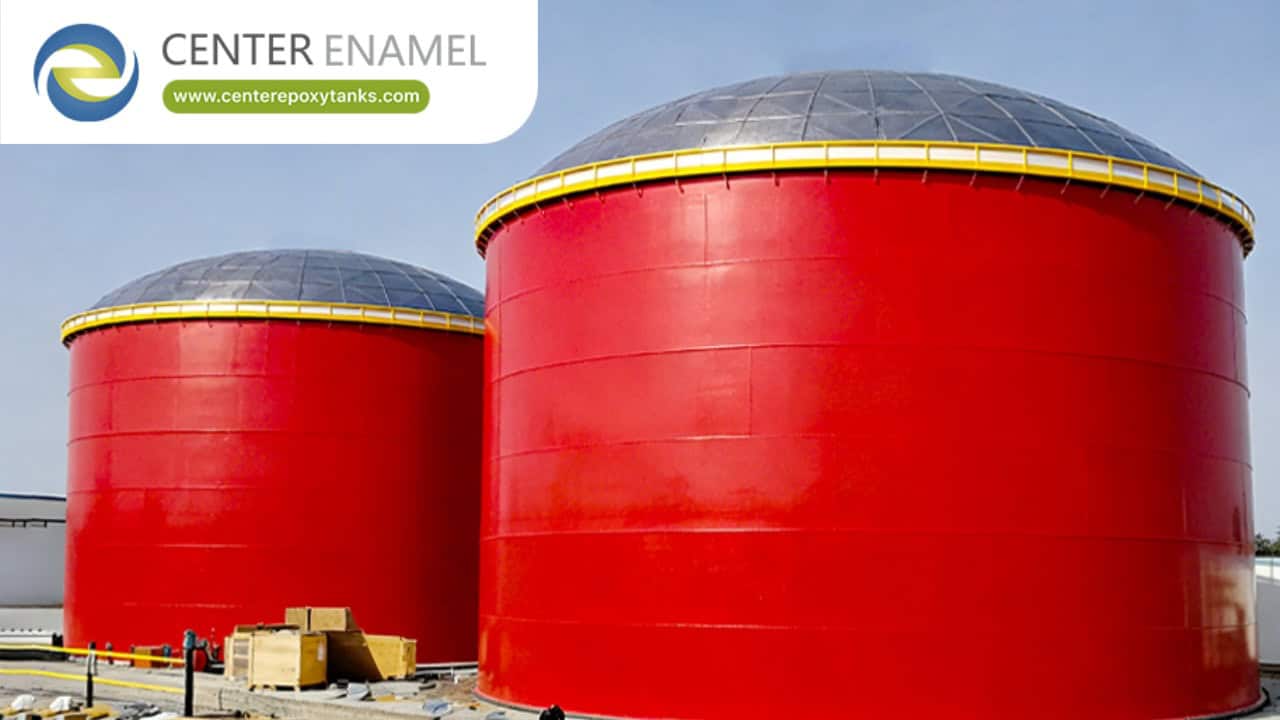
The following verified installation demonstrates the containment engineering discipline behind steel oil tank vapor control. (Application shown is the tank's actual delivered service; the same bolted, coated, or stainless engineering underlies oil-storage designs discussed here.)
Project Information | Details |
Location | India |
Year | 2024 |
Industry / Application | Fire-protection water for an industrial facility |
Product / Tank type | GFS bolted |
Configuration | 3 tanks, φ 19.86 × 13.2 m |
Capacity | 12,261 m³ |
Standards | AWWA D103-09 / ISO 28765 |
Status | Completed |
This reference is cited for its documented liquid-containment and corrosion-control engineering; it is not represented as an oil tank where it was a water or wastewater installation.
Advantages and Limitations
Advantages
· Cuts emissions and product loss together
· Supports air-permit compliance
· Reduces fire risk from accumulated vapor
Limitations
· VRU and oxidizer add capital and upkeep
· Seal condition must be maintained
· Very high vapor-pressure streams need pressure storage
Comparison
Method | Emission cut | Cost | Best use |
Floating roof | High | Medium | All volatile |
VRU | High | High | Recoverable HC |
Oxidizer | Very high | High | Non-condensable |
Carbon vent | Medium | Low-Med | Odor |
How to Select the Right Solution
· Start with the roof type to remove most vapor space
· Size VRU to actual breathing and turnover
· Maintain seals on a fixed schedule
· Match method to the air-permit limit
· Monitor performance, do not assume it
steel oil tank vapor control is most effective when the roof removes the vapor space and recovery or destruction handles the rest. Design and maintenance together deliver the compliant result.
Frequently Asked Questions (FAQ)
What is oil tank vapor control?
Design measures — floating roofs, seals, and recovery or destruction — that limit hydrocarbon emissions from storage.
How much do floating roofs cut emissions?
A sealed floating roof can reduce VOC loss by up to 99% versus a fixed roof, with seal condition being the key factor.
What is a VRU?
A vapor-recovery unit compresses and returns hydrocarbon vapor to product, cutting both loss and emissions.
Which standard applies?
API 650 roof rules plus local air-permit limits and OSHA entry rules for vapor spaces.
Is vapor control worth the cost?
For volatile, permit-limited sites it cuts product loss and supports compliance, often paying back through recovered product.
What maintenance matters most?
Rim-seal inspection and replacement, plus VRU metering to confirm performance.
For steel oil tank vapor control, share your product, capacity, vapor pressure, corrosivity, and site loads with an engineering team to receive a specification and quotation aligned to API 650, EN 14015, ISO 28765, or AWWA D103-09.


