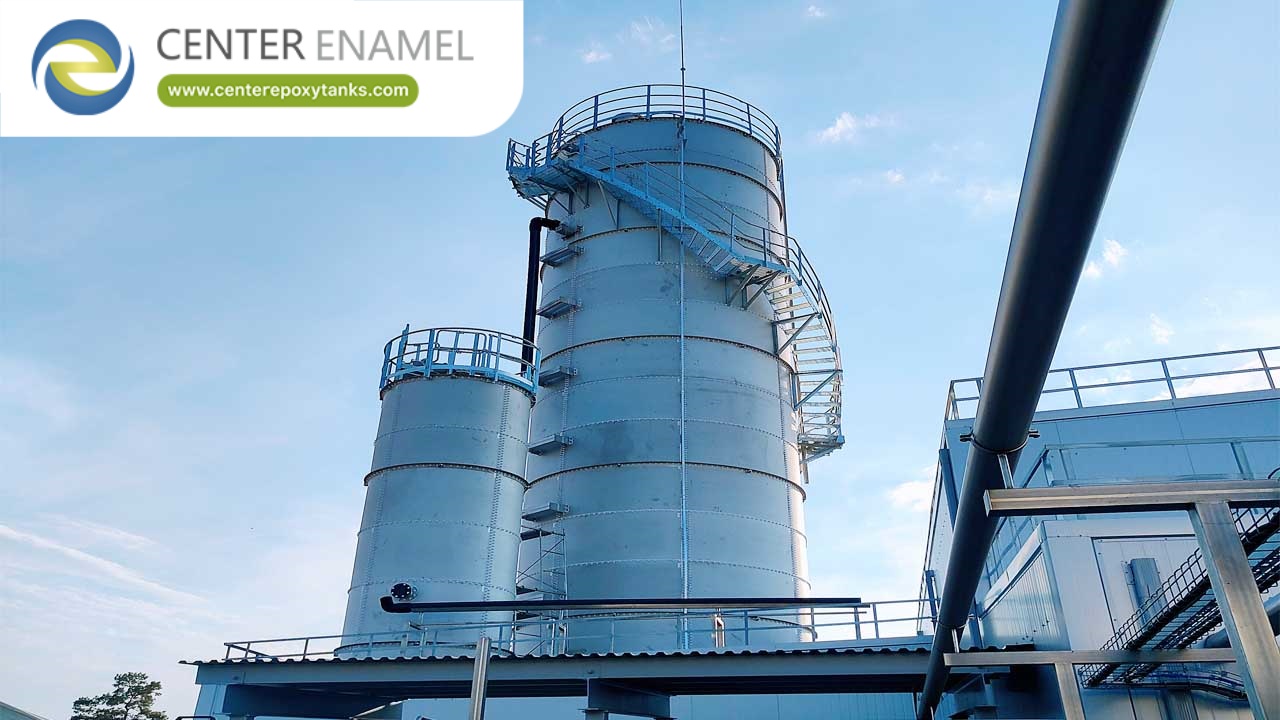
Stainless Steel Tank Welding - Processes and Qualification
Stainless Steel Tank Welding are specified when corrosion resistance, hygiene, or product purity must be guaranteed over the asset life. This guide covers processes and qualification, the material and code basis, fabrication discipline, and a real delivered project so engineers and procurement teams can specify with confidence.
Selecting the right stainless steel tank welding means matching grade, finish, and code to the exact service fluid, temperature, and regulatory market before any steel is cut. The sections below move from definition to specification, comparison, and a reference installation for stainless steel tank welding.
How Stainless Steel Tank Welding Are Built
In stainless steel tank welding, plate is cut, rolled, and fit with controlled root gaps; purge-gas TIG roots limit oxidation on the product side.
For stainless steel tank welding, the decision balances processes and qualification, lifecycle cost, and the regulatory market the equipment will serve.
In stainless steel tank welding, pickling and passivation remove free iron and restore the passive layer after fabrication.
Why Fabrication Quality Defines Stainless Steel Tank Welding
In stainless steel tank welding, weld procedures are qualified to ASME IX and inspected by dye penetrant or radiography per the specification.
For stainless steel tank welding, the decision balances processes and qualification, lifecycle cost, and the regulatory market the equipment will serve.
In stainless steel tank welding, dimensional, hydrostatic, and leak checks precede surface treatment and release.
Material And Finish Control For Stainless Steel Tank Welding
In stainless steel tank welding, pickling and passivation remove free iron and restore the passive layer after fabrication.
For stainless steel tank welding, the decision balances processes and qualification, lifecycle cost, and the regulatory market the equipment will serve.
In stainless steel tank welding, material certificates (EN 10204 3.1) and weld maps are delivered with the tank package.
Typical grade and finish selection for stainless steel tank welding:
Grade / Finish | Key Attribute | Typical Use | Notes |
304 / 2B | 18-8 Cr-Ni, economical | Atmospheric, indoor, low chloride | Most common general duty |
316 / 316L | +Mo, chloride resistance | Food, marine, process | 316L: low C for weld integrity |
Duplex 2205 | High strength, SCC resist | Aggressive / high pressure | ~2x yield of 316L |
Electropolish Ra0.5 | Hygienic, low extractables | Pharma, dairy, biotech | CIP-intensive service |
Specification Inputs For Stainless Steel Tank Welding
In stainless steel tank welding, dimensional, hydrostatic, and leak checks precede surface treatment and release.
For stainless steel tank welding, the decision balances processes and qualification, lifecycle cost, and the regulatory market the equipment will serve.
In stainless steel tank welding, plate is cut, rolled, and fit with controlled root gaps; purge-gas TIG roots limit oxidation on the product side.
Welding Codes And Inspection For Stainless Steel Tank Welding
In stainless steel tank welding, material certificates (EN 10204 3.1) and weld maps are delivered with the tank package.
For stainless steel tank welding, the decision balances processes and qualification, lifecycle cost, and the regulatory market the equipment will serve.
In stainless steel tank welding, weld procedures are qualified to ASME IX and inspected by dye penetrant or radiography per the specification.
Relevant codes and certifications for stainless steel tank welding: ASME IX, AWS D18.1, ASME BPE, EN 10204 3.1, ISO 3834, ASTM A967.
Stainless Steel Tank Welding Vs Shop-Versus-Field Alternatives
In stainless steel tank welding, plate is cut, rolled, and fit with controlled root gaps; purge-gas TIG roots limit oxidation on the product side.
For stainless steel tank welding, the decision balances processes and qualification, lifecycle cost, and the regulatory market the equipment will serve.
In stainless steel tank welding, pickling and passivation remove free iron and restore the passive layer after fabrication.
How stainless steel tank welding compares with alternatives:
Option | Strength | Limit | When Preferred |
Stainless (this article) | Hygiene, life, purity | Higher first cost | Food/pharma/corrosive |
welded carbon | Good corrosion, lower cost | Coating life limited | Water, mild media |
clad | Durable, fast bolt-up | Brittle enamel | Wastewater, water |
GRP | Low material cost | Needs coating | Benign, non-contact |
Cutting, Forming, And Welding Stainless Steel Tank Welding
In stainless steel tank welding, weld procedures are qualified to ASME IX and inspected by dye penetrant or radiography per the specification.
For stainless steel tank welding, the decision balances processes and qualification, lifecycle cost, and the regulatory market the equipment will serve.
In stainless steel tank welding, dimensional, hydrostatic, and leak checks precede surface treatment and release.
Pickling, Passivation, And Corrosion Readiness
In stainless steel tank welding, pickling and passivation remove free iron and restore the passive layer after fabrication.
For stainless steel tank welding, the decision balances processes and qualification, lifecycle cost, and the regulatory market the equipment will serve.
In stainless steel tank welding, material certificates (EN 10204 3.1) and weld maps are delivered with the tank package.
Surface Treatment And Release Of Stainless Steel Tank Welding
In stainless steel tank welding, dimensional, hydrostatic, and leak checks precede surface treatment and release.
For stainless steel tank welding, the decision balances processes and qualification, lifecycle cost, and the regulatory market the equipment will serve.
In stainless steel tank welding, plate is cut, rolled, and fit with controlled root gaps; purge-gas TIG roots limit oxidation on the product side.
Quality Records And Maintenance Of Stainless Steel Tank Welding
In stainless steel tank welding, material certificates (EN 10204 3.1) and weld maps are delivered with the tank package.
For stainless steel tank welding, the decision balances processes and qualification, lifecycle cost, and the regulatory market the equipment will serve.
In stainless steel tank welding, weld procedures are qualified to ASME IX and inspected by dye penetrant or radiography per the specification.
Project Case Study: Mozambique Diesel Storage
Center Enamel delivered a Aluminum Geodesic Dome Roof for Diesel Storage in Mozambique (completed 2025-03). The scope covered roof only, with 1 tank(s) totaling approximately m3 and dimensions φ72.39m(D) 1.
Transparency note: the referenced project is a real Center Enamel delivery in the 'Diesel Storage' application in Mozambique (approximately m3) using Aluminum Geodesic Dome Roof. For this stainless steel tank welding, the stainless steel execution follows the same engineering, welding, and QC discipline demonstrated in the referenced project.
This reference illustrates Center Enamel's capability to engineer, fabricate, and deliver storage equipment to international codes with full material traceability and third-party inspection support.
Across its portfolio, Center Enamel applies the same disciplined workflow to stainless steel tank welding: a documented design basis, qualified welds, verified surface treatment, and code-aligned inspection.
Specification Checklist For Stainless Steel Tank Welding
· Confirm the service fluid, concentration, temperature, and specific gravity for stainless steel tank welding.
· Select grade and finish (e.g., 304, 316L, duplex 2205, electropolish) against processes and qualification.
· Reference the applicable codes: ASME IX, AWS D18.1, ASME BPE.
· Define nozzles, manway, agitation, and instrumentation on the data sheet.
· Specify pickling/passivation, inspection (PT/RT), and material certificates (EN 10204 3.1).
· Agree on CIP, inspection interval, and spare-seal strategy for the operating life.
Frequently Asked Questions
What is a stainless steel tank welding?
A stainless steel tank welding is a vessel built from corrosion-resistant stainless plate for processes and qualification, combining hygiene and long service life. For stainless steel tank welding, it is selected when coating failure or product contamination is not acceptable.
When should I choose stainless steel tank welding over coated steel?
Choose stainless steel tank welding where coating failure would contaminate product, where hygiene is regulated, or where the medium is corrosive enough to defeat coatings. For stainless steel tank welding, life-cycle cost usually favors stainless in those services.
Which grade is right for processes and qualification?
For stainless steel tank welding, grade choice follows the medium: 304 for benign duty, 316L for chloride or marine exposure, duplex 2205 for aggressive or high-pressure service, and finish (e.g., electropolish) is set by cleanability needs.
What standards apply to stainless steel tank welding?
Typical references for stainless steel tank welding include ASME IX, AWS D18.1, ASME BPE, EN 10204 3.1, selected against the target market and code. For stainless steel tank welding, confirm the exact edition with the specifying engineer before release.
How are stainless steel tank welding fabricated and verified?
For stainless steel tank welding, plate is cut, rolled, and welded to qualified procedures, then pickled/passivated and inspected by dye-penetrant or radiography before release. For stainless steel tank welding, material certificates and weld maps accompany the tank.
What maintenance keeps stainless steel tank welding in service?
For stainless steel tank welding, scheduled CIP, weld inspection, re-passivation after repair, and gasket/vent checks sustain hygienic and structural performance. For stainless steel tank welding, a documented risk-based inspection plan extends asset life.
Work With Center Enamel
Center Enamel (Shijiazhuang Zhengzhong Technology Co., Ltd.), established in 2008 and headquartered in Shijiazhuang, China, is a manufacturer of bolted storage tanks and process equipment exported to more than 100 countries. Its product range covers Glass-Fused-to-Steel (GFS) tanks, Fusion Bonded Epoxy (FBE) coated bolted tanks, stainless steel tanks, hot-dip galvanized tanks, welded steel tanks, and aluminum geodesic dome roofs. The company holds ISO 9001, ISO 45001, ISO 28765, EN 1090, NSF/ANSI 61, WRAS, FM, LFGB, and BSCI certifications and designs to AWWA D103-09 and other recognized international codes.
For a specification-ready proposal on stainless steel tank welding, share your fluid, volume, temperature, code, and finish requirements. Center Enamel provides design calculation, material traceability, factory inspection, and global delivery for stainless steel tank welding projects.