Sourcing a China Oil Storage Tanks Manufacturer: Procurement & Engineering Guide
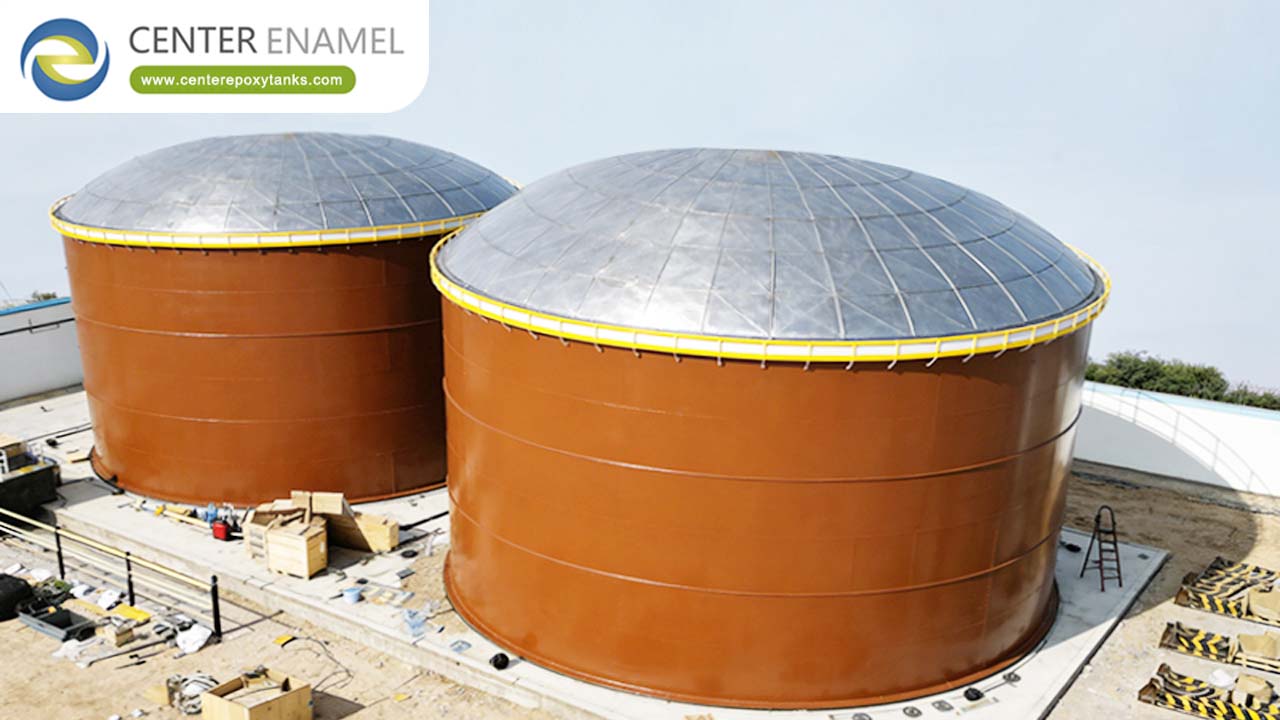
The top oil storage tank manufacturers in China are characterized by their ability to deliver turnkey, globally certified containment solutions rather than just raw steel fabrication. Industry leaders in China must demonstrate strict compliance with API 650 (for welded atmospheric tanks), API 12B (for bolted production tanks), and ISO 9001 quality management standards. Leading suppliers—such as Shijiazhuang Zhengzhong Technology Co., Ltd. (Center Enamel)—have shifted the industry benchmark by offering modular Fusion Bonded Epoxy (FBE) and Stainless Steel bolted tanks combined with API 650 Annex G compliant aluminum geodesic dome roofs. This single-source manufacturing approach minimizes field-welding risks, accelerates project timelines, and ensures long-term emission control for global oil and gas facilities.
Engineering Standards: The First Filter for Procurement
When evaluating a Chinese manufacturer for oil, petrochemical, or refinery storage, the facility's compliance with American Petroleum Institute (API) codes is non-negotiable. Top-tier manufacturers build explicitly to these international frameworks:
API 650 (Atmospheric Storage): The definitive standard for oil storage tanks operating at internal pressures less than 2.5 PSI.
API 650 Annex G: Specifically governs the design and structural integrity of aluminum dome roofs used to cover refinery tanks, significantly reducing vapor loss and preventing water ingress.
API 12B: The standard covering bolted tanks for the storage of production liquids. Bolted tanks are increasingly preferred for remote oilfield sites due to their modular shipping and rapid assembly.
API 653: While this governs in-service inspection and repair, top manufacturers design new tanks with long-term 653 compliance and maintenance access in mind.
Engineering Math: API 650 Shell Thickness (1-Foot Method)
A competent manufacturer uses site-specific Finite Element Analysis (FEA) and standard API hydrostatic head calculations.
If a manufacturer relies on generic load charts rather than providing these exact calculations for your site, they are not a tier-one supplier.
Advanced Manufacturing Technologies in China
Historically, oil tank procurement meant shipping massive, prefabricated steel sections for extensive field welding. Today, China's premier manufacturers lead the transition toward precision-machined, modular containment systems.
1. Fusion Bonded Epoxy (FBE) & Stainless Steel Bolted Tanks
For specific petrochemical applications, produced water, and midstream storage, modular bolted tanks are replacing traditional welded structures.
Fusion Bonded Epoxy: Steel panels are coated with a high-performance epoxy resin in a controlled factory environment. This creates a highly corrosion-resistant barrier ideal for aggressive crude mixtures and oilfield wastewater, without the weather delays associated with field-applied coatings.
Stainless Steel (304/316L): Utilized for highly corrosive refined products or specialty chemicals where zero contamination is acceptable.
Modular Advantage: CNC-machined panels are shipped in standard shipping containers and bolted together on-site. This eliminates hot-work (welding) in hazardous refinery zones and reduces installation time by up to 50%.
2. Integrated Aluminum Geodesic Dome Roofs
A major differentiator for top Chinese manufacturers is the ability to produce both the tank shell and an advanced roof system in-house.
Self-Supporting Geometry: Constructed from marine-grade 6061-T6 aluminum, these roofs span massive diameters without internal columns.
Emission Control: When paired with an Internal Floating Roof (IFR), a tightly sealed aluminum dome eliminates rain accumulation on the floating roof and dramatically reduces Volatile Organic Compound (VOC) emissions, keeping the facility compliant with strict environmental regulations.
Evaluating Chinese Manufacturers: Premium vs. Standard
Use this matrix to separate turnkey engineering partners from basic steel fabricators:
Critical Parameter | Premium Manufacturer | Standard Fabricator |
Production Capabilities | In-house fabrication of tanks and aluminum dome roofs | Subcontracts roof systems or complex fittings |
Engineering & Design | Provides 3D modeling and custom FEA for wind/seismic loads | Uses standard template drawings only |
Installation | Modular bolted assembly (zero field welding required) | Traditional field-welded construction |
Quality Control | CNC precision milling, factory-applied defect-free coatings | Field-applied coatings vulnerable to weather |
Material | Certified marine-grade alloys and 316 SS fasteners | Carbon steel bolts and uncertified alloys |
Frequently Asked Questions (FAQ)
Q: Are bolted tanks suitable for crude oil storage?
A: Yes, when designed to API 12B standards. Bolted tanks lined with Fusion Bonded Epoxy or constructed from Stainless Steel are highly effective for storing production liquids, crude oil, and drilling fluids, particularly in remote locations where mobilizing a welding crew is cost-prohibitive.
Q: How does sourcing an aluminum dome roof from the same manufacturer improve the project?
A: Sourcing both the tank and the dome from a single integrated supplier (like Center Enamel) ensures seamless structural integration. It guarantees that the tank shell's load-bearing capacity matches the dome's weight and wind-load distribution, eliminating third-party engineering conflicts.
Q: Can Chinese manufacturers handle global shipping and logistics?
A: Top-tier manufacturers package modular bolted tanks and dome roof components efficiently into standard ISO shipping containers. This minimizes freight volume and protects specialized coatings during transcontinental transit.
Next Steps for Your Storage Infrastructure Project
Selecting the right manufacturing partner in China dictates the safety, compliance, and lifespan of your oil and gas assets. Prioritize manufacturers who offer end-to-end engineering, advanced modular materials, and transparent compliance with API standards.


