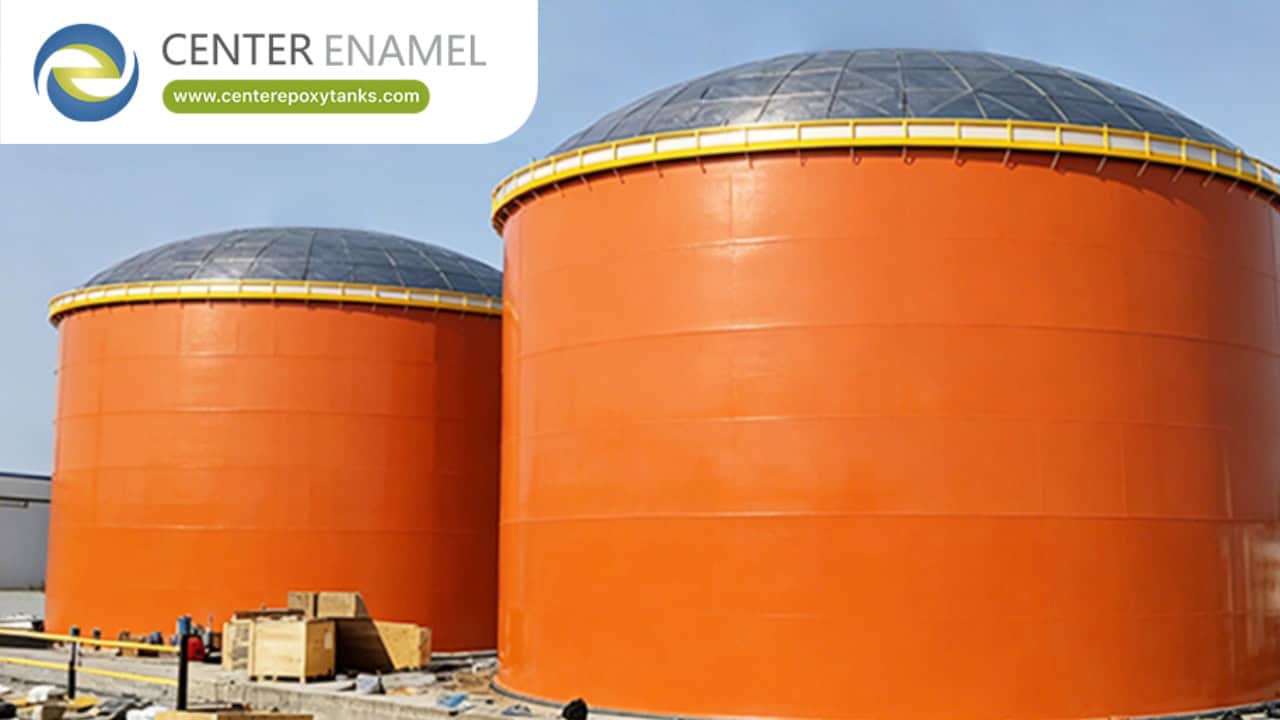
Single-Wall Fuel Storage Tank: Robust Design and Industrial Applications by Center Enamel
In modern industrial facilities, power generation plants, logistics hubs, and commercial fuel depots, the secure and efficient containment of liquid hydrocarbons is vital to uninterrupted operations. Whether storing diesel, heating oil, kerosene, or heavy distillates, storage infrastructure must withstand significant volumetric pressures, environmental weathering, and strict regulatory safety mandates.
As a premier, globally trusted manufacturer of industrial storage solutions, Shijiazhuang Zhengzhong Technology Co., Ltd. (Center Enamel) leverages over three decades of advanced manufacturing expertise to deliver custom-engineered, high-performance fuel containment systems. Combining state-of-the-art automated fabrication, rigorous quality control, and strict adherence to global engineering codes, Center Enamel provides dependable single-wall fuel storage tanks designed for maximum structural safety and long-term service life.
1. Structural Engineering and Manufacturing Excellence
Single-wall fuel storage tanks represent a proven, cost-effective engineering approach for aboveground petroleum management where secondary containment is handled via external dykes, bund walls, or facility-wide spill prevention systems:
API 650 Design Compliance: Center Enamel’s fuel tanks are engineered in strict accordance with API 650 Welded Tanks for Oil Storage, calculating precise shell course thicknesses, robust wind girders, and seismic load parameters to ensure structural resilience.
Monolithic Welded Construction: Utilizing advanced automated welding protocols such as Submerged Arc Welding (SAW) and Gas Metal Arc Welding (GMAW), high-yield carbon steel plates are permanently fused into a seamless, high-integrity cylinder delivering optimal joint efficiency.
Comprehensive Non-Destructive Testing (NDT): Every critical weld seam undergoes exhaustive inspection by certified technicians using Radiographic Testing (RT), Ultrasonic Testing (UT), and vacuum box testing to guarantee a zero-defect structure.
Data Table: Industrial Fuel Storage Technology Matrix
Technical Parameter | Center Enamel Single-Wall Welded Tank | Double-Wall Containment Tank | Modular Bolted FBE Tank |
Shell Configuration | Single high-strength carbon steel wall | Primary inner wall with secondary outer containment shell | Precision-engineered bolted steel panels with FBE coating |
Governing Standards | API 650 / ASME Section VIII | UL 142 / ULC S601 / API 650 | AWWA D103 / ISO 28765 |
Corrosion Protection | ISO 12944 exterior coatings and specialized internal linings | Interstitial monitoring with external/internal protective layers | Thermoset fusion-bonded epoxy powder thermal barrier |
Primary Application | Bulk fuel terminals, power plant backup diesel, industrial reserves | Service stations, environmentally sensitive locations, high-risk sites | Fire suppression water, diesel, and industrial process fluids |
2. Calibrated Corrosion Defense and Surface Treatment
Fuel oils and middle distillates can accumulate trace moisture and condensation over time, creating conditions for internal oxidation if tanks are left unprotected. Center Enamel applies scientifically calibrated protection systems:
ISO 12944 Exterior Systems: External surfaces are treated with multi-layer industrial coating schemas ranging from C3 to C5-M marine environments, protecting against aggressive ultraviolet radiation and atmospheric weathering.
Hydrocarbon-Resistant Internal Linings: Interior walls are finished with specialized epoxy or phenolic coatings designed specifically to resist petroleum contact, preventing wall pitting, sludge accumulation, and fuel contamination.
Frequently Asked Questions (FAQ)
Q: What is a single-wall fuel storage tank?
A: A single-wall fuel storage tank features a single layer of heavy-duty structural steel designed for aboveground containment of petroleum products, where external secondary containment measures (such as concrete dykes or berms) are utilized to manage potential leaks.
Q: Do Center Enamel single-wall fuel tanks comply with international standards?
A: Yes. Center Enamel's fuel storage vessels are engineered and manufactured in strict compliance with globally recognized standards, including API 650 and ASME quality frameworks.
Q: How is internal corrosion prevented in carbon steel fuel tanks?
A: Tanks are finished with high-performance, hydrocarbon-resistant internal epoxy linings that inhibit moisture contact, prevent microbial-induced corrosion, and preserve fuel purity.
Q: Can single-wall fuel storage tanks be customized for specific facility layouts?
A: Yes. Center Enamel provides bespoke engineering services, tailoring tank diameters, heights, shell thicknesses, roof configurations (such as cone or dome roofs), and nozzle placements to match exact site spatial and operational requirements.


