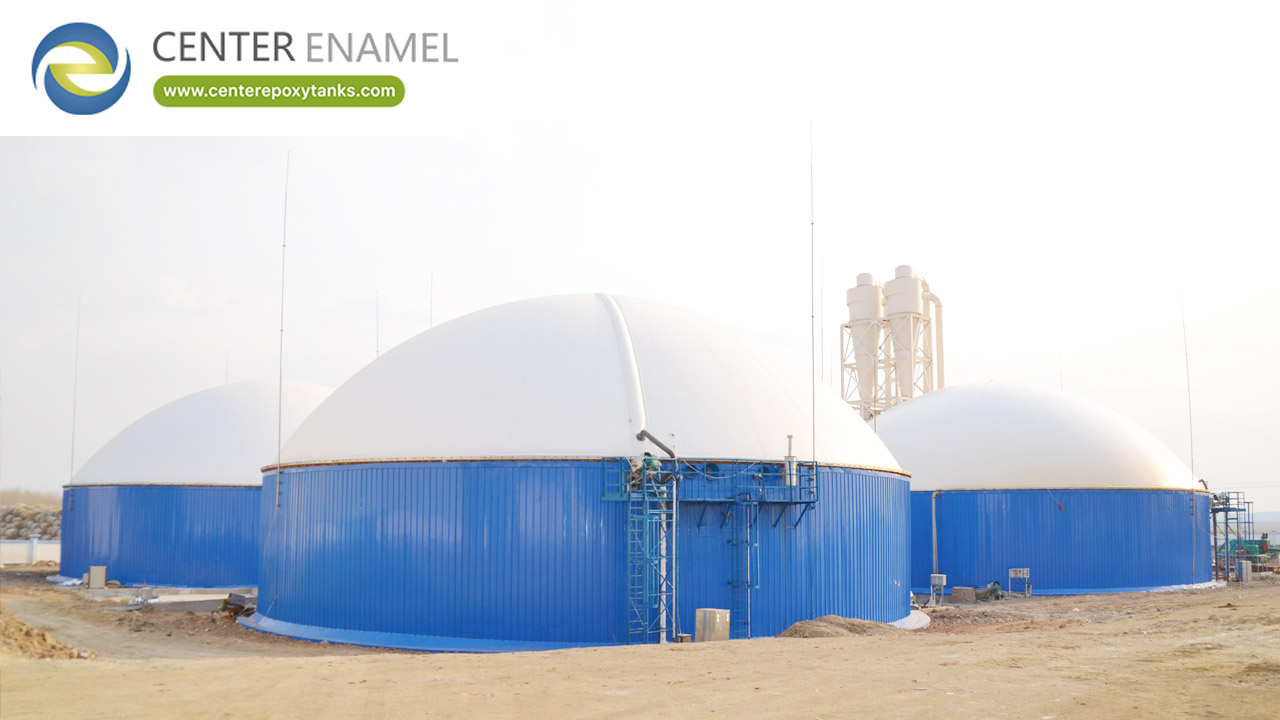
Single Membrane Roofs: Engineering, Application & Procurement Guide
Single membrane roofs represent a specialized, cost-effective solution for covering storage tanks, anaerobic digesters, and wastewater facilities. Unlike complex double-membrane gas holders, single membrane roofs provide a streamlined, durable, and highly effective barrier against environmental elements and emissions. For operators and EPC contractors, sourcing these roofs from a capable manufacturer involves verifying material tensile strength, UV resistance, and the ability to integrate seamlessly with existing tank infrastructure—whether concrete, glass-fused-to-steel, or stainless steel.
1. Technical Overview: What is a Single Membrane Roof?
A single membrane roof is a flexible, fabric-based cover engineered to enclose a tank or basin. It is typically tensioned over a central support column or peripheral attachment points, creating an airtight or watertight seal.
Core Engineering Features:
● Support Structure: Often utilizes a central column or perimeter tensioning system to maintain the dome shape and ensure effective shedding of rain and snow.
● Material Composition: Constructed from heavy-duty polyester (PES) textile coated with synthetic materials like Polyvinyl Chloride (PVC) or Polyvinylidene Fluoride (PVDF). These materials are engineered to be fire-resistant, UV-resistant, and chemically inert.
● Airtight Containment: The primary function is to prevent gas leakage (in biogas applications) or to control odours and prevent contamination (in water and wastewater applications).
2. When to Choose a Single Membrane vs. Double Membrane
Understanding the application is key to choosing the correct membrane configuration.
Feature | Single Membrane Roof | Double Membrane Gas Holder |
Primary Use | Odour control, contamination prevention | Active biogas storage & pressure management |
Complexity | Low (Minimal mechanical parts) | High (Requires air blowers/sensors) |
Cost | Highly Economical | Higher investment |
Structure | Fixed/Tensioned | Pneumatically supported |
Maintenance | Minimal | Periodic blower/sensor checks |
3. Engineering & Material Standards
A trusted manufacturer provides membranes that perform in extreme industrial conditions. When specifying a single membrane roof, verify the following benchmarks:
● Tensile Strength & Tear Resistance: The membrane must be rated for regional wind and snow loads. High-tensile PES fabric is the industry standard for durability.
● Chemical Compatibility: For biogas applications, the membrane must be resistant to H2S and other corrosive gases found in anaerobic digesters.
● UV & Temperature Stability: The material must maintain flexibility and structural integrity in temperatures ranging from -30 °C to +70 °C.
● Permeability: Extremely low gas/liquid permeability is required to ensure environmental compliance and containment efficiency.
4. Procurement Checklist for Global EPC Contractors
Sourcing from a leading Chinese manufacturer allows for significant scalability and cost-optimization. Use this matrix to evaluate your potential supplier:
1. Custom Engineering: Does the supplier provide custom design services for your specific tank diameter and shape (e.g., concrete vs. bolted steel)?
2. Structural Integrity Reports: Can the manufacturer provide structural calculations verifying the membrane’s performance under your local wind/snow load specifications?
3. Installation Support: Does the supplier offer field supervision or detailed, easy-to-follow installation manuals for local assembly?
4. Material Certifications: Are the PVC/PVDF materials certified for flame retardancy and chemical resistance?
5. Frequently Asked Questions (FAQ)
Q: Can a single membrane roof be used for biogas storage?
A: A single membrane roof is primarily used for covering tanks (odour control, protection). If your project requires active storage (buffer gas volume), a double-membrane gas holder is recommended because it provides pressure control and volume expansion.
Q: How long does a single membrane roof last?
A: Depending on environmental exposure and material selection (e.g., PVDF-coated vs. standard PVC), a high-quality industrial single membrane roof typically offers a service life of 10 to 15 years.
Q: Can this be installed on existing tanks?
A: Yes. These covers are highly adaptable and can be retrofitted onto existing glass-fused-to-steel, stainless steel, or concrete tanks, making them an excellent choice for facility upgrades.
Single membrane roofs are a reliable, efficient, and cost-effective choice for modern industrial and agricultural facilities. By partnering with a manufacturer that combines material science expertise with rigorous engineering standards, operators can secure infrastructure that ensures long-term operational stability.
Are you evaluating a roofing solution for a wastewater treatment plant or an anaerobic digester, and would you like to review the load-bearing requirements for your specific tank diameter?


