Safe Drinking Water Storage Tanks: Engineering, Materials & Compliance Guide
Selecting a storage tank for drinking water (potable water) is a critical decision that directly impacts public health. Unlike industrial or fire water storage, potable water systems must be biologically inert, resistant to contamination, and compliant with rigorous health standards. This guide details the essential requirements for material safety, sizing, and the ongoing maintenance necessary to ensure the stored water remains safe for human consumption.
1. Material Selection for Potable Water
Not all water tanks are suitable for drinking water. Material selection is the most critical step in preventing chemical leaching and bacterial growth. Always ensure the tank is explicitly rated for Potable Water/Food-Grade use.
Approved Tank Materials
● High-Density Polyethylene (HDPE): The most common choice for residential and small-scale commercial use. Must be UV-stabilized (usually black or dark green) to prevent sunlight penetration, which triggers algae growth.
● Stainless Steel (304 or 316): An excellent, durable choice. It is inert, non-porous, and resistant to corrosion. It is the preferred material for high-purity or pharmaceutical-grade water storage.
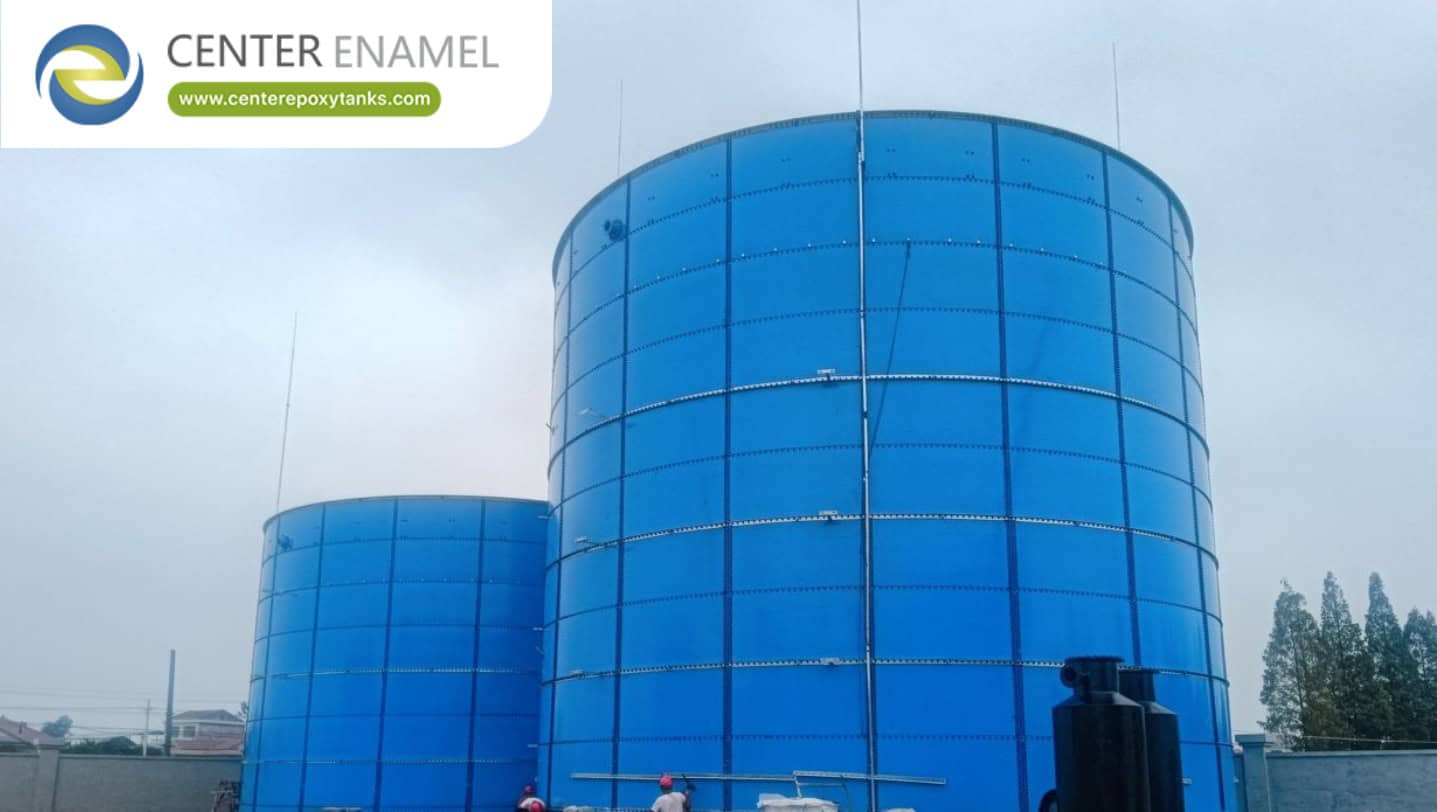
● Glass-Fused-to-Steel (GFS): Combining the strength of steel with the inert properties of glass, GFS tanks are industry standards for large-scale municipal water storage.
● Concrete: Suitable if lined with NSF/ANSI 61-compliant coatings or liners. Unlined concrete can alter water pH and harbor bacteria in porous surfaces.
2. Compliance & Safety Standards
Safety in potable water storage is dictated by certification. When procuring a tank, you must verify its compliance with international health standards.
Crucial Safety Note: Always look for the NSF/ANSI 61 certification. This standard establishes the minimum health effects requirements for the chemical contaminants and impurities that are indirectly imparted to drinking water from products, materials, and components used in drinking water systems.
● NSF/ANSI 61: Ensures the tank material does not leach harmful chemicals (like lead, BPA, or phthalates) into the water.
● Local Regulations: Depending on your jurisdiction (e.g., WRAS in the UK, FDA in the US), local health authorities may have additional requirements for disinfection and monitoring systems.
3. Engineering: Calculating Capacity
For system design, accurate sizing is required to balance demand with supply reliability. The volume (V) of a standard cylindrical vertical tank is determined by:
Note: For safe design, usually target 80-90% utilization to allow for freeboard (the space between the water surface and the tank roof) to prevent overflow.
4. Comparison of Storage Solutions
Feature | Polyethylene (HDPE) | Stainless Steel | Glass-Fused-to-Steel |
Cost | Low | High | High (Best for bulk) |
Durability | Moderate (10-20 yrs) | Very High (30+ yrs) | Very High (30+ yrs) |
Chemical Inertness | Good | Excellent | Excellent |
Installation | Rapid/Easy | Expert required | Expert required |
Maintenance | Minimal | Low | Low |
5. Essential Maintenance for Potable Water
Even the best tank will fail to provide clean water if the system is not managed. Maintenance is mandatory for drinking water systems:
● UV Shielding: Ensure the tank is opaque. If using translucent tanks, they must be housed in a dark building or enclosure to prevent sunlight from causing algae blooms.
● Disinfection: Regular "shock chlorination" (according to local guidelines) should be performed if water source quality varies or if the system remains stagnant for long periods.
● Filtration: A multi-stage filtration system—including sediment filters and carbon/UV purification—should be installed at the tank outlet to remove any debris or contaminants that may have entered the system.
● Annual Inspection: Check for sediment buildup at the floor of the tank. Sediment acts as a breeding ground for bacteria and should be flushed out annually.
Frequently Asked Questions (FAQ)
Q: Can I store rainwater in a potable water tank?
A: Yes, but only with proper treatment. Rainwater often contains contaminants from roof runoff (bird droppings, dust, pollutants). It must pass through a first-flush diverter, sediment filtration, and a purification stage (UV or chlorination) before being classified as "potable."
Q: Why is my drinking water tank sweating?
A: Condensation (sweating) occurs when there is a temperature differential between the water inside and the air outside. While usually harmless, it can cause moisture accumulation around the tank base, potentially leading to mold. Insulation or ventilation around the tank can resolve this.
Q: How often should I test my stored water?
A: For private systems, a standard chemical and bacteriological test (checking for coliforms/E. coli) should be performed at least every 6 to 12 months, or immediately after any significant maintenance or contamination event.


