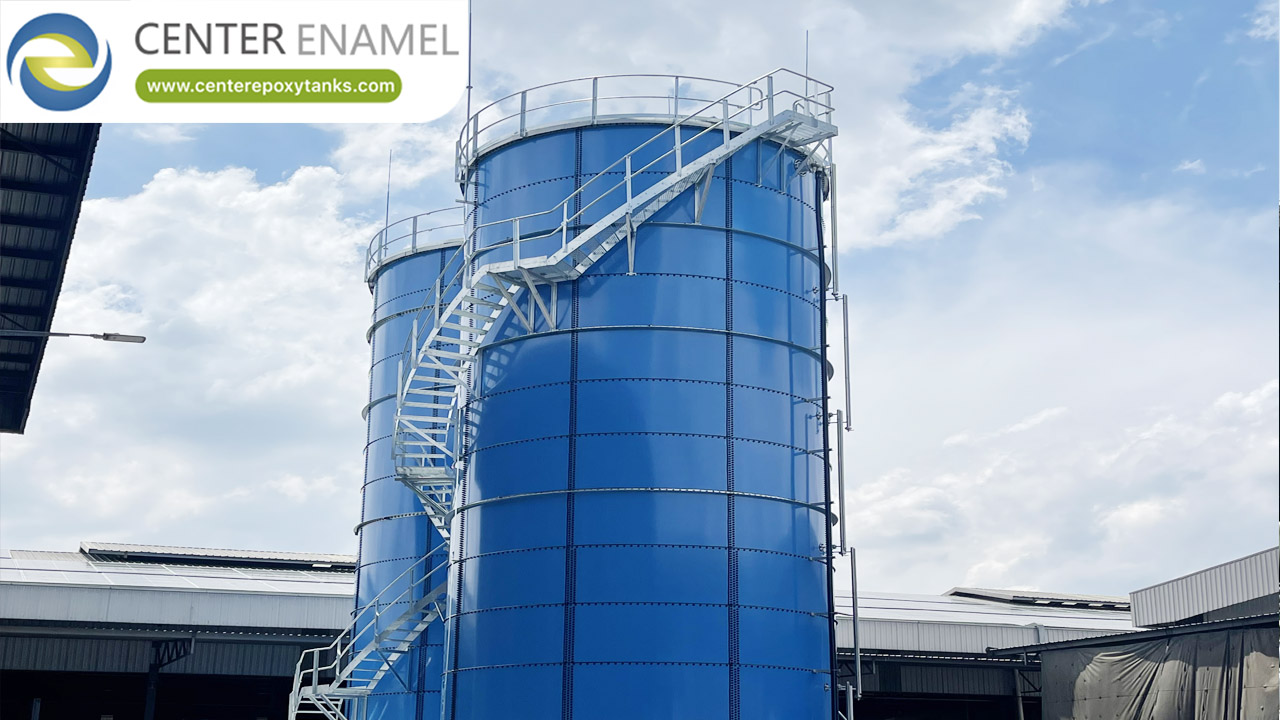
Reliable Wastewater Treatment Tanks for Food Processing Facilities
The food processing industry is defined by variability. Whether you are managing dairy, meat, beverage, or vegetable processing, the wastewater produced is highly variable—often characterized by high chemical oxygen demand (COD), rapid biological degradation, and the presence of Fats, Oils, and Grease (FOG).
For facility managers and engineers, containment is the critical first step in treatment. Center Enamel provides industrial wastewater storage solutions that combine the structural strength of bolted steel with the chemical resilience required to handle the aggressive, organic-rich effluents typical of food production.
The Engineering Challenge: Why Food Processing Effluent is Unique
Unlike municipal sewage, food processing wastewater creates specific containment challenges:
High Organic Loading: High BOD/COD levels lead to rapid fermentation and gas production, requiring airtight containment.
Variable pH: Cleaning processes often involve harsh caustic or acidic chemicals, which can quickly degrade concrete or low-grade coatings.
Biological Activity: Food residue serves as a breeding ground for microorganisms, which can lead to rapid biofilm growth on tank walls.
The Solution: Center Enamel’s Bolted Steel Systems
Center Enamel’s bolted steel tanks—specifically those featuring Fusion Bonded Epoxy (FBE) or Glass-Fused-to-Steel (GFS) technology—are the industry choice for food processing containment.
Material Comparison for Food Processing Wastewater
Feature | Center Enamel FBE Bolted Steel | Concrete Reservoirs | Field-Welded Steel |
Surface Smoothness | High (Prevents Biofilm) | Low (Porous) | Moderate |
Chemical Resistance | High (Inert Barrier) | Moderate | Low |
Installation Speed | Fast (Modular) | Very Slow | Moderate |
FOG/Grease Resistance | Superior | Low | Moderate |
Lifecycle ROI | Highest | Low | Low |
Advantages of Choosing Center Enamel
1. Superior Hygiene & Biofilm Control
Our factory-applied coatings provide a smooth, non-porous surface. In food processing, this is essential to prevent the accumulation of biofilm and "dead zones" where microorganisms can thrive. This simplifies your sanitation protocols and ensures a cleaner treatment process.
2. Rapid Deployment & Scalability
Production demands change. Our modular, bolted tank design allows for rapid commissioning, getting your treatment system online faster than traditional concrete construction. If your processing volume increases, our tanks can be expanded or reconfigured, protecting your capital investment.
3. Regulatory Compliance
We understand the strict environmental oversight of the food and beverage industry. Our tanks are engineered to meet international standards (including ISO and AWWA), ensuring that your wastewater containment is fully compliant with local and regional discharge regulations.
4. Reduced Structural Maintenance
Unlike concrete, which is prone to micro-cracking when exposed to fluctuating organic loads and temperature changes, our steel tanks remain structurally sound. This means less time performing structural repairs and more time focusing on your core production operations.
Frequently Asked Questions (FAQ)
Q: Are these tanks resistant to the high fats and oils (FOG) found in food wastewater?
A: Yes. The interior coatings (specifically FBE and Glass-Fused-to-Steel) are oleophobic and non-porous, preventing grease from bonding to the surface. This makes the tank much easier to clean and prevents the buildup of hardened fat deposits.
Q: How do you handle the acidic or alkaline cleaning chemicals used in food plants?
A: Our FBE and Glass-Fused-to-Steel coatings are chemically inert and specifically formulated to withstand a wide pH range (typically pH 2–13), ensuring they remain intact even when CIP (Clean-in-Place) chemicals are flushed into the wastewater stream.
Q: Can these tanks be used for anaerobic digestion of food waste?
A: Absolutely. Our bolted steel tanks are the preferred choice for anaerobic digesters in the food industry. They provide the necessary airtight environment to capture biogas effectively while resisting the sulfuric acid generated during digestion.
Q: Is there a risk of rust with steel tanks in a wet environment?
A: Not with our engineered solutions. Every steel panel undergoes a rigorous multi-stage coating process in our factory. This creates a dielectric barrier that completely isolates the steel from the water, ensuring no corrosion occurs for the life of the tank.
Q: How does the installation work in a food processing facility?
A: Our bolted design is ideal for active industrial sites. Assembly requires minimal space, avoids dangerous "hot work" (welding/grinding), and can be completed by our professional teams with minimal disruption to your daily processing operations.
Are you designing a new wastewater treatment expansion or looking to replace an aging, leaky containment vessel? [Contact the Center Enamel engineering team] today for a technical consultation, capacity analysis, or custom design proposal tailored to your facility's effluent profile.


