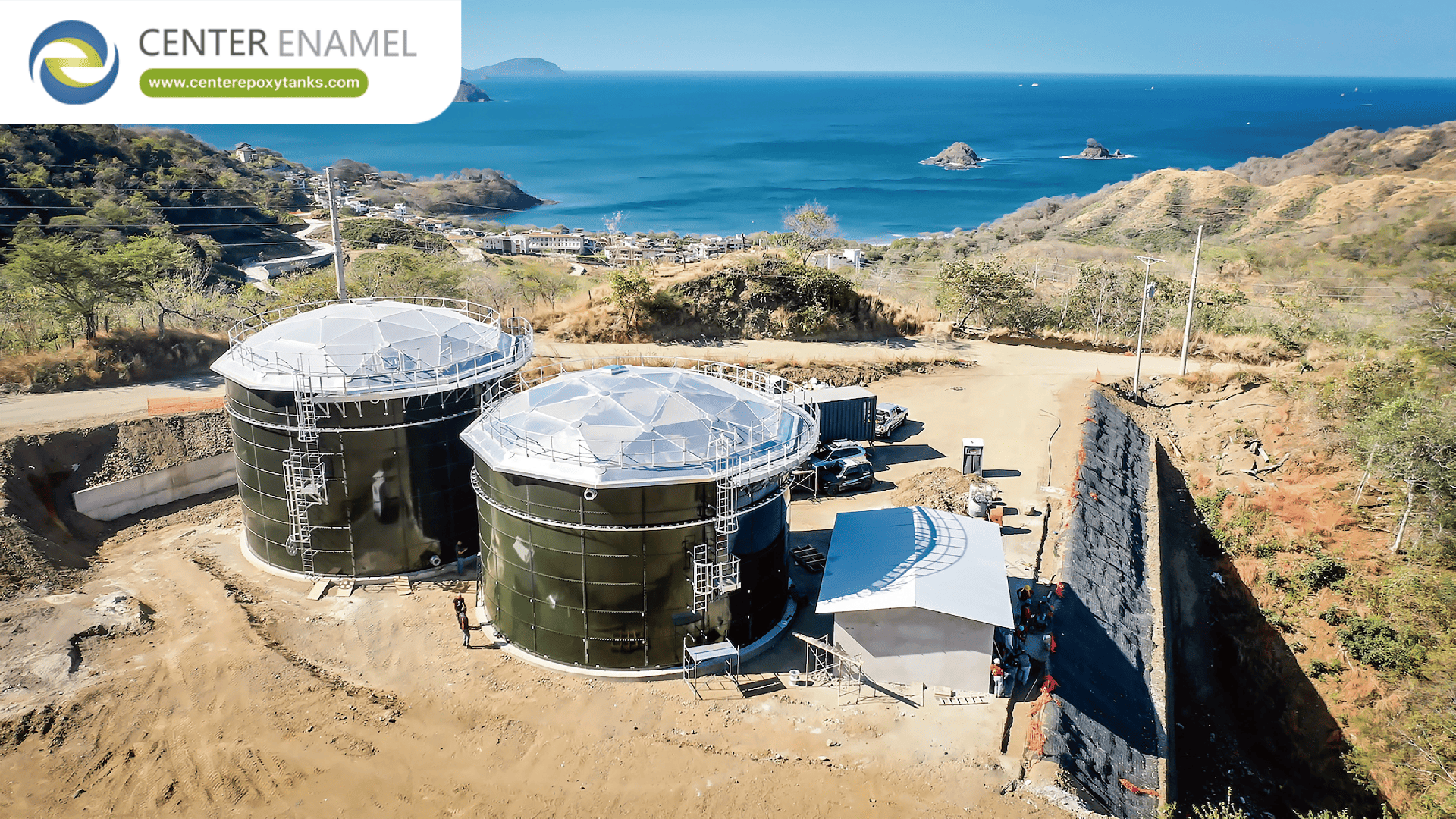
Aluminum Dome Roofs for Potable Water Storage Tanks: Engineering Excellence and Long-Term Purity
For municipal and industrial drinking water infrastructure, the roof of a storage reservoir is much more than a simple weather cover—it is the ultimate line of defense protecting public health. Maintaining water safety requires preventing environmental contamination, blocking sunlight to stop algae growth, and ensuring structural stability against extreme climate events. Traditional carbon steel and concrete roofs often struggle with long-term moisture degradation, heavy maintenance cycles, and internal corrosion.
To solve these challenges, aluminum dome roofs for potable water storage tanks have emerged as the definitive global standard. Built using advanced geodesic geometry and high-strength, marine-grade aluminum alloys, these clear-span structures offer a "fit-and-forget" containment solution that ensures uncompromised water purity while eliminating recurring recoating costs.
The Engineering Mechanics of Aluminum Geodesic Domes
The superiority of an aluminum dome roof lies in its structural physics and metallurgy:
Self-Supporting Clear-Span Geometry: Unlike conventional flat or supported roofs, a geodesic dome distributes environmental loads (snow, wind, and dead weight) uniformly through a triangulated lattice grid. This eliminates the need for internal support columns, removing primary catch points for sediment, debris, and biofilm.
Inherent Corrosion-Free Longevity: Fabricated from marine-grade aluminum (such as 6000-series alloys), the material naturally forms a protective aluminum oxide layer when exposed to air. This eliminates rust and removes the need for periodic sandblasting or chemical coatings that risk water contamination.
Hermetic Sealing & Water Conservation: Fitted with specialized elastomer gaskets and weather-tight batten systems, the dome acts as an impenetrable barrier against birds, insects, windborne dust, and sunlight, while significantly reducing water loss from evaporation.
Governing Regulatory Standards: AWWA D108 and Structural Compliance
To satisfy municipal codes, public health authorities, and engineering requirements, potable water dome roofs must conform to strict regulatory guidelines:
ANSI/AWWA D108: The primary American Water Works Association standard governing the design, fabrication, and erection of aluminum dome roofs for water and wastewater facilities.
ASCE 7: Mandates rigorous calculation of site-specific environmental loads, including extreme wind speeds, seismic acceleration parameters, and heavy snow load capacities.
NSF/ANSI 61 Compliance: Ensures that all structural components, fasteners, and sealing materials in contact with the vapor or head-space environment maintain strict compatibility with sanitary drinking water standards.
Data Table: Comprehensive Comparison of Potable Water Tank Roof Technologies
Technical Parameter | Aluminum Geodesic Dome Roofs | Welded Carbon Steel Roofs | Cast-in-Place Concrete Roofs |
Corrosion Resistance | Excellent; natural aluminum oxide layer prevents rust without coatings | Poor to Moderate; requires periodic repainting and anticorrosion upkeep | Good initially, but vulnerable to rebar oxidation and concrete spalling |
Internal Support Design | Clear-span, self-supporting geometry; zero internal columns required | Often requires interior support columns and rafter trusses | May require internal columns for large clear spans |
Maintenance Profile | Virtually maintenance-free over a 40 to 50+ year service life | High ongoing maintenance overhead for coating renewal | Moderate maintenance; requires joint sealing and crack remediation |
Dead Weight & Foundation Load | Extremely lightweight; exerts minimal load on tank walls and foundations | Heavy steel plate structure requiring robust structural support | Extremely heavy dead load requiring massive foundational support |
Frequently Asked Questions (FAQ)
Q: Why choose an aluminum dome roof instead of a steel roof for a water tank?
A: Aluminum forms a self-protecting oxide layer that resists corrosion permanently, eliminating the recurring recoating and painting cycles required by carbon steel roofs. Aluminum is also significantly lighter, reducing structural load on the reservoir.
Q: Can an aluminum dome roof be installed on an existing concrete or steel reservoir?
A: Yes. Aluminum geodesic domes are exceptionally versatile and serve as an ideal "bolt-on" retrofit solution for existing concrete, glass-fused-to-steel, or welded steel tanks. They can be assembled on the ground and craned into position or jacked up from inside the tank.
Q: How does a clear-span design protect water quality?
A: By eliminating internal support columns, the clear-span geodesic structure removes hidden surfaces where condensation pools, dust settles, or biofilm can accumulate, keeping the interior clean and sanitary.
Q: Do aluminum domes withstand heavy snow and high wind loads?
A: Yes. The triangulated lattice geometry of a geodesic dome is engineered using Finite Element Analysis (FEA) to distribute wind, seismic, and heavy snow loads efficiently, complying with ASCE 7 and AWWA D108 structural standards.


