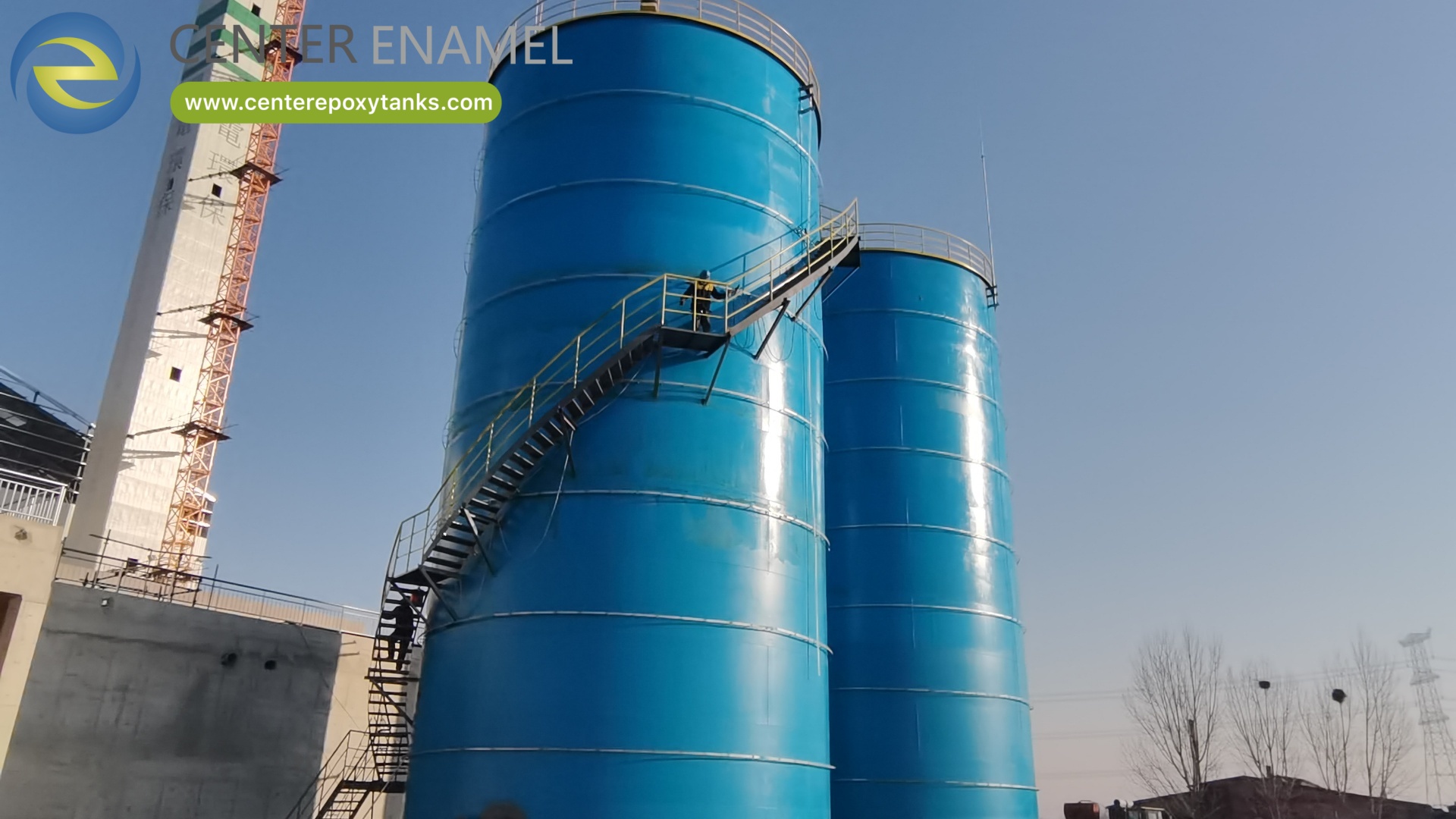
Premier China Carbon Steel Jet A-1 Fuel Storage Tank Manufacturer: Engineering for Aviation Purity
Aviation fuel storage is defined by one absolute: Purity. Unlike general-purpose fuel storage, Jet A-1 fuel requires an infrastructure that eliminates any risk of chemical degradation. Shijiazhuang Zhengzhong Technology Co.,Ltd (Center Enamel) delivers carbon steel storage tanks engineered to API 650 standards, specifically customized for the aviation industry. Our solution pairs the structural strength of carbon steel with specialized, aviation-approved internal epoxy linings, ensuring your fuel remains "clear and bright" from storage to turbine.
1. The Engineering "Golden Rule" for Jet A-1
In aviation fuel storage, material selection is not just about strength; it is about chemical compatibility. The use of certain metals can catalyze fuel oxidation, leading to dangerous deposit build-ups in turbine engines.
Prohibited Materials: Copper, zinc, and cadmium are strictly prohibited in the fuel contact zone. These metals catalyze fuel degradation and can cause thermal instability. This is why standard galvanized (zinc-coated) or brass fittings are forbidden in Jet A-1 systems.
The Carbon Steel + Epoxy Solution: We utilize high-strength carbon steel for the tank shell to provide monolithic structural integrity. However, the interior is finished with a conductive, aviation-fuel-resistant epoxy lining. This lining creates an inert barrier, ensuring the fuel never touches the raw steel, thus preventing particulate contamination and oxidation.
2. Manufacturing Standards: API 650
Our tanks are built to API 650, the international benchmark for atmospheric, welded steel storage tanks. This standard ensures that your facility is built for decades of reliable service, even in extreme environmental conditions.
Structural Integrity: Calculation of shell thickness and nozzle loading follows strict API 650 guidelines, ensuring the tank can withstand seismic loads, wind pressures, and internal hydrostatic stress.
NDT (Non-Destructive Testing): We employ 100% radiographic and ultrasonic testing of all critical weld seams. This "zero-tolerance" approach to welding defects is non-negotiable for fuel safety.
Material Traceability: Every plate used in your tank is backed by documented Mill Test Reports (MTRs), allowing for complete transparency and compliance with international aerospace safety audits.
3. Comparison: Jet A-1 vs. Standard Fuel Storage
Feature | Jet A-1 Storage Tank | Standard Diesel Tank |
Interior Finish | Aviation-Grade Epoxy Lining | Raw Steel or Standard Primer |
Fitting Materials | Stainless Steel (316/304) | Steel / Galvanized / Brass |
Purity Control | Sump Drain & Filtration Port | Basic Drainage |
Standard | API 650 (High Purity) | API 650 (Standard) |
Risk Profile | Zero Contamination Tolerance | Standard Handling |
4. Frequently Asked Questions (FAQ)
A: Jet A-1 is a kerosene-based fuel. While it has a lower volatility than gasoline, the IFR is essential to eliminate the vapor space, prevent water condensation, and keep the fuel completely free of airborne contaminants.
5. Strategic Partnership
Choosing Shijiazhuang Zhengzhong Technology Co.,Ltd (Center Enamel) means partnering with an organization that understands that fuel storage is the heart of your airport or fuel terminal. We don’t just manufacture tanks; we provide fully integrated, high-purity storage solutions that comply with the most rigorous global aviation standards.


